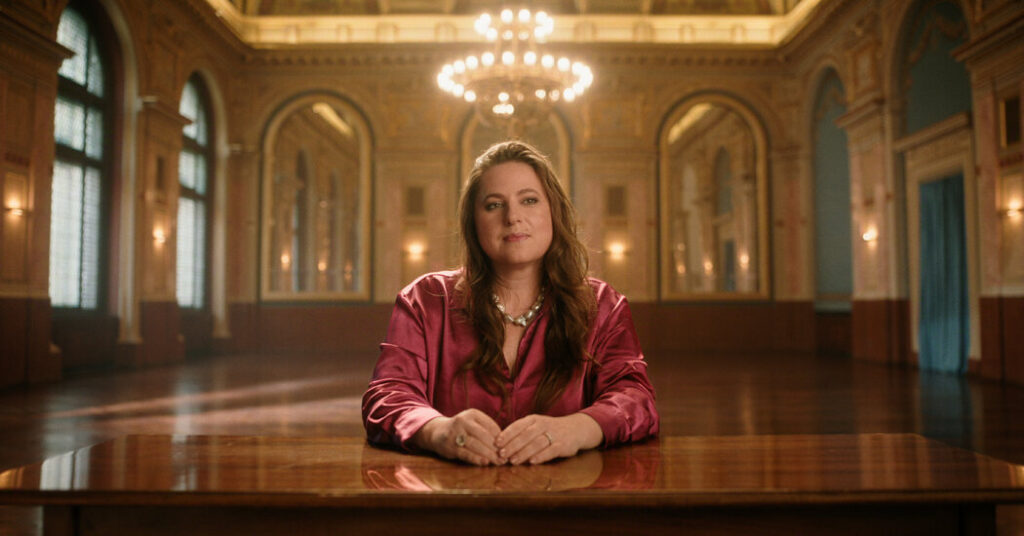
In 1991, 15-year-old Judit Polgar became the youngest chess grandmaster in history. In doing so, she broke the prodigy Bobby Fischer’s record — a remarkable enough feat on its own. But the victory was especially sweet because of her gender. The prevailing wisdom at that time, and for decades after, was that female chess players were simply inferior to men by nature, lacking both the intelligence and the killer instinct necessary to win. Fischer himself remarked, in a 1963 interview, that women are “terrible chess players” and added, “I guess they’re just not so smart.”
“Queen of Chess” (on Netflix), directed by Rory Kennedy, tells the story of Polgar’s remarkable career as the world’s top-ranked female chess player, a position she held from 1989, when she was 12, until she retired in 2014. Through archival footage and interviews with Polgar’s parents, two sisters and Polgar herself, we learn about her unusual upbringing in Hungary and her journey to becoming a champion. Living in bleak political and economic conditions, Polgar’s father came to believe that “geniuses are made, not born,” and spent every bit of money the family could spare on chess tutors for his daughters, wanting to give them an advantage in the world. Now grown, they speak of practicing chess from morning to night every day — no holidays, no vacations, no breaks. It seems to have worked: In addition to Judit’s accomplishments, her sister Susan is a chess grandmaster and Sofia is an international master.
But they learned at a time when it was not just unusual but nearly unheard of for women to compete against men. The Communist government didn’t support the idea either, and at first refused travel permits for the Polgar sisters to compete in international competitions. But eventually, they were allowed to go. And when young Judit began beating men — many of them much older than her — the men would at times become irate, storming away without shaking her hand.
“Queen of Chess” tells these stories, working chronologically through Polgar’s life and showing the way her chess victories intertwined with geopolitical changes and shifts in gender norms. Of special interest is her series of matches, taking place across decades, with the Russian chess grandmaster Garry Kasparov, who is interviewed at length in the film. Their controversial first match — in which Kasparov was caught on camera violating a rule that he maintains, to this day, he does not recall breaking — is one of the movie’s most exciting moments.
Kennedy sticks largely to conventional documentary techniques for “Queen of Chess,” which is not a bad thing: It’s a good story, well told, and Polgar makes for an interesting subject. It’s lively and fun, essentially a sports movie with an athlete (in this case, the athletics are mental) who must train and face challenges that she sometimes cannot overcome.
But though chess has been the basis for plenty of movies and TV shows, it’s still challenging to make it interesting onscreen. As Polgar notes, even the attendees at her tense and highly publicized first game against Kasparov got bored and began leaving the room. There’s a lot of sitting and staring, and unless you know the rules very well, it’s not always clear what you’re looking at. It’s not like, say, basketball.
What “Queen of Chess” shows is that if you’re going to make something like chess interesting onscreen, you have to remember that there’s more to a game than just the game. Polgar is a stellar player, but the story of how she got there, stayed there and kept getting better is bound up with what was happening in the world beyond the board. In choosing to weave together the competition with the broader story, the game gets more interesting, too.
Alissa Wilkinson is a Times movie critic. She’s been writing about movies since 2005.
The post Chess With an Extra Dash of Excitement: A Female Star’s Story appeared first on New York Times.