I am not given to sentimental displays of patriotism. I own a Team U.S.A. soccer jersey because I love the sport, but that may be my only apparel featuring the flag. I have been to my fair share of Fourth of July parades and fireworks displays, but I am also familiar with Frederick Douglass’s 1852 speech, “What to the Slave is the Fourth of July?” which was delivered on July 5 to acknowledge those not included in the freedoms celebrated on July 4.
Mr. Douglass contrasted the lauding of freedoms won while enslaving large portions of the populace. He said, “The blessings in which you, this day, rejoice, are not enjoyed in common. The rich inheritance of justice, liberty, prosperity and independence, bequeathed by your fathers, is shared by you, not by me. The sunlight that brought light and healing to you has brought stripes and death to me.” This Fourth of July, he said, “is yours, not mine. You may rejoice, I must mourn.”
Like many of us, I know well our country’s contradictions.
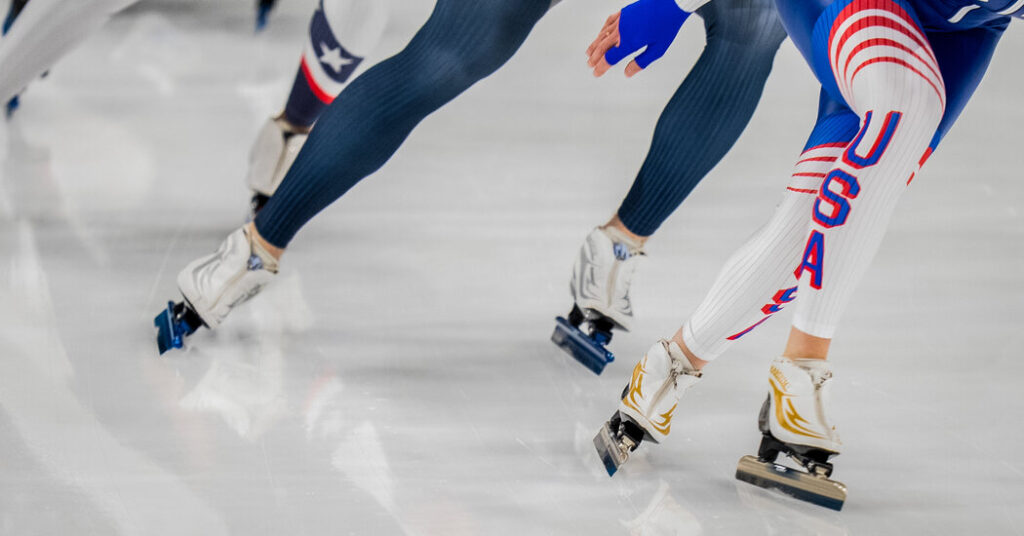
Despite this, I am a sucker for the Olympics. Seeing our athletes decked out in the red, white and blue during the opening ceremony, or witnessing their tears on the podium as the anthem plays, stirs even my heart, almost despite myself. I experience something approaching national pride when my fellow citizens accomplish feats far beyond my ability.
With the Winter Games kicking off, this year feels different. The shame I feel for how our country is treating its citizens — and those who long to be its citizens — is hard to ignore. I have seen too many tears of a different kind. We’ve seen families pulled apart by immigration enforcement officers. We have become the country that issues propaganda against our own citizens, asking us not to believe the evidence of our eyes. When we were once a beacon of freedom, so much so that during the Cold War, scientists, athletes and artists fled the Communist bloc to start a new life here.
Now, some of our leaders portray immigrants as violent criminals or cultural oddities with whom the rest of us have little in common. Never mind that America is a story of a multitude of peoples in the process of becoming better, guided by a set of ideals that we rarely truly actualize. The idea that certain people aren’t worthy of participating in that story because their country has tainted them is both racist and un-American.
Although the actions of those in power have filled me with sadness, I love the people of this country. And so when I think about supporting our Olympians, I view it as supporting the people of the United States. Team U.S.A. is not Team White House.
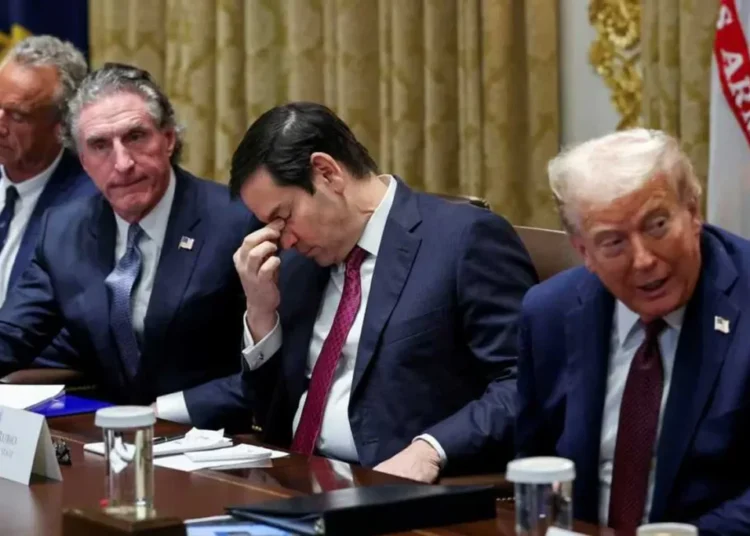
Donald Trump has insulted our Canadian friends to the north and threatened to take Greenland. After Canada’s last victory over the United States in hockey a year ago, Prime Minister Justin Trudeau said, “You can’t take our country — and you can’t take our game.” I understood the sentiment.
We are not the first Americans who have had to wrestle with complex feelings about cheering for our nation in troubled times. In 1936, Nazi Germany hosted the Summer Olympics. The towering figure of those games was the African American track and field athlete Jesse Owens. His own life epitomized the tension and potential of the Olympics. He proved that you can represent your country well even when you stand in stark opposition to its laws and the way it treats its people.
Born in my home state of Alabama, the child of sharecroppers, he won four individual gold medals — a feat that would not be equaled for nearly half a century. His wins served as a repudiation of Nazi myths about “Aryan” supremacy and revealed the power of sport to challenge ideologies that dehumanize, corrupt, and destroy.
And then that symbol of American resistance to Nazism returned home to a segregated United States.
Even though he’d become something of an American symbol, cheering for him, especially if you were African American, did not mean you were cheering all of America, including its legalized second-class citizenship for Black people or the lynchings that still plagued the country.
Owen’s gold medals, instead, challenged the American racist ideology of the time in much the same way he challenged Germany. Jesse didn’t represent what America was; he represented what it might yet be: a nation that values all its citizens and residents.
That is what sports can do. They have the ability to convey a certain dignity on a person, providing a chance at self-definition otherwise closed. Society might put limits on achievement, but let our athletes run or ski or skate, and their innate humanity always shines through.
Athletes struggle against fatigue, doubt and obstacles — human and societal — to accomplish something that might surprise even them. In this way, sports are a picture of human life: pain, failure, and beauty colliding, with meaning being found in victory or defeat. African Americans who cheered Owens understood that, seeing him as an assertion of Black dignity.
For the next few weeks, I will be cheering for American athletes, but not because I approve of everything happening in this country. I will listen to them tell their story to the world through sport.
I do not expect all our athletes to make political statements, and I do not expect them to share all my political views. Some may want to avoid adding to the already fraught cultural moment; others may feel ill equipped. I hope some will use the opportunity that the Olympics gives them to do something. I do not expect them to outline a fully formed legislative agenda, but calling for humane treatment of all within our borders could be a point of consensus.
Regardless of public comments, every athlete can represent the best of America through the way they treat their fellow international competitors. The friendship forged between Jesse Owens and the German long jumper Luz Long at the 1936 Games sent its own message to the world.
While our government shifts between isolationism and imperialism, our Olympians can remind the rest of the world that some Americans still believe it’s possible to be good neighbors. I do hope we win a lot, but I also hope that other countries have their moment, too. That is what sport is all about.
Esau McCaulley is a contributing Opinion writer and the author of the children’s book “God’s Colorful Kingdom Storybook Bible.” He is an associate professor of New Testament and public theology at Wheaton College and the host of the “The Esau McCaulley Podcast.”
The Times is committed to publishing a diversity of letters to the editor. We’d like to hear what you think about this or any of our articles. Here are some tips. And here’s our email: [email protected].
Follow the New York Times Opinion section on Facebook, Instagram, TikTok, Bluesky, WhatsApp and Threads.
The post At These Olympics, Which America Are We Cheering For? appeared first on New York Times.