Hovering among the song lyrics, sports scores and movie quotes that clutter up my brain, there are a few key texts that I have committed to memory. The Gettysburg Address, for one. Psalm 23. The preamble to the Constitution, plus the first few sentences of the Declaration of Independence (after “the consent of the governed,” things get hazy).
And there’s another manifesto rattling around up there, one that I learned some 21 years ago, when I began working at The Washington Post. It is less known to the world, but no less vital to my worldview.
It is called “The Seven Principles for the Conduct of a Newspaper.”
These principles, about 150 words in total, were the work of Eugene Meyer, the former Federal Reserve chairman who bought The Post at auction in 1933 and who became the first of four generations of his family to run the paper. On March 5, 1935, The Post’s new owner issued his seven principles, which addressed the newspaper’s mission, its style, its leadership, its independence — in all, its spirit.
Now, The Washington Post is in crisis: Its newsroom is being decimated and its coverage ambitions curtailed, and all this after its proud, tireless journalists were reduced to the indignity of publicly pleading for their jobs, only to be ignored by an unfathomably wealthy owner. I grieve for The Post, and part of my grief is personal. I worked in its newsroom for many years and forged deep friendships there, and, as a longtime resident of the Washington area, I remain a devoted Washington Post reader.
But I also grieve for the ideals and beliefs and priorities that have sustained the institution, and that are embodied in Meyer’s principles. They make up the animating ethic of The Washington Post and, to me, of the practice of journalism. And they are at risk.
When I began working at The Post in the summer of 2005, the Meyer principles were on display in the first-floor lobby of the old Washington Post building on 15th Street in downtown D.C. I saw them every day, so soon I knew them by heart. It was my first job at a newspaper, and I wasn’t sure I could hack it, not with legendary reporters in every section and Ben Freaking Bradlee still holding court in the cafeteria. So, during my earliest weeks there, I fixated on the seven principles, as if absorbing them would ensure that I belonged.
After Donald Graham, the beloved Post chairman (and Meyer’s grandson), sold The Post to Jeff Bezos in 2013 and the newsroom moved to a sleek location on K Street, the Meyer principles followed us there, a reminder of The Post’s culture and traditions. “The values of The Post do not need changing,” Bezos said in a reassuring letter to the Post staff on the day of the announcement — but much else did. He made desperately needed investments in the paper, upgraded its website, showed respect for the newsroom’s independence and even encouraged Post reporters to cover Amazon, and Bezos himself, however they liked. He also seemed to take great pride in his acquisition. In a 2016 speech to the staff, he called The Post “swashbuckling” and praised its “swagger” and “badassness.”
“Important institutions like The Post have an essence, they have a heart, they have a core,” Bezos said, and it would be “crazy” to change it. “That’s part of what this place is. It’s part of what makes it so special.”
During my 17 years at the paper, as I moved from news editor to section editor to book critic, the Meyer principles remained a constant guide. I remember the display in the new building, elegant but a bit hard to read (the new text was made of thick brass linotype letters, and I had to squint to make it out). Never lacking in earnestness, I made a pilgrimage to the spot every week or so, just to make sure The Post’s principles stayed in my memory and on my mind.
When I left for The Times in 2022, The Post was going through some turmoil, both cultural and financial, but I was confident that its core would remain.
Now, that confidence is shaken, if not shattered. Bezos and his publisher, Will Lewis, have cut more than a third of the newsroom, eviscerating its sports, international, local, arts and literary coverage. Even the Amazon beat reporter has been laid off. Eugene Meyer’s seven principles still hang in the newsroom, I am told, but now they are more reproach than reminder.
I hope that The Post’s current leaders stop by the display sometime, squint their eyes and take another look.
Journalism, I must admit, is a romanticized and self-congratulatory profession. My colleagues and I love to go on about our importance to the survival of the Republic, about our “craft” (that’s what we call reporting, writing and editing) and especially about our past. There is always some golden age of journalism that we look back upon with longing, that we hope to recover and that the best among us so obviously represent.
I realize that pining for the Meyer principles may seem like more wistfulness for bygone times. But what I admire about the list is precisely how straightforward it is, how shorn of embellishment and self-aggrandizement, and, despite its nine decades and counting, how relevant it remains to the goals of modern journalism.
Principle No. 1: The first mission of a newspaper is to tell the truth as nearly as the truth may be ascertained.
Principle No. 2: The newspaper shall tell ALL the truth so far as it can learn it, concerning the important affairs of America and the world.
No “my truth” squishiness here. There is a real truth and we must tell it; that is the mission of the journalist. But with that zeal comes an inherent humility, captured in the last eight words of the first Meyer principle. Truth is elusive. We may circle around it and get nearer each time, but we may never quite grasp it in full. The findings of journalism are necessarily incomplete, a fact that should inspire our efforts and limit our certainty. There is always more to the story.
That all-caps “ALL” of the second principle combines ambition with fairness: It does not simply mean that we must report on all sorts of subjects; it means we must report each story from every relevant vantage point. Then, after more of that stubborn modesty (“so far as it can learn it”), there is a call to exercise judgment on what is newsworthy (“important affairs”), only to end on ambition once again, with the imperative to cover not just our country but the globe. So much of this principle is being undercut in the decision to scale back The Post’s reporting of both “America and the world.”
Principle No. 3: As a disseminator of the news, the paper shall observe the decencies that are obligatory upon a private gentleman.
Principle No. 4: What it prints shall be fit reading for the young as well as for the old.
For me, the third principle does not just mean avoiding foul language or indecent subjects; instead, I linger on the word “private.” In my writing, do I express myself with the decency and consideration that I would expect in private, face-to-face exchanges? Or do I let the power and distance of the pen — or the microphone or the camera — loosen my standards? When I read the fourth principle, I think of my own children. I did not have kids when I joined The Post; now I have three. Will I make them proud with what I write and how I work? Will my journalism be relevant to their challenges, their lives? That relevance can make something “fit reading,” too.
No. 5: The newspaper’s duty is to its readers and to the public at large, and not to the private interests of its owners.
No. 6: In the pursuit of truth, the newspaper shall be prepared to make sacrifices of its material fortunes, if such course be necessary for the public good.
I was there in the Post building on Aug. 5, 2013, when Don Graham and Katharine Weymouth, the publisher and Don’s niece, told us they were selling the paper to Bezos. Some employees were in tears; most of us seemed in shock. But I took heart in Bezos’ letter to the staff that day. “The paper’s duty will remain to its readers and not to the private interests of its owners,” he said.
Though he did not explicitly invoke the Meyer principles, this was a near-verbatim reference to No. 5. Bezos had done his homework, it seemed, and he understood what The Post was about. The new owner also said he’d have “the courage to say follow the story, no matter the cost.” This seemed like an affirmation of the sixth principle, to pursue the truth even if the cost in our material fortune was steep.
I will not pretend to have a simple solution — or any solution, for that matter — to the business challenges afflicting America’s news media, nor do I believe that just because Bezos is rich, he is obliged to subsidize The Post in perpetuity. Yet, despite management’s preoccupation with The Post’s mounting losses, it is hard for me to imagine that economic concerns are the sole reason to eliminate more than a third of the Post newsroom, on top of previous cuts in recent years. I went to see the “Melania” documentary last weekend, for which Amazon reportedly spent $75 million overall, which includes a hefty promotional budget. Based on that viewing, I can only conclude that turning a profit on a quality product is not always Bezos’ primary motivation.
In that letter to The Post’s staff in 2013, Bezos cited “government, local leaders, restaurant openings, scout troops, businesses, charities, governors, sports” as important areas of coverage for the paper — many of the very areas that are now being shuttered or drastically scaled back.
Times change, of course, as do the preferences of news consumers. But in the terms of Principle No. 6, either the paper is no longer willing to make sacrifices in its material fortunes, or the owner’s interpretation of the public good has drastically changed.
I still have the front page of The Washington Post from Aug. 6, 2013, with the news stripped atop all six columns: “Grahams to Sell The Post.” The article about Bezos was headlined “Chief Executive Is Noted for Patience.”
Bezos’ patience appears to have run out.
Principle No. 7: The newspaper shall not be the ally of any special interest, but shall be fair and free and wholesome in its outlook on public affairs and public men.
Just days before the 2024 presidential election, Bezos chose to cancel a planned endorsement of Kamala Harris, the Democratic nominee. The decision, according to Will Lewis, the Post publisher, was “a statement in support of our readers’ ability to make up their own minds.”
Yes, I suppose one could interpret the move as an affirmation of this final Meyer principle, an effort to keep the paper independent. But that conclusion becomes less tenable given Bezos’ support for President Trump, including a $1 million donation to his inauguration fund, Amazon’s presence among the donors to the White House ballroom project and Bezos’ own prominent perch at Trump’s swearing-in at the Capitol Rotunda on Jan. 20, 2025. Whether out of conviction or convenience, Bezos’ favorable outlook on this one public man is quite clear.
A former Post colleague, Ashley Parker, wrote in The Atlantic this week about “The Murder of the Washington Post.” Here, I’m attempting to write an elegy for the departed. I fear that absent the robust Post coverage I often turn to first — books, local sports, foreign dispatches, a varied and vibrant editorial page — The Post will become unrecognizable to me. It is a strange feeling to miss a place that is ceasing to exist, at least as I knew it.
I hope that The Post will endure, even thrive, as a business, but I worry that it may do so at the cost of its essence, its heart, its core. As Bezos himself said a decade ago, that would be crazy. But it could also be tempting. If we’ve learned anything during America’s deepening political strife, it is that institutional principles — those much-lamented “norms” — matter most when they are challenged. It’s easy to stick by your values when times are good. Guardrails are particularly valuable when something is slamming against them.
In her 1997 memoir, “Personal History,” Katharine Graham, the publisher who led The Post through the Pentagon Papers and Watergate, wrote that her father’s seven principles “were the heart and soul of his convictions, but how to translate them into action was the challenge.” That’s the thing about principles. How do we take them down from the wall and put them in the business model, into the paper and into the hands of readers — and make sure that we do so every day?
I realize that sympathy from someone who already left the paper may be dismissed as compassion from the cheap seats, so let me conclude instead with the most practical advice that I received when I joined The Post in 2005. It came courtesy of Steve Pearlstein, a brilliant and blunt business columnist who I edited early in my time there.
If I had a long career at The Post, Pearlstein said to me, I would have all sorts of bosses and editors at different times. And sure, those people would supervise my work, complete my performance reviews and approve my vacation schedules. But I really wouldn’t work for any of them. You work for The Washington Post, he told me. Your responsibilities and duties are to the institution, and to the principles the institution must uphold.
At The Washington Post, those principles have always been right there on the wall.
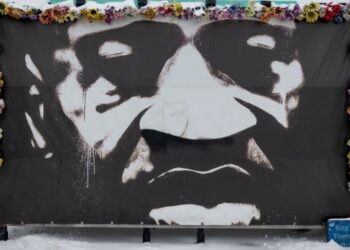
Source photograph by seb_ra/Getty Images.
The Times is committed to publishing a diversity of letters to the editor. We’d like to hear what you think about this or any of our articles. Here are some tips. And here’s our email: [email protected].
Follow the New York Times Opinion section on Facebook, Instagram, TikTok, Bluesky, WhatsApp and Threads.
The post An Elegy for My Washington Post appeared first on New York Times.