After she dropped to her knees outside her home in Midlothian, Virginia, suffocating, after she was lifted into the ambulance and told herself, “I can’t die this way,” and after emergency workers at the hospital cut the clothes off her to assess her breathing, Miasha Gilliam-El, a 37-year-old nurse and mother of six, blacked out.
What happened next has happened to thousands who’ve returned from the precipice of death with stories of strange visions and journeys that challenge what we know of science. Last year, a team of researchers from Belgium, the United States and Denmark launched an ambitious effort to explain these experiences on a neurobiological level — work that is now being contested by a pair of researchers in Virginia.
At stake are questions almost as old as humanity, concerning the possibility of an afterlife and the nature of scientific evidence — questions likely to take center stage at a conference of brain experts in Porto, Portugal, in April.
“The next thing I knew, I was out of my body, above myself, looking at them work on me, doing chest compressions,” Gilliam-El said, recalling Feb. 27, 2012, the day she suffered a rare condition called peripartum cardiomyopathy. For reasons that aren’t fully understood, between the last month of pregnancy and five months after childbirth, a woman’s cardiac muscle weakens and enlarges, creating a risk of heart failure.
Gilliam-El, who had given birth just three days earlier, recalled watching a doctor try to snake a tube down her throat to open an airway. She remembered staring at the machine showing the electrical activity in her heart and seeing herself flatline. Her breathing stopped.
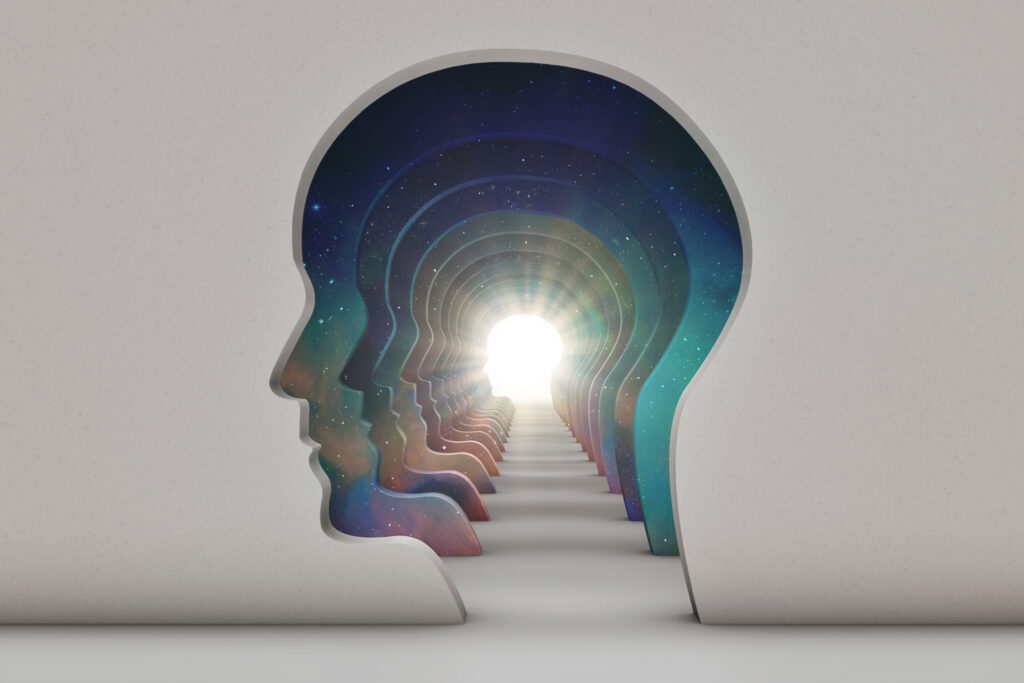
“And then it was kind of like I was transitioned to another place. I was kind of sucked back into a tunnel,” she said. “It is so peaceful in this tunnel. And I’m just walking and I’m holding someone’s hand. And all I’m hearing is the scripture, ‘Yea, though I walk through the valley of the shadow of death …’”
While neuroscientists have discovered more and more about the inner workings of the brain in recent decades, a deep mystery still surrounds near-death experiences like Gilliam-El’s.
Writing last year in the journal Nature Reviews Neurology, a research team led by Charlotte Martial, a neuroscientist at the University of Liège in Belgium, synthesized some 300 scientific papers focusing on commonalities across the following experiences: viewing one’s body from the outside, journeying through a tunnel toward a brilliant light, and experiencing a deep sense of peace. The authors linked these experiences to specific changes in the brain, creating a pioneering model called NEPTUNE (neurophysiological evolutionary psychological theory understanding near-death experience).
Bruce Greyson and Marieta Pehlivanova, researchers at the University of Virginia School of Medicine, responded with a sweeping critique of the NEPTUNE model in the journal Psychology of Consciousness: Theory, Research, and Practice.
While calling the model “an admirable strategy,” they wrote that aspects of such experiences cannot be explained solely by brain physiology, and they criticized the NEPTUNE authors for omitting evidence that did not support their ideas.
Although this debate is taking place in the rarefied atmosphere of scientific journals and conferences, it is almost certainly one that has crossed the minds of most people.
“This is not the digestive function of some lower life form we’re talking about here. These are implications that reach all of humanity,” said Jeffrey Long, a radiation oncologist and co-author of the 2011 book “Evidence of the Afterlife: The Science of Near-Death Experiences.”
“Do we have some evidence?” he asked. “And how strong is that evidence that we have life after death, that our consciousness survives bodily death?” Long — who was not involved in either the NEPTUNE paper or the critique — said he has studied more than 4,000 near-death experiences.
The NEPTUNE researchers cited several studies showing that about 10 to 23 percent of near-death experiences occur after a heart attack, 15 percent after a prolonged stay in intensive care and 3 percent after a traumatic brain injury. Others occur after electrocution, near drowning and complications during childbirth.
“For most of them, it’s a life-transforming experience,” Martial said. “Typically, they are less afraid to die [afterward].” They tend to develop greater interest in spirituality, she said, and can become more empathetic to others.
To create the NEPTUNE model, scientists examined changes in gas concentrations in blood vessels in the brain: the decreased oxygen and increased carbon dioxide that occur just before and during a cardiac arrest.
They cited studies suggesting that sensations resembling out-of-body experiences may be generated in the temporoparietal junction, a high-level hub for processing sensory information and helping distinguish the self from others. Studies indicate that applying electric stimulation to this area, located behind and just above the ear, could trigger an out-of-body experience, they wrote.
Folded into their analysis were observations about brain chemistry, including the nerve cells and chemical messengers that regulate mood, sleep and learning. Martial said the model is intended as a living document that can be revised as scientists learn more.
But Greyson and Pehlivanova disputed key aspects of the model. They wrote that illusions triggered by electric stimulation are “nothing like the visions of deceased persons reported in [near-death experiences].” For example, one study reported inducing an illusion in which a patient felt the presence of a person behind them whom they could not see or hear.
“This is not remotely comparable to the visions reported in many [near-death experiences] of identified deceased persons who are seen, heard, smelled, and touched,” wrote Greyson and Pehlivanova, who are, respectively, a professor emeritus of psychiatry and neurobehavioral sciences and a research assistant professor of psychiatry and neurobehavioral sciences.
The two acknowledged that near-death experiences “are typically triggered by physiological events” but stressed that such events do not account fully for the experiences people have described. They faulted the NEPTUNE authors for dismissing evidence from patients’ near-death accounts and from hospital staff who have supported aspects of those accounts — for example, the number of people who were in the room during resuscitation.
Scientists disagree on whether the stories patients tell constitute reliable scientific data.
Near-death experiences have been described since antiquity, said Greyson. Researchers have been collecting and discussing accounts since at least 1892, when Swiss mountaineer and geologist Albert Heim discussed stories he’d collected since his own brush with death while climbing in the Alps.
By their nature, these reports can be difficult to define and even harder to analyze with scientific rigor. In a 1983 paper, Greyson described a 16-item scale he developed for measuring accounts of near-death experiences and standardizing research into them.
But the effort to impose rigor on the study of near-death experiences forces researchers into an uncomfortable zone that straddles the line between the scientific and the spiritual.
“These stories are seductively powerful narratives that give hope to our deepest yearnings for consciousness beyond our death,” Kevin Nelson, an emeritus professor of neurology and retired chief of medical staff affairs at University of Kentucky HealthCare, wrote in an email. “I too have such hope, but with wax in my ears and science lashing me to the mast, I will not succumb to the siren’s song.” (Nelson was one of the authors of the NEPTUNE paper.)
Greyson said the NEPTUNE researchers may dismiss the testimony of patients who have come close to dying “as not evidential, but the fact is that every scientific discovery begins with subjective observation that may eventually be corroborated by controlled experiment.”
In addition to testing aspects of the NEPTUNE model, Greyson and Pehlivanova wrote that “it will also be important to remain open to other potential causes, whether currently unknown or not yet fully understood.”
By necessity, most previous studies have involved researchers going back to patients after their near-death experiences to gather their accounts and medical records. But such retrospective studies are open to biases in how people remember such events after time has passed and how they have shared their accounts with others.
However, Martial, the NEPTUNE researcher, said that she and three of her colleagues at the University Hospital of Liège are in the midst of a prospective study that involves tracking patients from the moment they are taken to the hospital’s resuscitation room. It will involve video footage recorded at the hospital as well as electroencephalograms that measure electrical activity in the brain.
“When we die, this is a process — not just an event,” Martial said. “For example, during a cardiac arrest, we have a decrease of oxygen, which leads to a decrease of brain activity. But at some point, actually, we see an increase of electrical brain activity, and then we can observe a kind of flatline.”
Gilliam-El, the nurse, remembered that her near-death experience ended when a powerful voice told her “Not yet,” and she felt herself return to her body. Everything looked blurry in the bright hospital room.
She feared that if she told anyone what had happened, they wouldn’t believe her.
The post When patients see the line between life and death, should we believe them? appeared first on Washington Post.