Luge looks crazy. It’s the fastest event at the Winter Olympics, with competitors hitting 90 mph on their backs atop tiny sleds with no brakes going down ice tracks. A Georgian luger died after crashing on a training run at the 2010 Vancouver Games.
Skeleton looks even crazier — like luge, but these athletes fly facedown and headfirst.
Yet luge and skeleton are among the Winter Games events with the lowest injury rates.
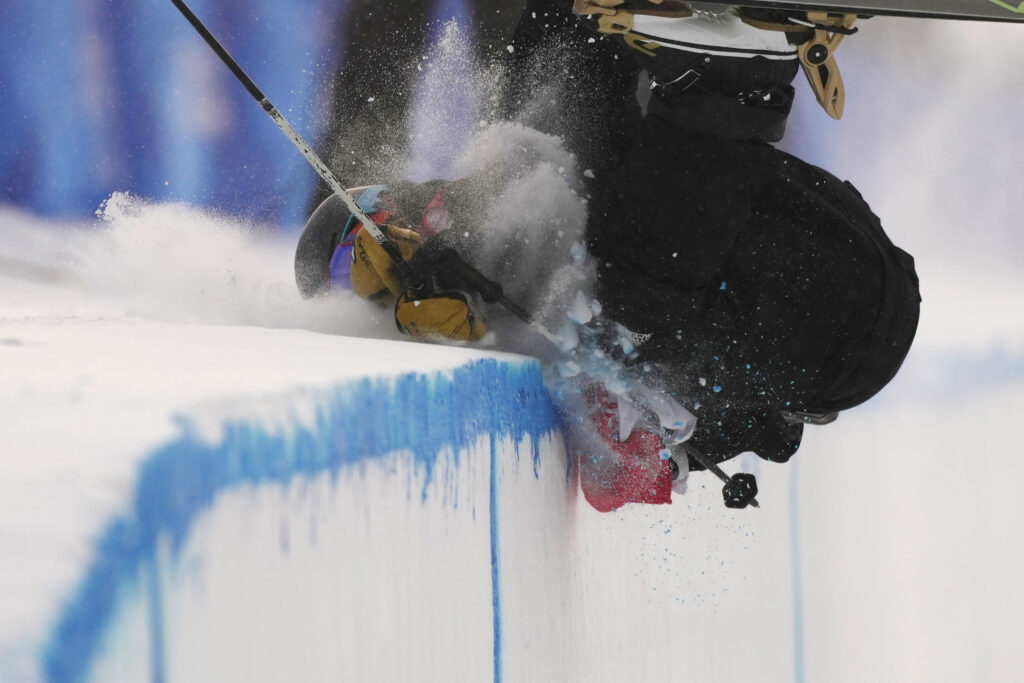
The greatest percentages of injuries come in snow events with jumps or slopes that require athletes to perform aerial spins and flips, according to a Washington Post analysis of International Olympic Committee studies conducted after each of the past four Winter Games. Researchers defined injuries as anything requiring medical attention that interfered with normal function, from bruises to bone fractures. Major injuries, which forced competitors to sit out at least seven days, were rare but tended to be clustered in the same events with the highest injury rates.
The No. 1 most injury-prone event is ski big air, a competition where skiers hit a ramp and perform high-flying acrobatics, with 28.1 percent of athletes getting hurt. It debuted at the 2022 Olympics.
Just behind that is ski halfpipe, another freestyle event in a U-shaped channel, which first appeared at the 2014 Sochi Games. It posts a 27.6 percent injury rate.
Overall, an average of 11 percent of athletes suffered some kind of injury during each of the past four Winter Olympics, according to the IOC studies published in the British Journal of Sports Medicine. The newer sports tended to have more injuries.
Five of the six events with injury rates above 20 percent, the studies showed, were freestyle snow competitions, in which athletes are judged on their ability to perform tricks.
They do spins and flips with names like corks and pretzels.
In big air, one of the hardest tricks to pull off is the switch triple cork 1980 mute grab — where a skier launches off a jump backward and does three flips and 5½ rotations in the air.
Any airborne event “offers larger, more acute mechanisms for getting hurt,” explained Eric Post, manager of sports medicine research for the U.S. Olympic and Paralympic Committee.
“It’s in these high-risk environments that you have those major injuries,” he said.
For some, it can be a constant hazard of the Olympics — and the 2026 Winter Games start this weekend in Italy.
British skier James Woods, a former world champion, was forced to pull out the Beijing Games after suffering a back injury during his big air competition. He also lost out on competing in ski slopestyle, in which competitors look like skateboarders doing tricks jumping off obstacles.
“I’m again full of pain killers and strapped up in bed,” he wrote on Instagram in 2022.
Woods said “again” because at the 2018 PyeongChang Games he suffered a neck injury after a ski slopestyle event. And he’d skied through a serious hip injury to compete at the 2014 Sochi Games.
Despite luge appearing more dangerous, only 6.5 percent of its competitors got hurt in the Winter Olympics stretching back to the 2010 Vancouver Games. Skeleton participants had a 10.8 percent injury rate.
The injury rate at the Winter Olympics has remained relatively stable over the years, and it’s on par with what’s seen at different winter sports’ world championships.
Summer Olympic athletes tend to face slightly lower injury rates, studies show.
The risk isn’t limited to competitions with medals on the line.
Injury rates at the Winter Games are about evenly divided between practice and competitions. But the worst injuries were most likely to come during competition. At the Beijing Games, severe injuries were twice as likely during competitions than practice, studies show.
Torbjorn Soligard, lead author on the injury studies, said the IOC began to closely study injury and illness rates at the Olympic Games in 2008.
“These epidemiological studies are the first step in reducing future risk,” the IOC scientific manager said in an email.
Soligard pointed to a long-term research program his group is doing with the International Ski and Snowboard Federation (FIS) that is looking at how to build safer jumps and course designs by analyzing different variables, such as air drag based on postures and changes in snow friction under assorted conditions.
The project aims to give course designers digital modeling tools so that they can better predict potential landing impacts before the jumps are built.
Many of the older, more traditional events at the Winter Games cause fewer injuries.
Cross-country skiing, biathlon and Nordic combined skiing posted the lowest rates, ranging from 2.3 to 5 percent.
Curling — the sport with the giant stones and brooms — reported a 6.1 percent rate.
Even ski jumping only posted a 5.4 percent injury rate, despite athletes racing down ramps at 60 mph and flying 300 feet in the air.
The biggest difference, Post said, is that ski jumping does not involve acrobatic tricks.
The post These athletes face the greatest risk at the Winter Olympics appeared first on Washington Post.