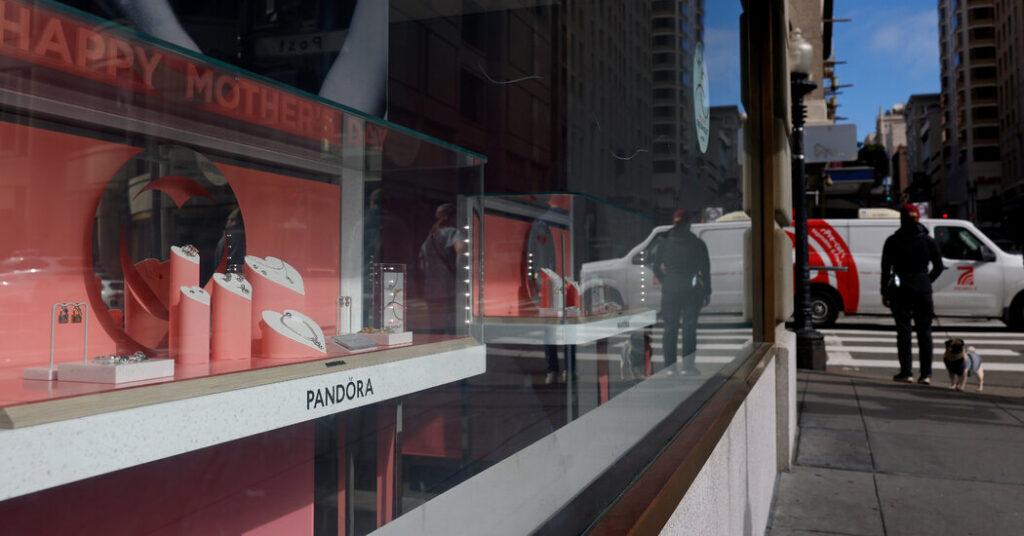
Pandora, the world’s largest jewelry brand by volume, buys more than 300 tons of silver every year. But in a sign of how extraordinarily pricey it has become, the jeweler said it plans to hold down costs by making more of its charm bracelets with platinum, a precious metal not exactly known for being cheap.
The price of silver has been on a roller-coaster ride in recent months, setting a series of record highs before veering up and down sharply over the past few frenzied trading sessions. At $80 per ounce, silver remains more than twice as expensive as it was a year ago. Gold prices have also jumped, but less steeply than silver, driven in part by investors seeking safe places to park their money during geopolitical turmoil.
For Pandora, which prides itself on offering “affordable luxury,” the rapid run-up in the price of silver, its primary material, has bedeviled its business model.
That’s why, on Wednesday, Pandora said it would introduce a line of platinum-plated products to “reduce its reliance on sterling silver while continuing to offer consumers high‑quality, desirable jewelry at accessible price points.” A year from now, the jeweler plans to have shifted at least half of its silver products to platinum plating on a metal alloy, allowing it to “mitigate a notable part” of the rise in raw material costs, the company said in a filing.
Platinum prices have also climbed recently, but to a lesser extent than silver. So far this year, platinum has risen about 3 percent — to about $2,100 an ounce — a fraction of the double-digit percentage gain in silver over the same period.
“It is very risky for any business to be dependent — so highly — on one commodity price,” Berta de Pablos‑Barbier, the chief executive of Pandora, said in an interview. The moves in silver have had too much influence on the company’s earnings, she added.
Ms. de Pablos‑Barbier took on the role at the Copenhagen-based jeweler at the start of the year, charged with persuading shareholders that the company can overcome a series of setbacks, the latest being the rise in precious metal prices.
In its earnings release, the company said sales had been hampered by a “generally soft consumer backdrop,” with a pronounced slowdown in the United States toward the end of last year. Revenue last year came in at $5.1 billion, up 2 percent on a like-for-like basis, and profit was unchanged versus the year before. Sales growth this year was forecast to be roughly flat, the company said.
President Trump’s tariffs have hit the company hard, since it makes its jewelry in Thailand and sells a substantial amount in the United States. A successful rebranding and embrace of lab-grown diamonds propelled Pandora’s shares to a record high in early 2025, before the tariff announcement in the spring sent them spiraling downward.
Since Mr. Trump first announced his sweeping global tariffs, Pandora’s stock has lost more than half its value. The Trump administration has imposed tariffs of about 20 percent on goods from Thailand and Vietnam, where Pandora plans to open a production site.
In recent months, Pandora’s share price has continued to slide, effectively moving inversely to the surge in price of silver.
For 2026, Pandora said it has hedged the vast majority of its exposure to silver, softening the blow somewhat by locking in a price well below the current rate. But when those hedges expire, the company faces a large financial hit if metal prices remain elevated.
But by then, the jeweler expects to have shifted many of its products from silver to platinum plating, Ms. de Pablos‑Barbier said. This would allow the company to maintain its “accessible” brand, she added, because the platinum plates a metal alloy developed by Pandora, which will do most of the work to keep costs down.
“Consumers will actually get a superior product with a high-quality precious metal that is better for their everyday wear and at accessible prices,” she said, noting that platinum won’t corrode or tarnish, even if worn to the beach.
Eshe Nelson is a Times reporter based in London, covering economics and business news.
The post Silver Is So Pricey That the World’s Largest Jeweler Is Switching to Platinum appeared first on New York Times.