
Not all cancers are written in your genes.
A sweeping new report from the World Health Organization found that up to four in 10 cancer cases around the globe could be prevented with lifestyle changes.
In the large international study, researchers identified 30 modifiable risk factors that fuel the disease — including, for the first time, nine cancer-causing infections.
“This is the first global analysis to show how much cancer risk comes from causes we can prevent,” Dr. André Ilbawi, the WHO’s team lead for cancer control and the study’s author, said in a press release.
“By examining patterns across countries and population groups, we can provide governments and individuals with more specific information to help prevent many cancer cases before they start,” he continued.
That’s no small thing. By 2026, more than 2 million Americans are expected to be diagnosed with cancer, and over 600,000 are projected to die from it, according to the American Cancer Society.
Zooming out globally, the numbers are even more staggering.
In the study, Ilbawi and his colleagues analyzed data from 185 countries and found that there were 18.7 million new cancer diagnoses worldwide in 2022.
About 7.1 million of those cases were linked to risk factors people can actually change, unlike DNA damage from aging, inherited genes and other non-modifiable risks.
Broken down by sex, preventable causes were tied to 2.7 million of 9.2 million cancers in women and 4.3 million of 9.6 million cancers in men.
The researchers then pinpointed the biggest drivers behind these avoidable cases.
What are the top modifiable factors?
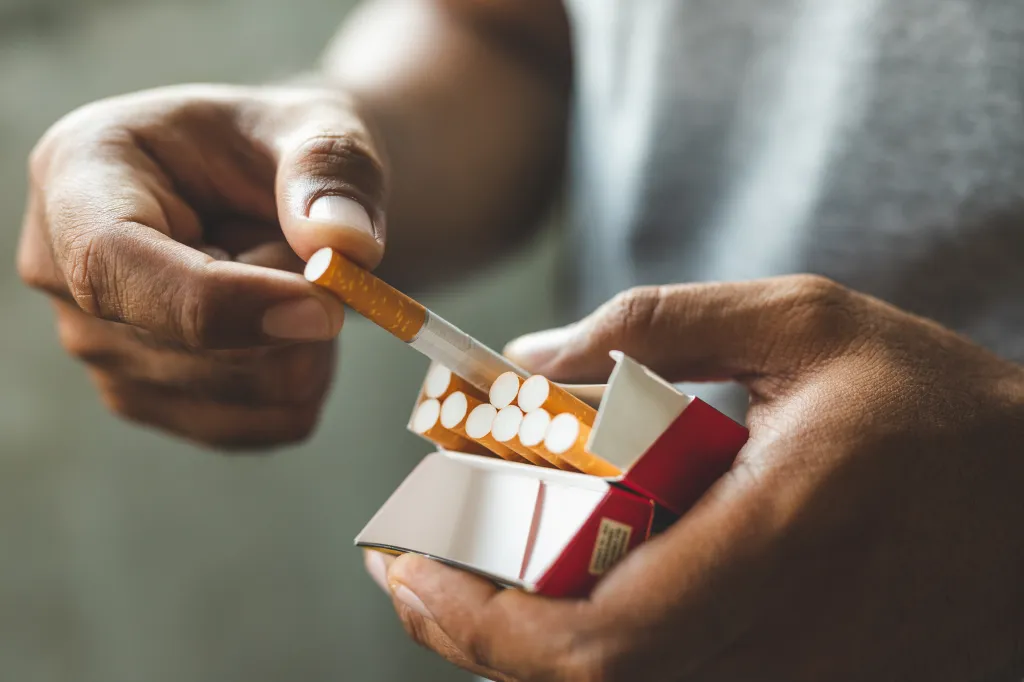
Smoking tobacco reigned supreme as the top modifiable risk factor, fueling 15% of new cases worldwide.
Cancer-causing infections came in second, accounting for 10% of new diagnoses. That includes the HPV, a sexually transmitted infection that can be prevented through vaccinationand safer sex.
Alcohol consumption rounded out the top three, responsible for 3% of new cases.
The diseases most often tied to these preventable risks factors were lung, stomach and cervical cancers — together making up nearly half of all avoidable cases in 2022.
Lung cancer was largely linked to smoking and air pollution. Stomach cancer was often traced back to H. pylori, a bacterial infection. And cervical cancer was overwhelmingly caused by HPV.

The full list of 30 factors include:
- Smoking tobacco
- HPV
- Drinking alcohol
- High BMI
- Physical inactivity
- Smokeless tobacco (like chewing tobacco)
- Poor breastfeeding practices,
- Air pollution
- Too much UV exposure
- Hepatitis B
- Hepatitis C
- Epstein-Barr virus
- Helicobacter pylori (H pylori)
- Human herpesvirus type 8
- Schistosoma haematobium
- Human T-cell lymphotropic virus
- Opisthorchis viverrini and Clonorchis sinensis
- Asbestos
- Arsenic
- Benzene
- Beryllium
- Cadmium
- Chromium
- Diesel engine exhaust
- Formaldehyde
- Nickel
- Polycyclic aromatic hydrocarbons
- Silica
- Sulphuric acid
- Trichloroethylene
Who’s most at risk?
The study found that 45% of new cancer cases in men were preventable, compared with 30% in women.
Among men, smoking alone accounted for a jaw-dropping 23% of new cases, followed by infections and alcohol. For women, infections led the pack at 11%, followed by smoking and high BMI.
Where you live also matters. Preventable cancers among women ranged from 24% in North Africa and West Asia to 38% in sub-Saharan Africa. For men, the highest rates were seen in East Asia, while Latin America and the Caribbean had the lowest.
Researchers say these gaps reflect differences in lifestyle, pollution, workplace exposure, access to vaccines and screenings, and how strong the national health systems are.
But despite the sobering stats, Ilbawi said the findings are actually good news. Because these cancers are preventable, he explained, they’re also fixable, like through policies that curb smoking, reduce alcohol use, clean up air pollution and expand HPV vaccination.
“The percentage of preventable cancers can change over time,” Ilbawi told the BBC. “Our goal is to get it as close to zero as possible.”
The post 40% of cancers — and nearly half of deaths — are caused by 30 controllable factors appeared first on New York Post.