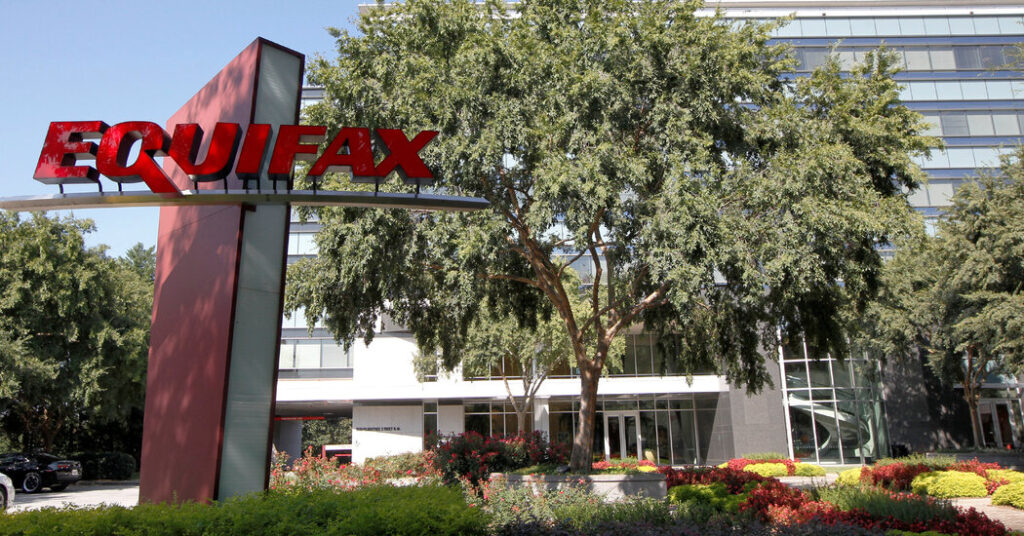
Three Democratic senators have accused the credit-rating company Equifax of price gouging states for a service many will use to comply with the new work requirements for Medicaid and food assistance passed by Republicans in Congress last year.
In a letter to the company’s chief executive, Senators Elizabeth Warren of Massachusetts, Ron Wyden of Oregon and Bernie Sanders of Vermont asked the company to answer questions about its business practices and its anticipated profits from state contracts to enforce the new law.
“Equifax is laying the groundwork to cash in,” the senators wrote. The letter also described Equifax as having a “long history of anti-competitive behavior.”
Daniel Jenkins, an Equifax spokesman, said the company would “respond through the appropriate channels.”
“Equifax operates in a highly competitive market,” he said.
Many states rely on an Equifax product called the Work Number to instantly verify a Medicaid applicants’ wages and work hours. The database covers at least 99 million workers, whose information is often obtained through exclusive contracts with payroll contractors and employers.
Equifax has made a practice of steeply and frequently increasing the prices it charges for the Work Number, according to a New York Times investigation that the Senate letter repeatedly cited.
The company’s data will become even more essential to states when new rules requiring Medicaid enrollees to work go into effect on Jan. 1, 2027. States will need to check eligibility more often and will need a way to document how much people are working and earning each month.
As states negotiate new contracts, the senators are asking the company to share information about its contracts with states and how much it expects to benefit from the legislative changes. They also requested information about its lobbying expenses with both state and federal governments.
Even before the new requirements take effect next year, the cost of using the Work Number has ballooned in states. In North Carolina, the tab nearly doubled to $22.5 million in 2025 from $11.6 million in 2022. South Dakota’s costs rose nearly 400 percent over the same time period for a set number of income checks.
Even with those steep price increases, states have been reluctant to drop Equifax because the company offers an unmatched service: automated access to real-time information of about 40 percent of the work force.
In an earnings call last fall, Mark Begor, the company’s CEO, described the Republican law’s changes to Medicaid and food assistance as “a big positive.”
Last week, Dr. Mehmet Oz, who runs the federal Centers for Medicare & Medicaid Services, announced that his department had secured discounts totaling $600 million from 10 Medicaid vendors for the work they will do helping to stand up work requirements and other major policy changes.
Equifax was not among the group that struck a deal with the government.
Sarah Kliff is an investigative health care reporter for The Times.
The post Senators Accuse Equifax of ‘Price-Gouging’ Medicaid Programs appeared first on New York Times.