SUVA, Fiji — The methamphetamine drop-offs to a squatter settlement here followed a routine.
Once a week, according to residents, a black Dodge truck with tinted windows pulled up to a tent on the edge of the community, a dense maze of tiny shacks connected by muddy paths, slick from the persistent summer rain. A man stepped out, swapped drugs for cash with his local contact, and drove off. Dealers repacked the white crystals into tiny zip-top bags, no bigger than a child’s pinkie, before doling them out for about $22 each.
The settlement does not have plumbing or formal electricity. Even food is scarce. But the drugs were everywhere, according to community workers and one former user who lives here, a 17-year-old boy. Given that almost all his friends were on meth, he said, getting addicted was “only a matter of time.”
For years, law enforcement partners and the United Nations had warned Fiji that international criminal syndicates were exploiting its geography as a South Pacific island, using it as a transshipment point for drugs originating in Southeast Asia and Latin America and destined for New Zealand, Australia and North America.
Those drugs — principally methamphetamines — have seeped into Fiji itself, devastating families and scarring this small society. Community workers say they have seen users as young as 10.
Compounding the problem is how meth is used in Fiji: injected, rather than smoked, snorted or taken orally, according to interviews with current and former methamphetamine users and an assessment of drug use in Fiji’s capital, Suva, commissioned by the World Health Organization and U.N. Development Program (UNDP). Poor education around drugs and a deeply ingrained communal culture have meant that needles are routinely shared among users, who lack knowledge of or ignore safe sex practices — igniting an HIV public health crisis, health workers said in interviews.
Fiji — a tourist destination known for its exclusive resorts, pristine waters and white-sand beaches — now has one of the fastest-growing rates of HIV infection in the world, overburdening its donor-dependent public health system. More than 1,583 new HIV infections were recorded in 2024 in a country with a population of less than 1 million — the highest ever in Fiji’s history, and a 500 percent increase from 2018.
That number, according to preliminary assessments from the Joint U.N. Program on HIV/AIDS (UNAIDS) and Fiji’s Health Ministry, is expected to double again this year to more than 3,000. And public health officials believe the true number of those infected is closer to double that, as many exposed Fijians have not yet been tested, especially on more remote islands.
Conditions here “were a recipe for an explosive epidemic,” said Jason Mitchell, who leads the Fijian government’s HIV task force. “We have a long way to go … before we see the end of this.”
A majority of these new cases have been recorded among young people between ages 15 and 34, while a growing number of mothers are passing the infection on to their babies, according to local health statistics; half of the new infections are linked to drug use.
Experts in both public health and transnational crime believe that Fiji is the starkest example of a phenomenon that is taking hold across the Pacific region: Rising HIV infections track drug shipment routes across islands that are smaller, more isolated and have significantly less testing for the virus, including in Tonga, Samoa and the Solomon Islands.
Those islands “all have the early signs that Fiji had in 2019,” said Renata Ram, UNAIDS’ country director in Fiji. Ram raised alarm bells of an impending HIV crisis in a 2022 article, warning that risky behaviors commonplace in Fiji were spreading to other parts of the Pacific.
Law enforcement officials, customs agencies, U.N. officials and others who investigate drug syndicates believe that the groups operating in and around Fiji are working with each other, bringing together Chinese triads, Mexican cartels, Australian biker gangs and other syndicates with connections as far away as Nigeria.
Criminal organizations are targeting our region “because they understand our enforcement limitations to monitor across vast maritime territories using traditional enforcement methods,” said the Oceania Customs Organization Secretariat, a 24-member association that helps coordinate customs and border enforcement for Pacific nations, in a response to questions from The Washington Post. “We’re witnessing unprecedented coordination between drug cartels, organized criminal groups and regional networks.”
That cooperation presents a huge challenge and has “thrown traditional narcotics work out the window,” according to one U.S. law enforcement official who, like others, spoke on the condition of anonymity to discuss counternarcotics operations. Criminal organizations from different countries, rather than violently seeking to secure turf, are working together in Fiji, law enforcement officials say, much like a diversified multinational corporation.
“Those guys are going to make deals along the chain, even though they technically would be looked at as adversaries,” the U.S. law enforcement official said, “because at the end of the day they are going to do what it takes to succeed.”
At the same time, international law enforcement agencies have been reticent to share intelligence with their Fijian counterparts, prosecutors said, because of allegations that drug syndicates have infiltrated the police and other agencies.
In December, leaked chats on Viber, a messaging app commonly used in Fiji, allegedly showed police officers texting with traffickers about moving drugs. Seven senior officers are now under investigation in connection with that case, according to Fiji’s Ministry of Policing. Between January 2023 and October of last year, before the Viber investigation, 27 police officers were charged with drug-related offenses, the ministry said.
John Rabuku, Fiji’s deputy director of public prosecutions, who last year secured convictions up to life in prison in connection with the Pacific’s largest-ever drug bust, acknowledged in an interview that these were only “middle-level people … involved in the logistics.” Even at trial, he said, prosecutors were unable to show the drugs came from a particular group. The syndicate had brought in 4.1 metric tons (about 4.5 U.S. tons) of methamphetamine worth over a billion dollars into Nadi, Fiji’s main tourist area, on a yacht in December 2023.
“No one would give us that information,” Rabuku said. “The offshore intelligence community … just didn’t want to tell us.”
White money
Joseph was a singer in a reggae band, performing for tourists at beach bars, when a contact he knew approached him about selling marijuana. The 47-year-old, who spoke on the condition that only his first name be used because of security concerns and ongoing criminal cases against him, started dealing, mostly selling locally grown product to foreigners.
A few years before the covid pandemic, he and others said, meth started hitting the streets, first as a party drug for tourists and wealthy Fijians. The drugs, according to the U.N. Office on Drugs and Crime (UNODC) and law enforcement officials, were from shipments transiting to Australia and New Zealand, where meth is growing in demand and exceptionally lucrative, selling for 18 times what it retails for in the United States, according to law enforcement officials and other experts on the drug trade.
When covid-19 hit, putting a freeze on tourist arrivals and complicating the transport of drugs in and out of Fiji, traffickers started paying runners in the drug itself — “white money,” as it is called on the streets. Joseph and experts on organized crime said dealers started selling meth locally to turn their pay into cash.
“That payment in kind became the origin of the domestic market,” said Virginia Comolli, head of the Pacific program at the Geneva-based Global Initiative Against Transnational Organized Crime. There was so much that dealers “didn’t know how to price it,” she said, while users themselves had no idea how addictive the drug could be.
As supply exploded and prices fell, meth quickly spread among the urban poor, sex workers and other marginalized communities.
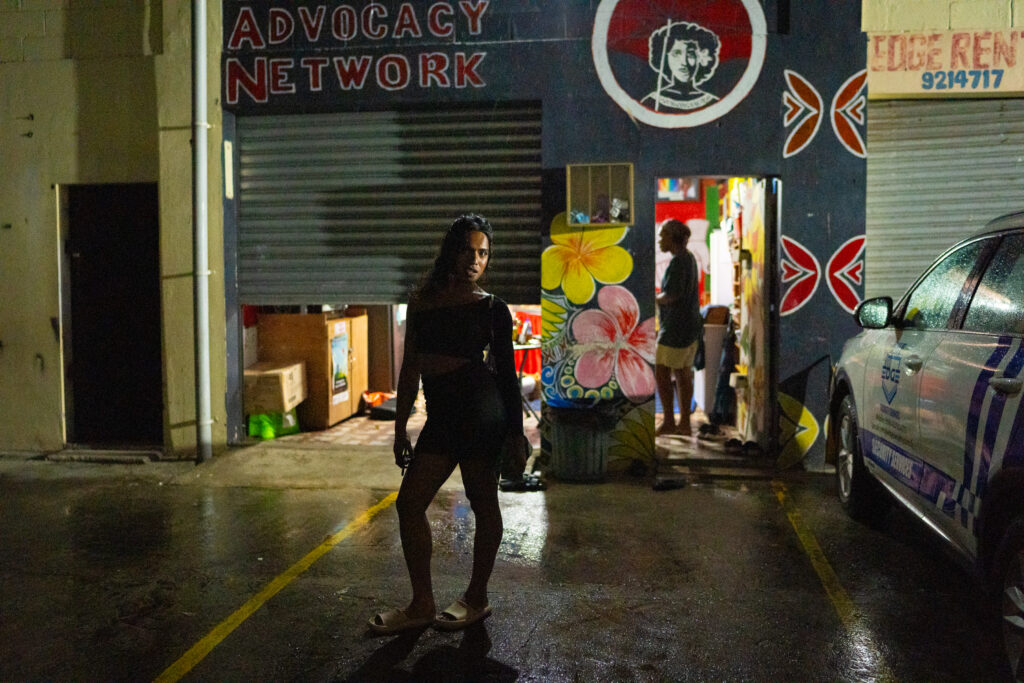
“It was the ‘in thing’ for us,” said Rochelle Naulunimagiti, a 37-year-old transgender sex worker and activist. “All the girls were on it.”
In Fiji, just as a single cigarette is often shared among a group of smokers and as the traditional psychoactive drink, kava, is passed around in a single cup, needles too were shared, community workers and users said.
Friends would sit and inject in a group, using shared bottle caps or other mixing paraphernalia to dissolve the crystals into an injectable liquid. Often, just one person — called the “doctor” — would be in charge of administering the drug, injecting the others, users and community workers said. In rare cases, addicts injected themselves with the blood of a person who was already high to get a residual hit. But the high was never as strong. On one evening, reporters from The Post observed a user injecting “raw,” as it is called here: using their own blood, instead of water, to dilute the crystals, and then injecting the mixture back into their veins.
Ben Morrison, who co-founded Inspire Pacific, which runs a camp for boys who are grappling with drugs and violence, said about 30 percent of those in the cohort are HIV-positive, most through needle-sharing.
For them, “HIV is like, what’s that? Okay, I got a sickness, but look at my life. I don’t have a dad, I don’t have a home, I don’t eat on a daily basis,” Morrison said. “So what’s another diagnosis from a doctor to me?”
Sometimes, though, the risks were clear to users. Naulunimagiti knew better, she said. But one night in 2023, grappling with depression, she said she “really needed that feeling.” She took a needle from a friend and injected herself. Several months later, she tested positive for HIV.
“I was a leader in the community,” Naulunimagiti said through tears. “I thought, what would people think of me?”
Culture of silence
Mark Shaheel Lal, a 24-year-old student, was walking through the streets of Suva one afternoon when a driver rolled down his window and shouted, “he has AIDS!” before speeding off. It wasn’t the first time, he said. Just a few months earlier, someone pointed at him and called out, “HIV.”
Just weeks before Fiji’s government officially announced there was an HIV outbreak in the country, Lal, a gay man who is not a drug user, came out as HIV-positive. In a nation where a culture of silence still exists around the diagnosis, Lal’s declaration made him a face of the epidemic, as well as a source of information for many HIV-positive Fijians. Through his Facebook page, Living Positive Fiji, Lal has counseled more than 100 newly diagnosed HIV patients over the past year, helping them navigate their diagnosis.
“I know how I felt when I got that note,” Lal said. “I thought my world was ending. It even came to a point where I thought I should take my own life because I was going to die anyway.”
Some who have reached out to him have been hesitant to get treatment, believing that since they are not showing any signs of sickness, the diagnosis must be incorrect. Advances in antiretroviral therapy mean HIV is no longer the death sentence it once was — but only if detected early and if someone is receiving treatment. Fiji’s public health officials are also pushing for Pre-Exposure Prophylaxis (PReP) medication for high-risk groups, which can prevent people from contracting HIV altogether.
Of the more than 120 people who died of HIV-related causes in Fiji in 2024, more than half found out their status the same year, according to data from the Health Ministry, long after their immune system had already been fatally compromised.
Accessing critical medication has also not always been straightforward. At one point in late 2024, Lal and Naulunimagiti said, there were no antiretroviral pills in the country. There was also a shortage of specimen bottles for further testing, which Lal raised money for and then donated to the local reproductive health clinic.
In recent months, both Australia and New Zealand have pledged millions to Fiji’s effort to get the HIV epidemic under control. The Fijian government was separately in discussions with the U.S. Agency for International Development (USAID) for additional funding and the U.S. Centers for Disease Control and Prevention (CDC) for help investigating the origins of the epidemic and the specific strain of HIV the country was dealing with, according to people familiar with the conversations. Both discussions did not progress under the Trump administration, which took office soon after Fiji declared its epidemic. USAID had just reopened its regional mission in Fiji in late 2023 after more than a decade.
A spokesperson for the CDC, in response to questions from The Post, referred queries to the Department of Health and Human Services, which referred The Post on to the State Department. The U.S. Embassy in Suva did not respond to a request for comment.
New year, new bust
On a recent afternoon in Fiji, a community worker sitting in a taxi rolled down the window, stuck out their hand and brandished a handful of new syringes, still wrapped in sterile packaging, to a group of zombielike men, scar tissue marking their forearms, sitting outside an alcohol store.
It took them a minute to register that the syringes were free handouts. They rushed to the car, grabbed the syringes and asked for more.
Needles have now become almost as valuable as the drug itself, as awareness of safe injecting practices grows in the country. Providing needles remains illegal, however. Participants in the WHO- and UNDP-commissioned assessment on drug use said they “without exception … reported difficulties accessing sterile needles and syringes for injection,” particularly in pharmacies, which are reluctant to give them out without a prescription.
“Carrying the syringes sometimes feels just as risky as carrying weed or dope,” Joseph said.
A needle and syringe program, where sterile needles are distributed free with no questions asked, is in the pipeline and likely to be implemented later this year after cabinet approval. The WHO, in its assessment, identified it as one of the highest priorities for Fiji.
Meanwhile, the drugs keep coming. On Jan. 16, Fijian police raided a vessel off a wharf in the northwest of the country and found more than 2 metric tons of cocaine, packed in over 100 sacks. Prosecutors have charged six — four Ecuadorian nationals and two locals — in connection with the trafficking case. The drugs, prosecutors said, came in through semisubmersible vessels known as “narco subs.” Also so far this year, two senior police officers, who have since been suspended, were charged with illegally importing and possessing meth.
“A culture of participation” in the drug trade has “seeped into our police force, our institutions and our society,” said Rabuku, the deputy public prosecutor, undeterred even by recent life sentences. As long as that does not change, he added, Fiji will “always remain a transit point for drugs.”
The post On a paradise island in the Pacific, meth and HIV epidemics rage appeared first on Washington Post.