“Abolish ICE” is the cause of the moment, but that end point seems unlikely; many of the functions that Immigration and Customs Enforcement undertakes must be done, and are part of any normal presidential administration.
The best-case scenario is not abolition but reform—true, fundamental reform—to turn ICE into a law-enforcement agency that respects the Constitution and laws of America. That sort of extensive reform is not easy, and developing a post-Trump vision for immigration enforcement must start now, so that the country has something to move toward if it eventually leaves Trump’s approach behind.
Meaningful reform would address four distinct areas: personnel, operations, accountability, and organizational culture. It would do so across the agency that actually is ICE and the others that are colloquially referred to as ICE today because of their ongoing participation in the enforcement surge, such as Homeland Security Investigations and the Border Patrol. Fundamentally, the reforms would seek to restore accountability, transparency, and trust, enabling “New ICE” to transform itself into an agency of which the American people can be proud.
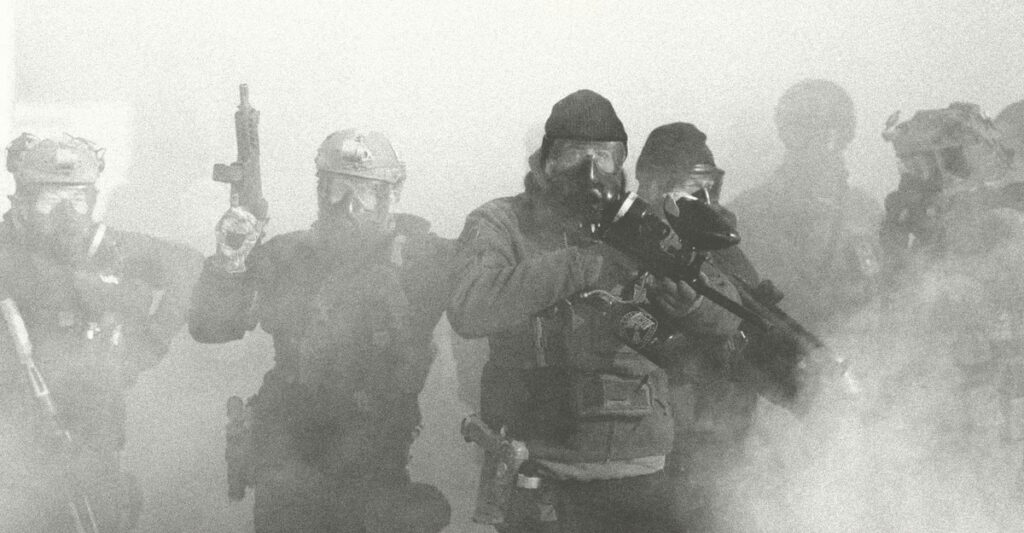
All of this starts with personnel—who is recruited and how they are trained. To satisfy President Trump’s demand for overly aggressive enforcement, ICE has lowered its standards for recruitment and shortened the training period, bringing in a flood of new recruits. The results are inevitable: lower-quality enforcement agents and more mistakes.
[Adam Serwer: The real reason ICE agents wear masks]
Department of Homeland Security agents already have a notably poor level of compliance with legal requirements. Indeed, one remarkable fact is that today, before the recent hiring surge comes fully online, customs officers and Border Patrol agents have committed crimes at a per capita rate that is greater than the crime rate for people who immigrated here illegally. These problems are likely to only get worse; instead of, as it used to, principally recruiting from the military and law enforcement, where applicants might have relevant experience, ICE now plans to spend millions of dollars to advertise for new agents at Ultimate Fighting Championship matches and gun shows. Perhaps of even greater concern, ICE’s recruitment efforts appear to deliberately echo white-nationalist rhetoric—bringing in a wave of new agents who are more inspired by MAGA ideology than by the virtues of public service.
New ICE would restore the minimum recruitment age back to 21, which had been lowered to 18 in August. Recruitment priorities will need to focus on applicants with relevant experience, not just those with aligned political views. Additional educational requirements should be considered. In the end, if “personnel is policy,” as Ronald Reagan’s director of personnel, Scott Faulkner, is reputed to have said, then whom you hire defines what you do.
Once you have the new hires, they need to be well trained. Before the Trump administration’s expansion of ICE, most trainees received four to six months of training. To a large degree, ICE’s lengthy training period arose because of a language module for Spanish instruction. But even leaving that module aside (it has been cut completely), training today is shorter than it had been—approximately eight weeks, which some say is really 47 days as an homage to Trump. There can be no doubt that today’s new ICE recruits are less physically fit, that agents are receiving roughly half the training that their predecessors received, and that educational standards have been lowered.
The training is not only shorter; it is also substantively worse—teaching future agents aggressive tactics that must be left behind. Reports suggest that ICE agents may be receiving training that standardizes some of the new operational changes, such as entry into homes with only administrative warrants, that are so controversial.
A reformed New ICE would need much better—and more—training. Congress or the president should mandate that the training program be at least four months long, and that the curriculum be modified to include enhanced training on constitutional law, while significantly reducing its emphasis on SWAT-like uses of force.
Once people are recruited and trained, the question becomes what those personnel are instructed to do: operations. ICE right now is an organization whose actions, and the policies that guide those actions, are a reflection of overly aggressive enforcement priorities set by Trump, many of which are beyond the agency’s normal capacity. Border Patrol agents (who normally patrol the Texas frontier) and HSI agents (trained in sophisticated transnational-smuggling investigations), in particular, are being tasked with duties outside their core mission and not consistent with their training or experience. And many of the ICE agents deployed on the streets today have not been trained to operate in urban environments with high levels of civilian protest activity.
The results are inevitable: illegal, improper, and dangerous behavior. As Federal District Court Judge Kate Menendez recently recounted in an exhaustive 83-page opinion, many of ICE’s actions have been at odds with legal requirements. Among the apparently unlawful actions recounted by Menendez are the arrest of peaceful protesters and legal observers, the stop and sometimes arrest of drivers monitoring ICE, and the indiscriminate use of pepper spray, likely in violation of the First and Fourth Amendments. To this one can readily add ICE agents’ violations of constitutional restrictions on the use of force, breaches of their own use-of-force policies when confronting protesters, and the unconstitutional disregard of Fourth Amendment warrant restrictions.
Even many of ICE’s lawful actions are unwise, immoral, and outside the bounds of appropriate behavior for an American law-enforcement agency. ICE policy, for example, allows for the wearing of masks. Border Patrol agents may undertake immigration enforcement within 100 miles of an external border (which, because the border includes the Great Lakes, makes Chicago a border town). A revised policy allows Border Patrol and ICE agents to enter previously safe-haven areas such as hospitals, churches, and courts in search of immigrants. And ICE is reportedly planning to use controversial (but legal) big-data technology to target its enforcement priorities.
Worse yet than the terrible legal policies are the lawless actions. ICE agents have, for example, recently—according to ICE itself—unlawfully arrested an individual because he refused to show identification (the detainee’s family disputes whether ICE even requested ID at all). Likewise, they have unconstitutionally demanded that a U.S. citizen submit to their facial-recognition app or be arrested. And ICE is alleged to have denied detainees access to lawyers.
ICE’s acts have also resulted in the illegal detention of more than 150 U.S. citizens. Just recently, one agent was filmed arresting a U.S. citizen based on the suspicion that he was an alien because he had a foreign accent. Other agents wrongly arrested a U.S. citizen and forced him to leave his home dressed only in underwear and a blanket in below-freezing temperatures. Public reports suggest that ICE agents in Minneapolis are searching for Hmong residents. These actions are being conducted despite all constitutional protections to the contrary.
All of this must go. All of it can go. ICE policies can be changed. The laws governing ICE behavior can be revised and strengthened. Agents can be prohibited from entering safe havens; they can be required to show their faces and identify themselves. They can be prohibited from using pepper spray or relying in any way on ethnic indicators, such as appearance, language, and accent, as a basis for their probable cause to arrest. Border Patrol agents can be subjected to stricter geographical restrictions, limited to land borders and, say, a 10-mile corridor. They could, likewise, be statutorily prohibited from performing the enforcement-and-removal function altogether.
Perhaps more fundamentally, ICE agents could, if Congress wishes, be deprived of all criminal-arrest power and the authority to execute judicial warrants. Rather, much as with the TSA officers at screening checkpoints, ICE agents could, by law, be limited to quasi-civil enforcement authorities, such as detention and seizure. The majority of ICE agents could be disarmed.
That said, all the good policies in the world are of no use if they are mere dead letters, gathering dust in the corner. How can anyone ensure that New ICE agents follow the new rules?
Direct enforcement mechanisms through the courts are, we have come to learn, of little practical use. Indeed, as Chief Judge Patrick Schiltz, of the federal district court in Minnesota, has said, “ICE has likely violated more court orders in January 2026 than some federal agencies have violated in their entire existence.” On more than 90 occasions, ICE has ignored the courts. That must change. Court orders are likely to be of greater impact under New ICE because new leadership would demand the adherence of the agents. But even then, there are limits to how much compliance a court can deliver. Ex post review that provides only for ex ante change has proved relatively ineffective.
[Read: Meet the new Proud Boys]
Instead, New ICE must build (or rebuild) ex post individual accountability for individual-agent misconduct. This can be done in any number of ways: First, as Judge Nancy Gertner has has written, 40 years ago, the Supreme Court said that the exclusionary rule (via which improperly attained evidence can be kept out of court) didn’t apply in immigration proceedings, thus removing any real incentive for ICE to obey the limits of the Fourth Amendment. The Court could revisit that decision. More realistically, Congress could mandate it by statute or the president could do so by executive order. Second, the Court has said that plaintiffs injured by Border Patrol agents may not sue for their injuries, offering a “national security” justification. This, too, can be modified by statute if Congress chooses, or by executive order.
Speaking of Congress, the single most effective thing to advance accountability would be for Congress to discard its supine posture and reinvigorate its crucial oversight functions. Meanwhile, we could also return to a time of robust internal accountability (such as a restored internal-affairs division and a better protected inspector general’s office), including, where appropriate, Department of Justice investigations of alleged criminal activity and, in extreme cases, federal or state criminal prosecution.
Finally, a future president must attempt to change the culture of the organization. Firing bad leaders is one thing, but as any football fan knows, that’s not enough. A new coach needs to imbue the team with a changed character—reformed habits of behavior and, sometimes, wholesale changes in personnel at many levels of the hierarchy.
The new culture would be one focused on ICE’s core mission—supporting national security by conducting high-value investigations of transnational crime and interior immigration-enforcement action against dangerous criminals. The New ICE culture would elevate and enhance its compliance with law, championing policies that are supported by the public. New ICE would forgo broad sweeps in urban environments for targeted enforcement against identified subjects. And a refocused ICE would welcome external accountability and transparency, recognizing that the trust of the American people must be earned, not demanded.
The country needs an ICE. But it does not need this ICE. A New ICE must be built from the ground up. That will require immense political capital and lots of hard work. But if America is ever again to return to the rule of law, it’s an effort that must be undertaken.
The post How to Actually Reform ICE appeared first on The Atlantic.