For months, the United States and Europe have tussled over regulation of social media, as America’s hands-off approach conflicted with Europe’s more aggressive policies.
This week, the long-simmering dispute is worsening after leaders on both sides of the Atlantic exchanged allegations and threats, and European prosecutors issued summonses to American tech leaders including Elon Musk.
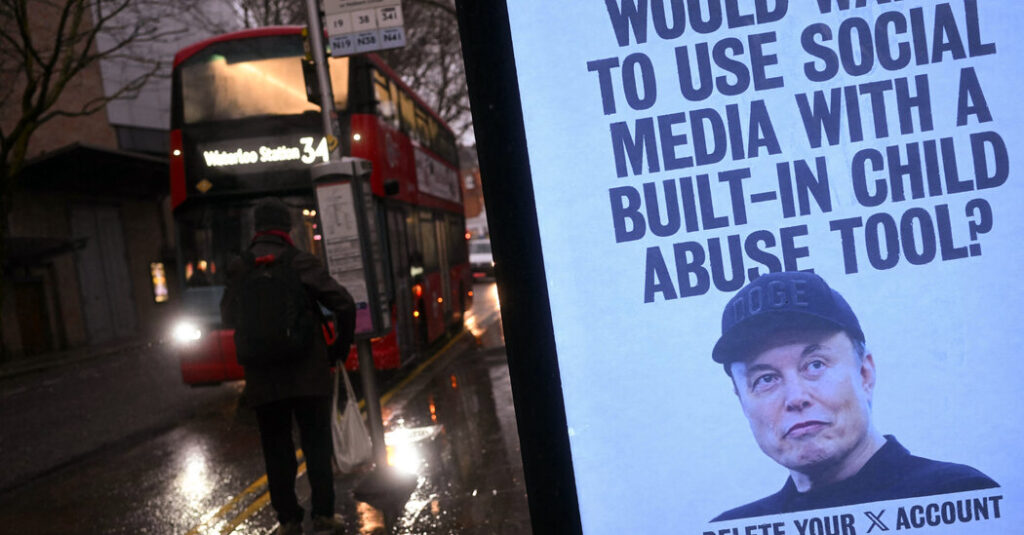
On Tuesday, French authorities raided the Paris offices of Mr. Musk’s social media platform X over allegations involving the distribution of child sexual images and producing content denying crimes against humanity. Almost simultaneously, the Spanish government vowed to ban social media for children under 16 and to make tech executives criminally liable for illicit content spread on their platforms.
Hours later, Republicans in Washington struck back. The House Judiciary Committee on Tuesday released a 160-page report, “The Foreign Censorship Threat,” accusing Europe of weaponizing regulations to harm American free speech. Separately, Mr. Musk called the Spanish prime minister “a tyrant and traitor” and X accused French investigators of circumventing due process.
The clash illustrates a fundamental divide between European and American leaders about how to regulate social media — or whether to restrict it at all. At issue is what expression is protected, who can be held responsible for wrongdoing, and what countries decide the rules for such inherently borderless platforms.
The issue has become a wedge over the past year under President Trump, whose administration has portrayed European regulation of American social media platforms as an attack on free speech. The United States has placed travel restrictions on Europeans campaigning against online misinformation and lashed out at officials investigating American firms. Critics say the approach aims to liberate right-wing allies to say what they want online, even as the Trump administration restricts other types of expression that it opposes, like protests against immigration.
The argument is likely to surface at next week’s Munich Security Conference in Germany. At last year’s conference, Vice President JD Vance, shocked European leaders by arguing that Europe was using “ugly, Soviet-era words like misinformation” to suppress alternative viewpoints.
European leaders say their regulatory push is an attempt to protect citizens from abuse and to encourage American platforms to do more to address disinformation and illicit content including child sexual abuse material. In 2022, the European Union passed the Digital Services Act, a law that imposes strict rules on content moderation and user safety.
Following Australia’s lead, Spain, Denmark and France are also moving to bar children from apps like TikTok and Instagram, aiming to shield them from abusive content. And authorities in the E.U., France and Britain have begun wider investigations into X and Grok, its A.I. chatbot.
To many Europeans, these moves reflect how the concept of free expression is about more than just protecting the right to speak. It also “protects audiences and those seeking information,” said David Kaye, a former United Nations special rapporteur on freedom of expression. Laws in countries including France and Germany banning hate speech or Holocaust denial are intended to prevent intimidation and encourage democratic participation.
The split between the United States and Europe has widened since December, when the European Union used its new Digital Services Act to fine X roughly $142 million for, among other accusations, failing to protect users from scams.
“The Digital Services act is not censorship,” said William Echikson, a tech expert at the Washington-based Center for European Policy Analysis. But that is not how Trump administration officials saw it.
The week of the fine, the White House issued a new National Security Strategy that said the “activities of the European Union” undermine “political liberty and sovereignty,” including by restraining free speech.
Later that month, the U.S. State Department sanctioned five Europeans it associated with Europe’s approach to social media, barring them traveling to the U.S. and accusing them of censorship. One of them, Thierry Breton, a former senior E.U. official, helped write the Digital Services Act.
The accusations continued this week, with the congressional report identifying more than 100 closed-door meetings since 2020 when European officials, it said, “pressured platforms to change their globally applicable content moderation rules.”
Thomas Regnier, a spokesman for the E.U.’s executive arm, called censorship allegations “complete nonsense” at a press briefing on Tuesday.
Claims of censorship have also swung both ways, with Europeans at times accusing social media firms of suppressing content. On Wednesday, left-leaning European lawmakers called for an investigation of TikTok, which recently sold its U.S. operations to a group with ties to Mr. Trump. They accused the service of blocking content about immigration protests in the U.S. TikTok said technical problems caused temporary content-loading problems.
Koba Ryckewaert contributed reporting.
Adam Satariano is a technology correspondent for The Times, based in London.
The post France’s Raid on X Escalates Trans-Atlantic Showdown Over Social Media appeared first on New York Times.