Judge Glock is director of research at the Manhattan Institute and author of “The Dead Pledge: The Origins of the Mortgage Market and Federal Bailouts, 1913-1939.”
President Donald Trump announced a plan last month to lower housing costs by putting more federal money into mortgages and banning corporate investment in houses. Such efforts will do little, if anything, to make housing more affordable because state and local regulations are the main drivers of high costs.
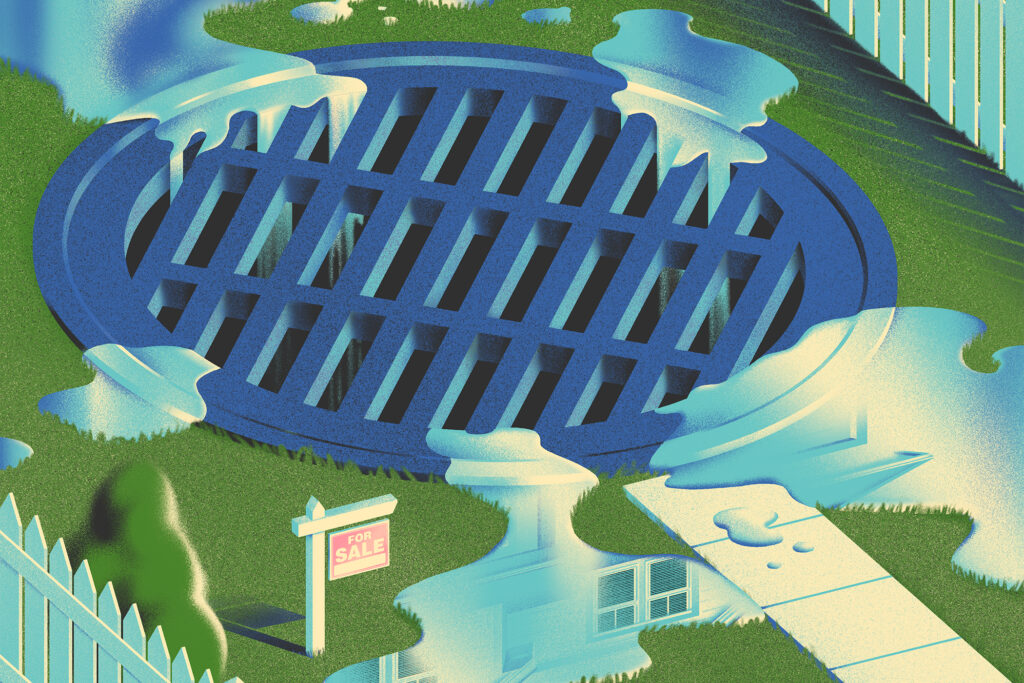
Yet one federal regulation, about a seemingly mundane matter, is making nearly all housing and construction more expensive: rules governing stormwater.
It might sound like a minor issue, but stormwater runoff rules can add tens of thousands of dollars to the costs of a completed house. These federal regulations create onerous requirements for construction projects, add expensive features to finished buildings and sometime stop housing development altogether. Getting the federal government to stop micromanaging stormwater runoff is one of the few ways Trump and Congress could directly reduce housing costs.
Since stormwater can pull dirt, oil and other pollutants off buildings and roads and into rivers and lakes, environmental groups have long sought ways to regulate it. In 1987, Congress required states and cities to limit runoff as part of the Clean Water Act. The Environmental Protection Agency saw an opportunity in the vaguely worded legislation to reshape much of the American landscape.
Despite lacking authority in the law itself, the EPA began requiring every construction project over one acre to get a Construction General Permit. According to the National Association of Home Builders, these permits “are the most common environmental permit residential developers and builders must obtain.” Developers have to comply with the intricate details in the more than 100-page long permit, in addition to 11 separate appendixes. They also have to draft a Stormwater Pollution Prevention Plan, which can be hundreds of pages long and require details on everything from nearby historical sites to potential endangered species. Builders then must hire certified stormwater specialists to regularly inspect construction sites for runoff and fill out even more forms. Before fencing and landscaping begin, the paperwork alone can add thousands of dollars to a development.
The EPA also requires finished buildings and subdivisions to include features that limit runoff. The EPA says 95 percent of all building permits should include stormwater controls. New developments can be required to have features such as permeable pavements, green “swales” or ditches for runoff, dry wells to infiltrate water into the ground, green roofs and bioretention ponds. The EPA says stormwater controls should be extensive enough that runoff is no different after development than before, a particularly burdensome standard.
The EPA also uses stormwater runoff as an excuse to limit development altogether. Over the past few decades, the EPA pushed states to place “impervious cover” limitations in certain areas, capping the amount of paved surfaces connected to storm pipes or rivers. Under the federally mandated stormwater standard, Delaware says new subdivisions in one watershed can be no more than 50 percent paved and any new development that is at least 20 percent paved needs an “environmental impact assessment report and mitigation.”
The EPA has never tried to calculate the full costs of its stormwater mandates, but studies show they are substantial. Beacon Economics, an independent economic research firm, estimated that the addition of stormwater mandates in San Bernardino County, California, “could increase the construction cost of single-family homes by up to $25,000.” A Rand study of Pittsburgh found that the costs of stormwater treatment for each paved acre could run over $300,000.
Sometimes the costs go beyond dollars and cents. The proliferation of stormwater retention ponds in neighborhoods has caused a disturbing rise in children drowning. A study conducted by researchers from Nationwide Children’s Hospital found that 265 drowning deaths occurred in residential retention ponds, mainly children 1 to 4 years old, in the period from 2004 to 2020.
If these stormwater regulations truly cleaned up America’s lakes and rivers, they might be justified. But by all indications the stormwater regulations are doing little to stop pollution. Even by the EPA’s own estimation, the costs of the most recent Construction General Permit rule outweighed the benefits. The EPA found that agriculture, not urban runoff, is the main pollution problem for rivers and streams.
Most burdens on building come from state and local governments, but Washington policymakers should focus on what they can change. The federal stormwater program is a massive burden on developers and drives up home prices across the nation with little benefit. If it were serous about cutting housing costs, the federal government would get out of the stormwater business altogether.
The post Building a new house? This little-known rule could cost you thousands. appeared first on Washington Post.