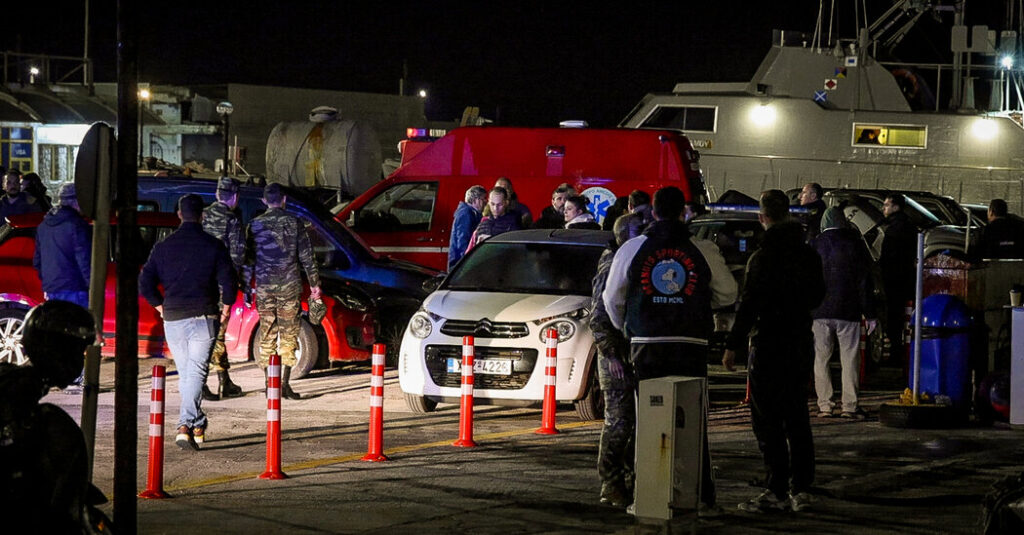
At least 15 people died after a rare collision between a speedboat carrying migrants and a Greek Coast Guard vessel off the island of Chios in the eastern Aegean Sea, the authorities said on Wednesday.
The episode was considered highly unusual because it involved direct contact between two boats. Deadly shipwrecks are common in the Aegean, which is one of the main maritime migration routes to Europe, but they have usually involved migrant boats sinking in stormy weather, unimpeded by other vessels.
The collision caused the death of 11 men and four women, all of them migrants, and wounded 26 other people, including 11 children and two coast guard officers, according to a statement from the coast guard. A search was underway on Wednesday morning for other survivors, the coast guard added.
The exact circumstances of the collision were not immediately clear. The coast guard said that its vessel had detected the migrant speedboat “moving without navigation lights” off the eastern coast of Chios during a routine patrol and signaled for it to stop, using lights and warning sounds. Instead, the coast guard said, the boat reversed course, crashing into the starboard side of the patrol vessel.
“From the force of the impact, the high-speed boat capsized and sank, causing all its passengers to fall into the sea,” the statement added.
Officials at the Greek Ministry of Maritime Affairs declined to comment on whether the migrants had died from injuries sustained in the crash or from drowning, nor did they give details about the migrants’ national backgrounds.
In response to questions about whether shots had been fired during the incident, Christos Tsiachris, director of Chios’s general hospital, said in a television interview that several migrants had undergone surgery but that none of the injured bore gunshot wounds.
The latest disaster came amid a broader hardening of Greece’s stance on migration. The country’s conservative government froze asylum applications last summer and then passed a law in September that allows the authorities to jail asylum seekers who remain in the country after their applications are rejected.
Those moves followed a broader crackdown on migrants trying to reach Greece. A New York Times investigation in 2023 found that Greek Coast Guard officers had rounded up asylum seekers and abandoned them at sea. Leaders across Europe have toughened their border policies over the past decade to try to prevent a repeat of the migration crisis of 2015 and 2016. More than a million people sought sanctuary in Europe in those years after fleeing war and poverty in countries like Afghanistan and Syria, many of them crossing the Aegean.
Migration levels through the Aegean have dropped in recent years as more people try to reach Greece from northern Africa instead of from Turkey. As a result, the southern Greek island of Crete has become one of the main landing points, while arrivals have fallen on eastern islands such as Chios.
This week, the Greek migration minister, Thanos Plevris, submitted legislation for the creation of three state camps for migrants on Crete, noting that 40 percent of all migrant arrivals now reached that island, with 44 percent taking the Aegean route, down from 78 percent in 2024. He attributed the drop via the Aegean to “much better cooperation with the Turkish Coast Guard, which has dramatically reduced flows,” particularly from Syria.
Seventeen people died when a migrant boat sank off Crete in December, the country’s deadliest smuggling wreck in more than two years.
The post At Least 15 Die in Rare Collision Between Migrant Boat and Greek Patrol Vessel appeared first on New York Times.