EVERYTHING IS PHOTOGRAPH: A Life of André Kertész, by Patricia Albers
André Kertész, who died in 1985 at the age of 91, is now enshrined as a pioneering figure of modern photography — a development that would have been almost impossible to imagine when paging through the February 1946 issue of Harper’s Bazaar.
Kertész (pronounced KEHR-tayce), then 51, was well into middle age when the issue was published. It included a lush photo spread of Picasso by Brassaï, a fellow Hungarian who happened to be one of Kertész’s protégés and frenemies. Kertész’s own name was tucked away in the magazine’s “Shopping Bazaar” column, alongside a promotional squib for a music box repairman. “André Kertész,” the listing read, “will come to your home by appointment to photograph your child.”
“His humiliation at the contrast between the splashy feature by Brassaï, photographe extraordinaire, and the mention of André, kiddie photographer, is palpable,” Patricia Albers writes in “Everything Is Photograph,” her judicious new biography of an artist who spent most of his extremely long life feeling like he never properly got his due.
Albers is the author of the terrific “Joan Mitchell, Lady Painter” (2011), and she has been working on this book for 11 years. In her introduction, she describes her first encounter with his photos in the 1960s, when she happened upon a volume that included miscellaneous images by Kertész: a street acrobat in a handstand, a flirtatious dancer sprawled on a couch, three figures near a broken bench. Albers was mesmerized. “Until that day, I had never encountered photographs with such emotional resonance.”
Decades later, her love of his work is evidently undimmed. “Everything Is Photograph” is filled with her gorgeous descriptions of Kertész’s pictures, tempting you to interrupt your reading to Google every photo she writes about with such acuity and care. But the life she recounts is fascinating, too. Kertész’s persona wasn’t always to be trusted: He was a teller of tall tales, a sweet and courtly man who encouraged the artistic ambitions of the young women he knew while also complaining viciously about his friends and patrons behind their backs. Albers takes all this in stride, returning to his output as a touchstone, an extension of the real Kertész, beyond the backbiting and self-pity. Photography was more than a matter of observing the world; for Kertész, Albers writes, it was a “conversation with life.”
Kertész was born Andor Kohn in 1894 in Budapest, to culturally assimilated Jews. From the time he picked up his first camera at 18, he was hooked. As a conscript in the Austro-Hungarian Army during World War I, he lugged a camera to the Eastern Front, fragile glass plates and all. His time in the army was terrifying, but it was also full of creative discovery; after the hostilities, his re-entry into a dull day job as a bank clerk felt all the more dreary and unbearable.
In the mid-1920s, Kertész moved to Paris, the city he would forever consider his artistic home. There, he dabbled in Surrealism, but he would ultimately become what Albers calls a “movement of one,” whose work was “untheorized and instinctual.” While other photographers emphasized grand solemnity, he preferred oblique angles and incongruous details. Brassaï admiringly called him “the bird catcher.”
Kertész started using a new portable camera called a Leica (now legendary among photojournalists) that let him move through the streets more nimbly. “It is no longer the camera that takes the picture,” his younger brother, Jeno, said, “but the lens that draws as you want it to.”
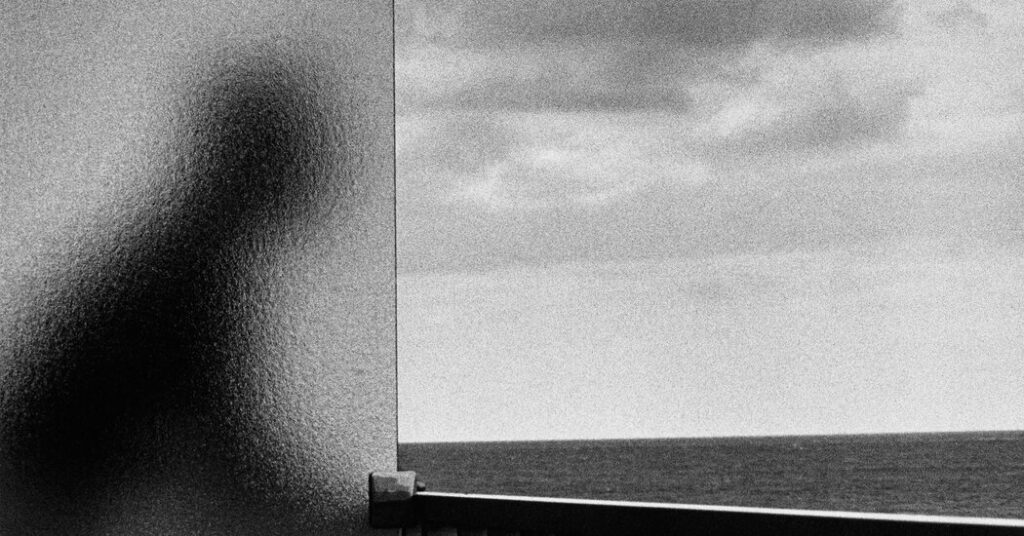
What Kertész wanted to draw he was never quite able to put into words. He struggled with French and, later, English. He even had trouble expressing himself in Hungarian. But his pictures were like poems, radiating a quiet intensity. Albers begins each chapter with a photo he took during the time period that follows. The chapter on his first years in Paris features an image of a tantalizing doorway to a mysterious staircase. Albers prefaces his move to America in 1936 with his close-up shot of a drooping tulip.
As Europe spiraled toward another war, Kertész was lucky to get a job offer from a press agency in the United States, even if he was grudging about his good fortune. He and his second wife, Elizabeth Salamon, moved to New York, where he took on commercial work and had a nicely remunerative 15-year run at House & Garden. But for a long time he had trouble getting recognition for the photography he wanted to do. His quiet, melancholy sensibility didn’t jibe with the showboating American vernacular. “You are too human, sorry, Kertész,” one editor supposedly told him. “Make it brutal.” Another editor confessed to being utterly baffled by Kertész’s pictures: “I don’t understand them.”
Of course, his fortunes would eventually turn. “Everything Is Photograph” — the title comes from Kertész’s explanation of how he chose his subjects — shows the decisive roles played by an artist’s personality and fickle gatekeepers. Kertész, too, continued taking pictures, even when advanced age and increased frailty meant spending less time shooting in the street and more time perched on his balcony or positioned by his window. This method of picture-taking suited him just fine. He “fishes for photographs,” a friend once said. “Instead of running to find them, he waits patiently for them to bite.”
Albers notes the discrepancy between Kertész the man, who could get agitated and harshly judgmental, and Kertész the artist, who consistently took in the world with an open heart and an open mind. One of my favorite pictures isn’t reproduced in the book, but it appears on the cover of Don DeLillo’s novel “Underworld.” Kertesz shot it in 1972, from his Manhattan apartment window. In the foreground is a church tower, topped by a cross. In the background are the World Trade Center’s twin skyscrapers, wreathed in fog. In the upper right is the silhouette of a soaring bird.
Capitalism and religion, the future and the past — the heavy themes are there, for anyone who wants them. But there is also something so powerful about that little bird. You can imagine Kertész, by then in his late 70s, waiting for the moment when it entered the frame. He always loved photographing birds, which “represented the human soul, the creative spirit, freedom, his own very much included,” Albers writes. It’s a measure of how much they meant to him that after his wife died in 1977, five years after this picture was taken, Kertész said, “I can’t hear the birds sing.”
EVERYTHING IS PHOTOGRAPH: A Life of André Kertész | By Patricia Albers | Other Press | 517 pp. | $49.99
Jennifer Szalai is the nonfiction book critic for The Times.
The post A Loving Biography of the Photographer Who Made Poetry With His Pictures appeared first on New York Times.