It began with the merest of cracks in Venezuela’s feared system of authoritarian rule.
A television network broadcasting comments by an opposition leader. Other opposition figures saying they were coming out of hiding. A group of university students publicly confronting President Delcy Rodríguez, demanding she release political prisoners.
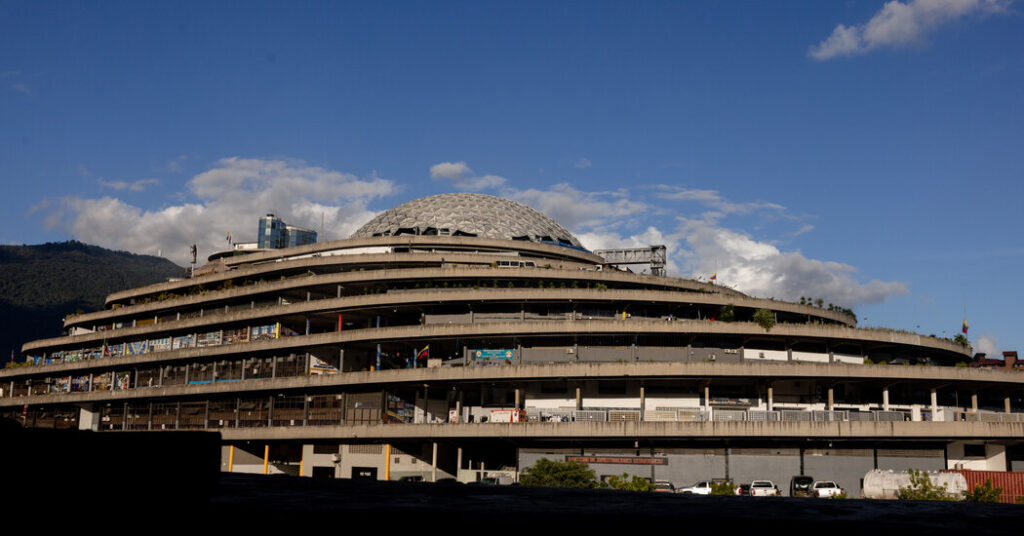
Then Ms. Rodríguez followed with her own startling announcements, saying she would close El Helicoide, an infamous prison that rights groups have described as a torture center, and proposed a mass amnesty law that could free hundreds of political prisoners still held in Venezuelan jails.
Taken together, these moves have many in Venezuela wondering whether signs of a thaw are emerging just a month after U.S. forces captured Ms. Rodríguez’s predecessor, Nicolás Maduro, and forcibly extracted him to the United States.
Any relaxation of authoritarian restrictions could be reversed, of course, and pushback has already emerged from some in the government. But that such discussions are happening at all is a surprising reflection of how quickly the political landscape is changing in Venezuela as Ms. Rodríguez faces pressure domestically to ease repressive policiesand improve the economy.
“The government is yielding much more than I thought they would in such a short time,” said Colette Capriles, a social psychologist at Simón Bolívar University in Caracas, citing both the sweeping reversal of nationalist oil policies and what she called “serious gestures of opening up the political and public space.”
“The interim government’s situation is one of vulnerability, in the sense that it is compelled to listen,” Ms. Capriles said. “It is in desperate need of building a genuine consensus that actually works.”
Others, like Nicmer Evans, a government critic who was detained in December by intelligence agents, held in El Helicoide and released in mid-January, argue that it is too early to describe what is happening as some kind of definitive transition away from years of anti-democratic rule.
Even so, Mr. Evans said, “The fact that people are finding the courage to take a first step and show others that fighting for the rule of law and constitutional rights is possible is nothing short of extraordinary.”
Some of what is unfolding in Venezuela fits into a three-part plan laid out by Secretary of State Marco Rubio, though perhaps at a more accelerated pace than he envisioned. Mr. Rubio said the first priority was stabilizing the country, followed by economic recovery and then a transition to a more representative democratic government.
Skepticism abounds that Ms. Rodríguez, a top Maduro ally who was his vice president, is a person who could spearhead far-reaching democratic reforms: After all, experts note, she was among the architects and top beneficiaries of the authoritarian system that she now commands.
The Venezuelan government did not respond to requests for comment for this article.
Details remain sparse about Ms. Rodríguez’s amnesty proposal, raising fears that it could be broadened and manipulated to provide immunity to government officials accused by international agencies of human rights violations. Some critics say she is simply making cosmetic changes, buying her time before U.S. officials coerce her into significantly loosening her grip on power.
Powerful government figures like Diosdado Cabello, the interior minister who wields control over intelligence operations and paramilitary cells, have also showed in recent days how easily those testing the shifting boundaries can be silenced.
After a private television network, Venevisión, tested censorship limits last week by broadcasting comments by the opposition leader María Corina Machado, Mr. Cabello threatened the network with unspecified consequences.
Shortly afterward, Venevisión said that the network had been removed from broadcasting platforms in much of the country, laying bare how swiftly Ms. Rodríguez’s government can mete out retaliation to anyone crossing its path.
While Venezuela’s political system is less draconian than that of communist-governed Cuba, its top ally, Venezuela remains an authoritarian fortress country in some ways.
Freedom of expression remains tightly restricted, with major newspapers and television networks in the hands of pro-government owners. Some in Venezuela say access to the social media platform X remains blocked, requiring them to use virtual private networks, or VPNs, to evade government restrictions.
Most foreign journalists are still denied entry into the country, and the few that do make it inside are often promptly deported upon being detected. Venezuelan journalists working for international news organizations are also regularly detained.
And while President Trump has said the United States is running Venezuela, the country remains effectively off limits for many Americans. U.S. citizens still must obtain visas to enter Venezuela for even a routine business trip, a complex bureaucratic process that often results in no response at all from the Venezuelan authorities.
Venezuelans who left the country face greater challenges. For those in the United States, renewing a passport is a costly ordeal requiring travel to other countries where Venezuela has functioning consulates. Many Venezuelans who recently crossed into the United States had their passports confiscated and are now at risk of being deported back to Venezuela.
And yet, embryonic changes to the system seem to be emerging, potentially opening the way for some kind of broader transformation.
For instance, some family members of political prisoners have been appearing in public and boldly speaking out in an effort to secure the release of loved ones. As of Monday, more than 300 such prisoners had been released by Ms. Rodríguez’s government, but nearly 700 remained incarcerated, according to Foro Penal, a leading human rights group.
A handful of opposition leaders has also started to come out of hiding, resuming public activities like media appearances. This group includes Delsa Solórzano, a lawyer and former lawmaker, and Juan Barreto, a former Caracas mayor who broke with Mr. Maduro over the government’s expanding authoritarianism.
“Delcy has decided to loosen the pressure valve,” said Mr. Barreto, who was under de facto house arrest for months with armed intelligence agents stationed outside his home.
Surveying the new political reality in which Trump administration officials have threatened Ms. Rodríguez with a fate similar to Mr. Maduro’s, Mr. Barreto said that her government had no choice but to move forward with some changes.
“The country has a gun to its head,” Mr. Barreto said. “The decisions being made are under this kind of duress.”
It is a delicate balancing act for Ms. Rodríguez, who has been exhibiting a kind of performative defiance of the United States, repeatedly criticizing Mr. Maduro’s removal and calling for him to be returned, while welcoming stronger economic and diplomatic ties with the United States.
Ms. Rodríguez’s government has also formed what it calls a Program for Coexistence and Peace. It is an initiative made up of figures from within Chavismo, the political movement at Venezuela’s helm for nearly 30 years, but also from civil society, among them Michael Penfold, a prominent scholar who specializes in issues of public governance.
A top priority for this project will be to help formulate the proposed legislation for Ms. Rodríguez’s amnesty proposal. Further down the road, some express cautious optimism that it could evolve into a type of truth and reconciliation commission aimed at healing the wounds of Venezuela’s descent into authoritarianism.
In the meantime, the Central University of Venezuela, a public institution in Caracas that historically functioned as a hotbed of political activism, has re-emerged in recent days as a nexus where people are publicly debating Ms. Rodríguez’s leadership and the general direction of the country.
Benigno Alarcón, a political analyst who took part in one such debate at a packed venue last week, warned those in the audience to tamp down expectations. He said that for an actual democratic transition to begin, “there must be an actual change in the governing coalition, and there must be a change of regime.”
“Transitions are not events,” Mr. Alarcón said. “They are processes, and they are typically fraught with conflict. Real transitions tend to be lengthy, and in many instances, reversible.”
Anatoly Kurmanaev contributed reporting from Caracas, Venezuela.
Simon Romero is a Times correspondent covering Mexico, Central America and the Caribbean. He is based in Mexico City.
The post Venezuela’s Authoritarian Grip Eases. But for How Long? appeared first on New York Times.