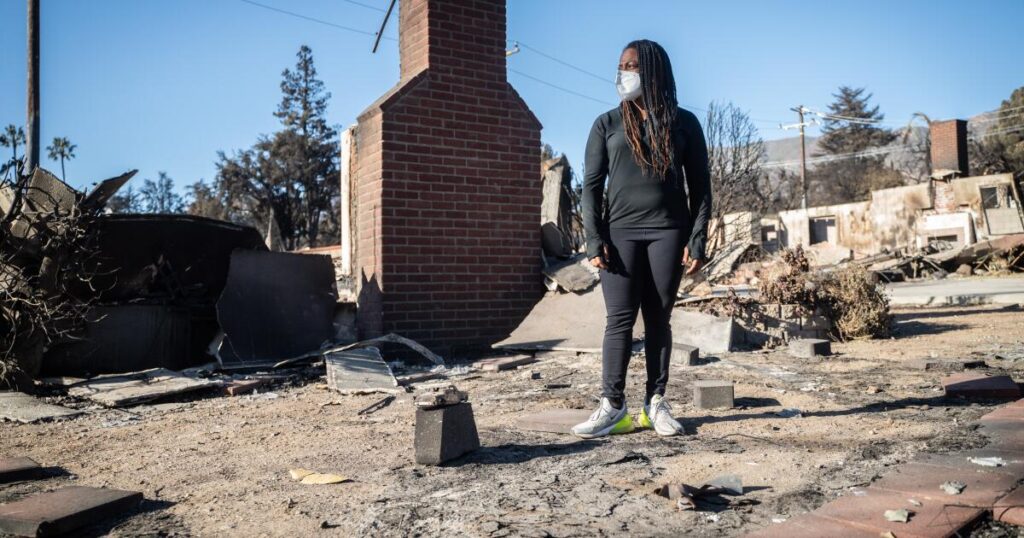
One of the biggest complaints from victims of the January 2025 wildfires has been demands by insurers that they provide itemized receipts for personal property losses, even if their records were destroyed in their burned homes.
Now, California Sen. Adam Schiff and 15 members of the state’s Democratic congressional delegation have asked top home insurers to explain and defend their claims policies, with 70% of fire victims still displaced.
“We have received outreach from constituents who shared that they have been required to itemize their material losses and provide receipts corresponding to every item, which can also include requirements of photographic evidence of prior ownership — an impossible task even for those who have not lost everything,” the lawmakers stated in a letter.
The letter was sent Monday to State Farm General, the state’s largest home insurer; the California FAIR Plan, the state’s insurer of last resort; and seven other large insurers.
The lawmakers asked the insurers to detail by Friday how they determine when itemized receipts are necessary and whether itemization requirements increased since the fires. The letter raised the possibility that the insurer demands may violate the insurance code and the state’s primary consumer protection law, the Unfair Competition Law.
The requirement by insurers to provide receipts to prove losses of furniture, clothing and other personal property became a bone of contention soon after the fires in Pacific Palisades, Altadena and elsewhere that killed at least 31 people and destroyed more than 16,000 structures.
State law at the time required insurers after a declared disaster to pay policyholders who suffered total losses as much as $250,000 without requiring itemized receipts, using a formula based on 30% of their dwelling coverage. If homeowners wanted to receive payments up to their policy limit, however, they had to provide them.
That prompted Insurance Commissioner Ricardo Lara last February to call on insurers to pay 100% of their policyholders’ contents coverage limits without a detailed inventory, noting some already did.
In response, a majority said they would pay at least 75% of contents coveragewithout a detailed inventory, according to the department. State Farm increased its advance contents payments for total losses from 50% to 65%.
In October, Gov. Gavin Newsom signed a bill that raised those payments to 60% of personal property coverage up to $350,000 without the need to submit a detailed inventory if a disaster has been declared. The law also extended the time for filing itemized claims to at least 100 days, up from just two months, but it was not retroactive.
That legislation, Senate Bill 495, backed by Lara and authored by Sen. Ben Allen (D-Pacific Palisades), whose district includes the Palisades fire zone, originally called for policyholders to get 100% of their personal property coverage limits without itemization, but it was opposed by insurers and amended. Past law and Allen’s bill do not apply to fire victims whose homes are not total losses.
Legislation introduced last month by state Sen. Steve Padilla, (D-San Diego) would allow policyholders suffering total losses in a disaster to get 100% of their personal property coverage without itemization.
The letter sent Monday addresses other key problems fire victims say have slowed their claims payments, including multiple adjusters being assigned to claims resulting in a downward change in payouts. The letter asks insurers to explain how they determine the number of adjusters needed for a claim.
Other issues raised include whether insurers are using artificial intelligence to review claims and what recourse victims have when they receive payout estimates they believe are far below their home value.
Insurers’ handling of wildfire claims already has prompted investigations by regulators.
The insurance department started a market conduct examinationof State Farm General, which has been accused of delaying, underpaying and denying claims. Los Angeles County also launched it own probe of the insurer.
State Farm denies any wrongdoing and said it has paid out more than $5 billion to 13,500 customers affected by the wildfires.
The other main target of complaints by fire victims has been the FAIR Plan, the insurer of last resort, which is operated and backed by the state’s licensed home insurers.
Its rolls increased dramatically over the last several years as its member insurers pulled out of fire-prone neighborhoods, leaving them little choice but to buy the plan’s expensive but limited policies. The policies cover fires but not common perils such as water damage or liability if someone is injured on a property. That forces policyholders to seek expensive “wrap-around” policies from private insurers.
The department ordered the FAIR Plan to offer broader coverage in 2021, but an appeals court ruled in December that the department overstepped its bounds when it did so.
Legislation introduced by state Assemblymember Lisa Calderon, (D-Whittier) on Monday would require the FAIR Plan to offer more comprehensive policies, hire more staff and address complaints by policyholders in a faster manner.
The plan received some 5,400 claims stemming from the January 2025 wildfires and is expected to pay out some $4 billion to policyholders. It had to assess its members $1 billion to pay its claims. About half of that amount is being recovered from residential policyholders statewide.
The bill also requires the FAIR Plan to open its governing committee meetings to the public and publish an annual report with premium rates, strategic plans and policyholder service metrics, among other information.
The FAIR Plan declined comment on the bill, but the American Property Casualty Insurance Assn., a trade group representing insurers, criticized the legislation, alluding to the plan’s financial condition.
“This legislation is a lose-lose for Californians. Mandates like these are the root cause of California’s insurance crisis. Expanding coverage without sustainable pricing and adequate reserves ultimately reduces consumer choice and strains the entire market,” the group said in a statement.
The plan also has faced criticism over how it handles claims for smoke damage. That has led to policyholder lawsuits and an administrative action by the insurance department scheduled to be heard this year.
The post Lawmakers demand insurers explain tough requirements for payouts to wildfire victims appeared first on Los Angeles Times.