For a city known for its anything-goes ethos, for its embrace of letting your freak flag fly, the list of activities one could not legally do in San Francisco was remarkable.
You could not, for instance, park your own car in your own driveway without first constructing a screen or fence to protect neighbors from such an unsightly view. Business owners couldn’t paint a sign on their own storefront without getting special permission.
And cafe owners couldn’t serve romantic dinners by candlelight — at least not without heading to the city’s permit office, lighting a candle there and waving a cloth napkin over the flame to prove that it would not catch fire.
San Francisco’s labyrinthine bureaucracy has long been the source of eye rolls and embarrassing headlines, with layers of laws added to the books over decades in response to one emergent concern after another.
Over the past 13 months, the nation has been consumed by the Trump administration’s international feuds and its deployment of immigration agents and the National Guard to U.S. cities. In California, wildfires devastated two communities in the Los Angeles area.
The challenges have often felt larger than life.
In San Francisco, however, Mayor Daniel Lurie has spent his first year focused on some of the city’s most mundane complaints, eliminating the rules on driveways, candle-lit dinners and more.
His quality-of-life strategy, which also included trying to bring businesses back to the hollowed-out downtown and clearing sidewalks of daytime drug markets, has paid off so far, resulting in strong first-year approval ratings. At the same time, Mr. Lurie, a moderate Democrat and earnest technocrat, insists he has no interest in national politics, and he still refuses to say President Trump’s name in public.
His approach could suggest a path for other politicians caught in the maelstrom of partisan division, especially Democrats. In New York, Mayor Zohran Mamdani has also focused on the little things since taking office in January, like fixing road bumps.
“We have to get rid of the nonsense and focus on common sense,” Mr. Lurie said in an interview.
That he has taken this approach in San Francisco is notable in itself.
The city is known for having larger-than-life mayors who have tried to make sweeping changes. When Gov. Gavin Newsom was the city’s mayor in 2004, he and other city officials broke state law by issuing 4,000 same-sex marriage licenses, thrusting San Francisco onto the front lines of the national fight for marriage equality. Mr. Newsom also made the city the first in the country to offer universal health care and to mandate composting.
Willie Brown, who led the city from 1996 to 2004, remade City Hall, complete with gold plating, and helped the San Francisco Giants build a waterfront ballpark.
Mr. Lurie appears to have no such grand ambitions. In his perpetual stream of Instagram reels, he is more likely to tout the new opening of a Taco Bell Cantina than he is to make a nationally relevant proclamation. He argues that making life simpler for San Franciscans is a revolutionary act in itself after years of bureaucratic headaches.
“We took the people of San Francisco for granted,” he said. “We took our small businesses for granted.”
In San Francisco, one unit of affordable housing can cost more than $1 million to build, even as people live in tents on the streets. One public toilet in the upscale Noe Valley neighborhood was slated to cost $1.7 million and take up to three years to construct. The maze at City Hall is so complex that some savvy San Franciscans earn a living as “permit expediters.”
Mr. Lurie’s administration has convened focus groups to figure out how to smooth the permitting process, yielding a running “no nonsense list” that includes dozens of fixes.
Before Mr. Lurie, the city had to ask Caltrans, the state highway agency, for permission to remove trash from on-ramps, but it now has an agreement allowing it to send cleaning crews any time.
Restaurateurs no longer have to visit a city office, candle and napkin in hand. Instead, the fire department will review wick safety during its regular on-site visits.
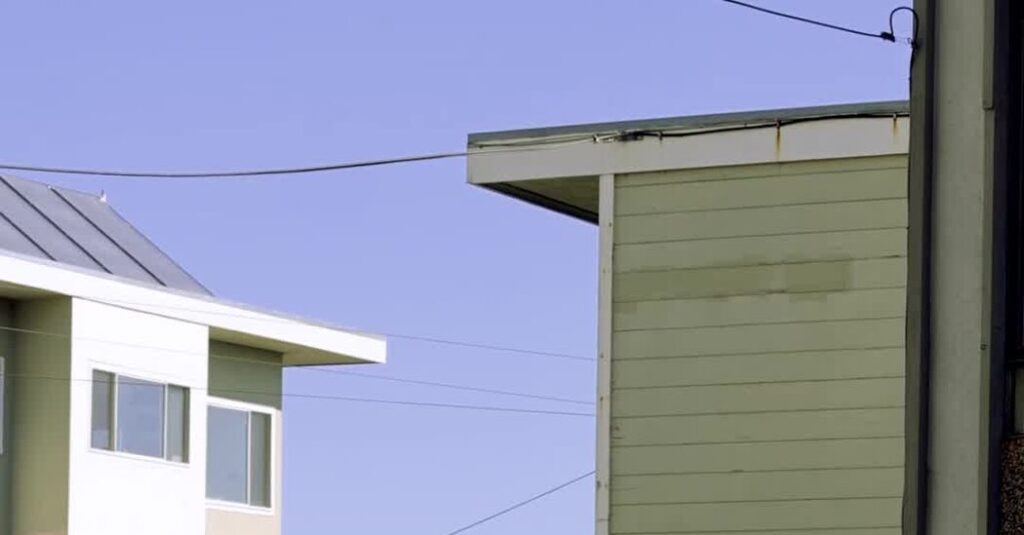
And residents can feel free to park their own cars in their own driveways without screens. In the past, city enforcement was complaint-driven, and the law had become a cudgel used by neighbors with an unrelated grievance. Fines could reach $1,500.
Elizabeth Watty, director of PermitSF, Mr. Lurie’s streamlining initiative, said many of the rules have been on the books for decades and were added to address some concern of the moment — such as neighborhood beautification for the driveway directive — but made little sense in modern-day San Francisco. She said there were 132 active driveway complaints when that rule was eliminated, and all of the cases were closed by the city.
Mr. Lurie is also seeking voter permission to trim the city’s 540-page governing document, which he says is the longest charter in the country and rife with confusing rules. While he was able to abolish the driveway and candle rules through administrative orders or legislation, voters would need to approve a charter rewrite.
Aaron Peskin, who is more liberal than Mr. Lurie and lost his own bid for mayor to him, said that while some parts of the city charter are outdated and should be eliminated, effective managers at City Hall should already be able to make their departments work.
“This is a silly conversation,” he said. “We’re a little smarter and more sophisticated than saying the problem with our charter is that it has too many pages.”
Christin Evans, a progressive who owns a bookstore and bar, accused Mr. Lurie of dangling popular changes like the driveway rule to distract from his more serious efforts to make it harder to qualify measures for the city ballot and to reduce the power of citizen commissions.
“It’s an executive power grab,” she said. “He is a bit of a Republican in his approach to governing the city.”
It remains to be seen how long Mr. Lurie can keep his focus on ground-level changes instead of engaging in the national politics that have embroiled so many local leaders. The closest he came to being drawn into national affairs was in October, when federal immigration agents began staging in nearby Alameda, Calif., in preparation for an enforcement raid in his city. Mr. Lurie spoke with Mr. Trump by phone and leaned on wealthy business leaders to help convince the president to call off the surge.
He has refused to provide details about the call and referenced that episode in only one line deep in his State of the City address last month.
Mr. Lurie is not the first San Francisco politician to focus on streamlining. His predecessor, London Breed, supported efforts to ease housing development and got voter approval to reduce the time it took to open small businesses.
More than 20 years ago, Mark Leno, a city supervisor at the time, led an initiative to clear outdated laws from the books. After that effort, San Franciscans were able to dance to the national anthem, beat dust out of rugs on city sidewalks and spit on the floor of a streetcar. They could even legally toss a banana peel on the sidewalk (though they probably shouldn’t).
Perhaps the most noticeable change in the Lurie era, for those walking around San Francisco at least, is the preponderance of sidewalk tables and chairs, giving the city a more European flair.
The idea came from Rich Lee, the co-founder of a small coffee chain called Spro Coffee Lab. He had put a few tables and chairs outside his cafe in the Castro District — at a corner where he said it was easy for people to pass.
After receiving an anonymous complaint, the city informed him that he would need to remove the tables and chairs immediately and hire someone to make digital designs of the sidewalks and the table and chair placement. He would also have to buy insurance and pay the city a fee, all of which totaled more than $3,000. Residents would get 10 days to object, and if somebody did, a hearing would be convened.
After a few months, the matter was resolved, and the city determined that the tables and chairs could go right back to where they were originally. All of the time and money, though, were lost for good, he said.
The experience lingered in his mind. When he ran into Mr. Lurie last year and the mayor asked him how to fix the city, he unloaded.
Now, cafe owners can spend 10 minutes submitting information online, including attesting that they understand they must place furniture in a way that allows enough space for passers-by and emergency workers.
“I just wanted people to sit and drink coffee,” Mr. Lee said.
Heather Knight is a reporter in San Francisco, leading The Times’s coverage of the Bay Area and Northern California.
The post Instead of Battling Trump, San Francisco’s Mayor Is Sweating the Small Stuff appeared first on New York Times.