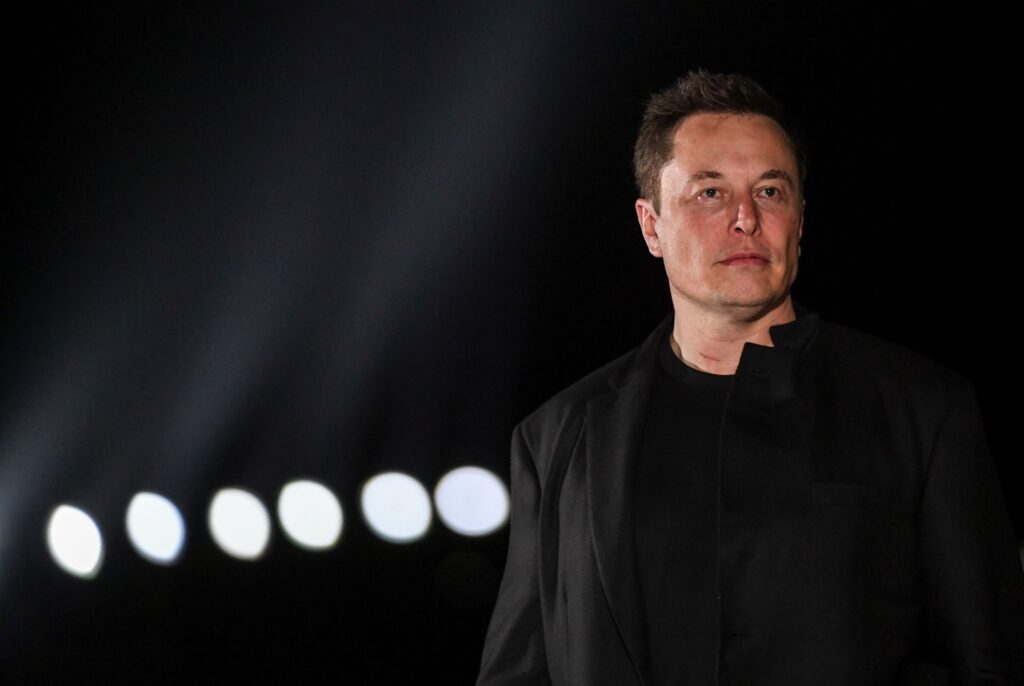
Elon Musk’s rocket-building company SpaceX said on Monday it had acquired his artificial intelligence and social media venture xAI, a move that consolidates the entrepreneur’s two largest private businesses into a massive new conglomerate to sit alongside his publicly listed electric vehicle maker Tesla, from which Musk derives much of his wealth.
SpaceX built its business around government and private space launches as well as the Starlink satellite internet service. It will now also encompass Musk’s social network X and his artificial intelligence projects such as the chatbot Grok. The combined company represents “the most ambitious, vertically-integrated innovation engine on (and off) Earth,” Musk said in a statement posted on SpaceX’s website.
The merger, reflected in documents filed with the Nevada Secretary of State and reported earlier by Bloomberg, follows recent moves by Musk to consolidate his sprawling empire. His social media company X, which originated in his $44 billion purchase of Twitter in 2022, was acquired by xAI last year in an all-stock deal that valued the AI venture at $80 billion and the social platform at $33 billion.
SpaceX, which has become a pillar of the U.S. space program, is expected to announce an initial public offering in coming months. Overseeing xAI would allow the company to promote itself as a contender in the race to develop AI, potentially tapping into investor interest that has propelled tech stocks to new highs, analysts said.
Kimberly Burke, director of government affairs at research firm Quilty Space, said SpaceX’s acquisition of xAI serves as “scaffolding” for an AI-fueled valuation. “This is how Musk manages risk for private investors,” she said.
Musk’s new, broader plan for SpaceX drew some praise on Monday from industry executives.
“Elon’s vision is to unlock SpaceX to deliver space-based data centers at speed, capacity, performance and cost that no competitor can duplicate,” said Gary Henry, former SpaceX senior director of national security space solutions. “Anyone care to bet against him?”
In his statement Monday, Musk said that SpaceX will now use Starship rockets to launch a new network of satellites containing powerful computers to run AI software. Building data centers in orbit instead of on Earth would make AI projects more efficient by harnessing solar power “with little operating or maintenance costs,” he said.
“My estimate is that within 2 to 3 years, the lowest cost way to generate AI compute will be in space,” Musk wrote.
That vision would tap into two of the technological advantages that have made SpaceX the world leader in rocket launches.
Rockets have traditionally been single-use, making it extremely expensive to send up a satellite or other payload. SpaceX has succeeded in developing reusable rocket boosters that can land safely at sea or on land when they return to Earth, including the massive reusable rocket system, Starship.
SpaceX also operates the world’s largest satellite system, Starlink, which has more than 9,000 communication satellites in orbit that can beam internet service back to Earth.
Musk has increasingly pushed Tesla in the direction of robotics and artificial intelligence in recent months, despite the company’s rank as the world’s most valuable automaker and the central role of its car business in underpinning his wealth.
After securing a $1 trillion pay package deal from Tesla in November, keeping him at the company for the next decade, Musk said last week that Tesla would stop production of two of its luxury vehicles, the models S and X and devote production capacity instead to building Optimus, a humanoid robot it intends to manufacture at scale.
The post Elon Musk unifies his space, AI and social media bets into one giant private company appeared first on Washington Post.