Disney has been a machine for making magic — and money — since its founding in 1923. On Tuesday, the company’s board tapped Josh D’Amaro, the head of its parks and resorts division, to take the reins from retiring CEO Bob Iger, with an eye toward another magically profitable century. With grave threats facing the entertainment giant’s business model, that will require evolution — something all iconic brands must do if they hope to survive.
Mickey Mouse is the foundation on which Disney’s fortunes were built. Walt Disney launched the character to fame in 1928’s “Steamboat Willie,” the first animated film to feature fully synchronized sound. It was soon powering not just audience laughter and studio profits, but an entire secondary industry of licensed Disney merchandise, from toys to neckties, silverware and marmalade. This made for an elegantly profitable cycle: the merch made the productions more lucrative, while the lavish animation it funded made the merch more marketable.
Disney has ridden that to ever-greater heights. The House of Mouse still has a robust licensing business, but there are also theme parks and cruises, ABC and cable networks, a streaming service and even planned communities. The engine of this virtuous cycle remains Disney’s fearsome creative operation, along with its library of iconic copyrights and trademarks.
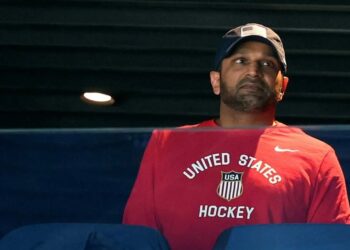
That made a strong argument for handing the keys over to Dana Walden, who oversees the company’s television and streaming unit, and speaks fluent Hollywood. But the prize went to D’Amaro, whose focus is customer “experiences.” Given the disruptions roiling the entertainment business, that logic makes sense.
Some of the most beloved Disney characters, including Mickey, will age out of copyright in the coming years — even as falling birth rates deliver fewer new consumers for kid’s movies and associated merchandise. Tentpole franchises such as Marvel have started to look long in the tooth. The collapse of the cable bundle means a dimming future for the company’s networks, especially crown jewel ESPN, which faces fiercer competition for broadcast rights, and can no longer collect tidy “carriage fees” every month from millions of cable subscribers who will never watch a game.
Disney competes for eyeballs not just with rival studios but TikTokers and YouTubers. These hungry upstarts are capitalizing on new technologies to delight audiences the way Walt Disney did during Hollywood’s golden age. The company has also tried to get into video games, investing $1.5 billion into the maker of “Fortnite.”
Artificial intelligence poses an existential threat by enabling amateur creators to challenge Big Mouse on shoestring budgets. Disney is racing to harness AI, signing a $1 billion deal with OpenAI in December. With a $185 billion market capitalization, it can afford to spend big on computational power and top talent. But when the economics of an industry shift this abruptly, the giants of yesteryear often lose their footing.
None of that is to discount Disney’s ability to keep winning audiences with new movies and shows. It’s just that the part of the business least vulnerable to all this disruption is what cannot be streamed, copied or substituted at a fraction of the cost: Disney’s meticulously designed in-person experiences and physical goods. These accounted for 57 percent of Disney’s operating income last year.
D’Amaro’s challenge will be keeping the creative engine running strongly enough to power growth in the businesses where Disney has a better-protected competitive edge. His previous success is no guarantee of a fairy tale ending.
The post A new ruler for the Magic Kingdom appeared first on Washington Post.