In Brazil, researchers made a spider-related discovery that’s just gross enough for me that I kind of don’t want to finish writing this article. Even though I just started knowing where it’s going to end up.
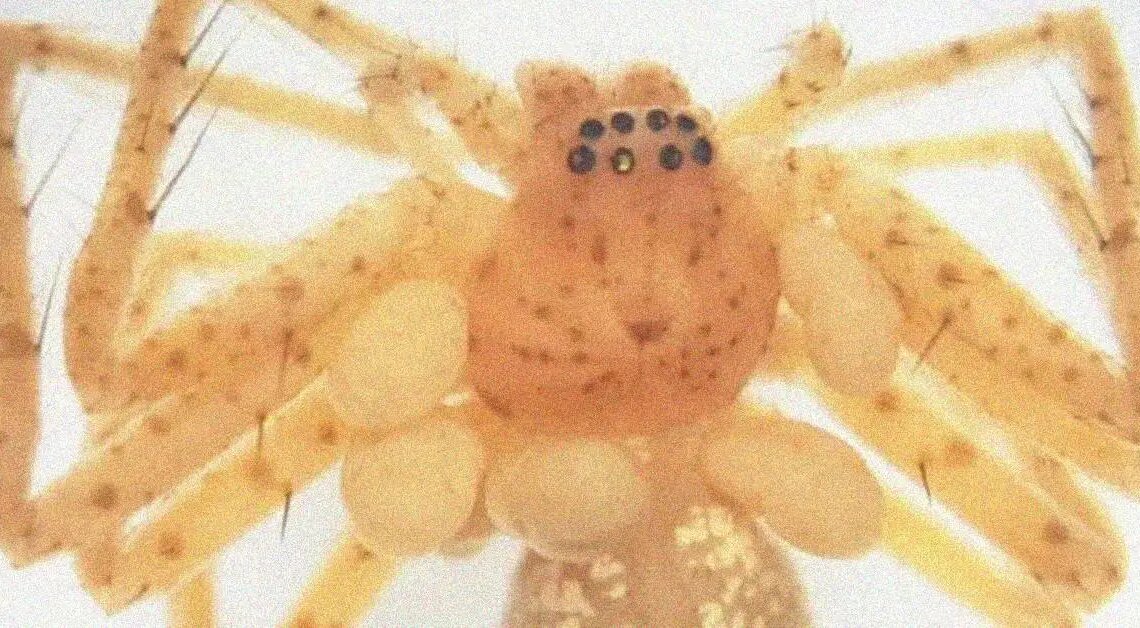
I will muscle through it to tell you that while examining a small juvenile spider preserved in a zoological collection, scientists noticed what looked like a pearl necklace around its body. These “pearls” turned out to be engorged parasitic mites that were feeding on the spider’s bodily fluids. The spider was long dead by the time anyone noticed; the mites became the real subject of interest.
What We Know (So Far) About the Newly Discovered ‘Pearl Necklace’ Spider
The finding, published in October in the International Journal of Acarology, marks only the second time spider-parasitic mites have been documented in Brazil. And the first time this particular mite family has been recorded there.
Ricardo Bassini-Silva of the Butantan Institute recognized the larvae clustered around the spider’s pedicel—that’s the joint between its abdomen and cephalothorax. This area lacks thick chitin, allowing the parasites to easily puncture it and effectively turn the spider into a Capri Sun.
The mites were found on juveniles from three spider families, all just a few millimeters long. The mites themselves were even smaller and are currently known only in their larval stage. Several mite species live parasitically as larvae before they detach and live independently as adults. The metaphor for human children is strong here.
The spiders were collected near caves and grottos in Rio de Janeiro state, close to where Brazil’s first spider-parasitic mite was discovered years earlier. Taken as a whole, Brazil is home to a wide variety of spiders, with more than 3,000 species found in its vast rainforests. That’s why Brazil remains one of the prime hunting grounds for scientists trying to catalogue them and the parasites that latch onto them.
The post Everything We Know About the ‘Pearl Necklace’ Spider Scientists Just Discovered appeared first on VICE.