In the early morning hours of Saturday, January 3, the roar of bombs dropping from the sky announced the US military attack on Venezuela, waking the sleeping residents of La Carlota, in Caracas, a neighborhood adjacent to the air base that was a target of Operation Absolute Resolve.
Marina G.’s first thought, as the floors, walls, and windows of her second-story apartment shook, was that it was an earthquake. Her cat scrambled and hid for hours, while the neighbors’ dogs began to bark incessantly. But the persistence of the strange hum of engines (military aircraft flying low over the city, she would later learn), as well as seeing a group of cadets in T-shirts and shorts fleeing the Army headquarters, were signs that this was not an earthquake.
Marina couldn’t rely on the typical media outlets that are easily accessible in most other countries to learn more. She didn’t bother to turn on the television or radio in search of information about the attacks that began simultaneously at 11 military installations in Caracas and three other states. The government-run television station Venezolana de Televisión (VTV) was broadcasting a report on the minister of culture’s visit to Russia as the attack was taking place. Her cell phone, however, still had a signal and she began to receive dozens of messages on WhatsApp: “They’re bombing Caracas!”
During the darkest moments of that confusing morning, there was no team of independent reporters able to go out and record what was happening on the streets. After years of harassment, censorship, and imprisonment of journalists by the government, there were instead only empty newsrooms, decimated resources, and a complete lack of security, which made it impossible to keep the public informed as the crisis was unfolding.
The fears felt by journalists were shared by many Venezuelans: the fears of arbitrary detention, of being imprisoned without cause, tortured, and extorted. These are fears that have led citizens in Venezuela to adopt some digital safeguards in order to survive. They have learned to restrict chats, move sensitive material to hidden folders, and automatically delete any “compromising” messages. Whenever possible, they leave their cell phones at home. If they have to take their phones with them, then before going out, they delete all photos, stickers, and memes that could possibly be interpreted as subversive. This state of collective paranoia has also, however, allowed Venezuelans to stay informed and not succumb to the dictatorship.
It is, largely, ordinary citizens who have created this information network. Soon after the bombs fell on January 3, the first videos began to circulate, recorded by people who had witnessed the explosions from their windows and balconies, or from the beach, where some were still celebrating the New Year. Even hikers camping at the summit of Cerro Ávila, in Waraira Repano National Park, managed to capture panoramic shots of the bombs exploding over the Caracas Valley. Shortly afterwards, international networks confirmed the news.
In the interior of the country, connectivity is even more complicated. In San Rafael de Mucuchíes, a peaceful village in the Andes in the state of Mérida, a group of hikers tried to keep up with the frantic pace of events with intermittent internet access at 10,300 feet above sea level. They learned the news from telephone calls via operators such as Movistar (Telefónica) and Digitel, not from the instant messaging app WhatsApp. They also overcame the challenges of the information desert they were in by using a portable Starlink satellite internet antenna that one of the travelers had in their luggage. During the crisis, the service developed by SpaceX was provided free to Venezuelans.
Three hours after the attacks, at 5:14 am, defense minister Vladimir Padrino López posted a video declaring that Venezuela had been the target of “the most criminal military aggression by the United States government.” He was the first official spokesperson to appear on screen.
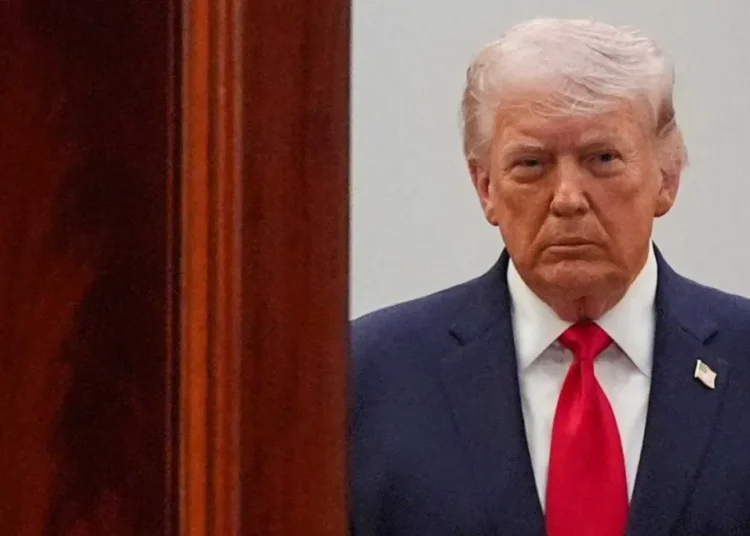
The rumor that President Nicolás Maduro had been captured spread as fast as the videos and messages on social media. At 5:21 am, Trump confirmed on his Truth Social account (a platform that cannot be accessed within Venezuela) that Maduro and his wife, Cilia Flores, had been captured and transported out of the country.
The information blackout on the US military operation that toppled Maduro was circumvented by a collaborative alliance of independent media outlets in Venezuela which sprang into action after the bombings of January 3. For almost 11 hours on YouTube, a group of Venezuelan journalists, some in exile and others within the country, with some hiding their identities for their own safety, jointly broadcast minute-by-minute coverage of an unprecedented event in the country’s recent history (video above). This virtual newsroom was the first to inform Venezuelans of Trump’s announcement that Maduro and his wife had been captured and transferred to the United States to stand trial.
Many Venezuelans, however, lost all connectivity that morning and only found out about the momentous events through word of mouth or much later, after they had managed to reconnect to the internet. Some areas of Caracas, especially those near the bombings like Fuerte Tiuna (the enormous military installation where Maduro’s home and where he was taken by the Delta Force unit is located), suffered prolonged power and internet outages.
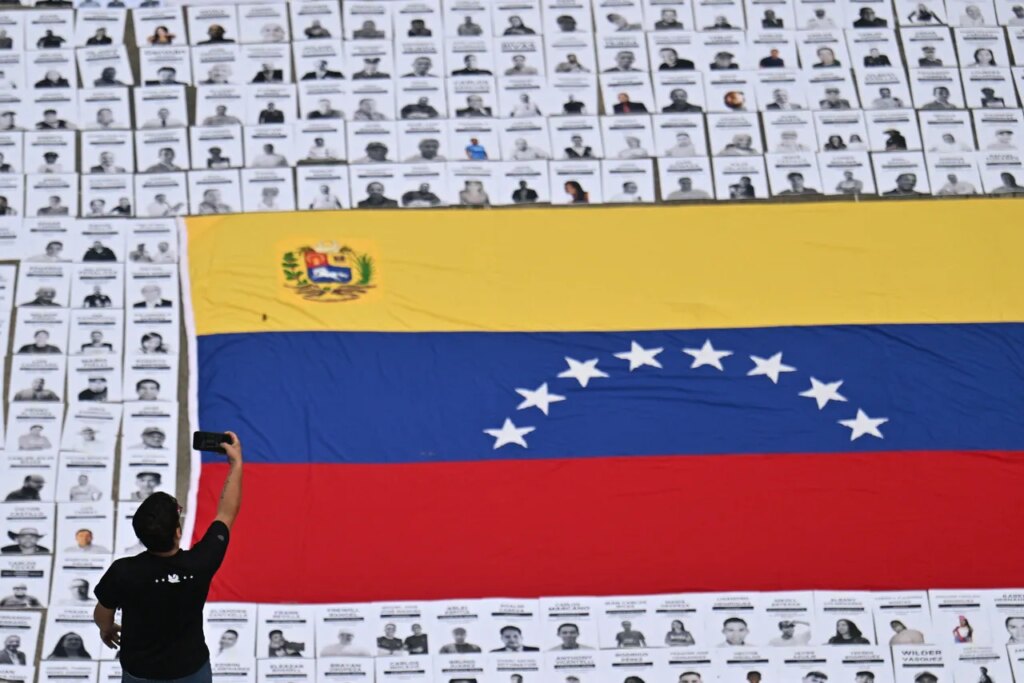
A lack of information on the intervention continued into the days following January 3. By order of the acting president, Delcy Rodríguez, who had been Maduro’s vice president, all radio stations in the country were forced to broadcast only solemn music in mourning for the Venezuelans who died during the military attack. To date, the new US-backed government has not published the final number of dead and wounded, nor their identities. Interior and Justice minister Diosdado Cabello said that more than 100 people died, while the army and militia posted 24 obituaries of uniformed personnel on their respective Instagram accounts.
Surviving Crises and Chaos
The Venezuelan people’s determination to know the truth in the face of the information blackout that existed during the recent US military operation reflects more than two decades of navigating the many crises and chaotic moments under the Chavista regime. They have experienced a common education on how to circumvent censorship, misinformation, and fear so that people can both report on events and stay informed under an authoritarian regime.
To understand how Venezuelans have adapted to the deterioration of freedom of speech and the press in their country, we need to go back to 2014, a year that marked a turning point for Venezuelan journalism. At the same time that there was a wave of protests against Maduro’s regime, many traditional print media outlets were sold to business groups loyal to the government and then changed their editorial stances. Many journalists left to establish digital platforms that would form a new ecosystem of independent media, perhaps with less reach and more limited resources, but with the determination to continue practicing journalism in an environment of growing censorship, threats, disinformation, and repression.
Also in 2014, Twitter (now X) emerged as a powerful alternative source of information especially as more than 400 media outlets disappeared over the course of two decades. That number includes some 285 radio stations across the country (71 percent of the media outlets that closed), according to the organization Espacio Público’s annual report in 2023.
Internet restrictions in Venezuela, however, threatened this digital boom. According to the latest report from the National Telecommunications Commission (Conatel), released in 2022, Venezuela had an internet penetration rate of just 55 percent. According to the organization VE sin Filtro (or Venezuela Unfiltered), the country went from having a relatively competitive internet to one of the worst levels of service in the world.
Furthermore, internet crackdowns are implemented as part of state policy. According to a report by TOP10VPN, Venezuela is the second-most affected country after Russia by this extreme measure of government censorship, resulting in economic losses of up to $1.91 billion and more than 5,900 hours without connection, affecting 17.9 million people.
Censorship and digital shutdowns are added to other repressive practices such as arbitrary detentions (journalists arrested without a warrant, often held incommunicado and subjected to trials without due process); forced displacement (threats and intimidation forcing journalists to leave their homes and even go into exile for fear of reprisals); and judicial harassment (arbitrary application of laws to criminalize journalistic work), which have been well documented by organizations such as the Instituto Prensa y Sociedad Venezuela (IPYS Venezuela), in English, the Press and Society Institute of Venezuela.
Looking at this history, it becomes clear that Venezuela under Chavismo has become a laboratory for social control by the dictatorship through the domination of communications.
As public debate and media consumption shifted to the internet over the last decade, Maduro’s government also began to establish mechanisms for controlling and monitoring the digital environment. The government forced internet providers in Venezuela to block independent media as part of its campaign of digital repression. This situation worsened in the context of the presidential elections on July 28, 2024, when the results that were clearly in favor of opposition candidate Edmundo González Urrutia were never recognized by Maduro. (An opposition coalition has presented evidence that González received 67 percent of the vote to Maduro’s 30 percent, a figure in line with analyses by the Associated Press and other international media outlets and organizations. The government’s official results claim that Maduro won with 51 percent of the vote to González’s 44 percent.)
According to the organization VE sin Filtro, at least 61 independent digital media outlets remain blocked, affecting 90 domains. This does not include temporary restrictions on key platforms such as Signal, YouTube, TikTok, and Telegram, often imposed during political events such as elections or social protests.
Today many Venezuelans rely on a VPN, or virtual private network, to access X. The crisis triggered by the electoral fraud in 2024 led Maduro to tighten controls on communications. Among the measures taken at the time was to remove X from internet services for “inciting hatred, fascism, civil war, death, and conflict among Venezuelans.”
Also in August 2024, Maduro urged his supporters to uninstall WhatsApp from their devices saying it posed a threat to the military, police, and Chavista community leaders. “Say no to WhatsApp,” exclaimed the now-deposed leader at the time, while also calling for people to abandon other platforms, specifically Meta’s Instagram and TikTok, which he identified as the main instruments “amplifying hatred and fascism.” Maduro encouraged his supporters to switch to other networks, such as the Russian Telegram.
But once again, digital tools soon became available that would allow Venezuelans to circumvent the latest restrictions and access information. In 2024, VPN provider Proton AG offered their services free of charge to Venezuelans, allowing people to circumvent government blocks on social media, at least at times.
Social Control, Reimposed
Three days after Maduro’s fall, the apparent normality in the streets of Caracas contrasted with the joy, anguish, and uncertainty that was being expressed on social media, especially WhatsApp. But the illusion of a relatively free debate on social media ended on January 5, when the National Assembly was sworn in at the Legislative Palace in the historic center of Caracas. On that same day Delcy Rodríguez was also sworn in as Venezuela’s acting president and 14 journalists covering the official ceremony were arrested and one of them was deported.
On January 3, the same day as the US bombing, a decree was issued declaring a state of external emergency with the force of law which, among other restrictions, suspended the right to demonstrate and assemble in public, put public services and the oil industry under control of the military, and mandated the arrest of anyone who promotes or supports “the armed attack by the United States against the Republic.”
The decree took effect immediately in a show of force. A few hours after the US military operation, four men (two in the state of Mérida and two in Carabobo) were arrested for allegedly supporting the US attack on Venezuela. On January 12, a group of 15 teenagers who were celebrating Carnival in a neighborhood of Barcelona, in the state of Anzoátegui, were detained and charged in court with “incitement of hatred, treason, and criminal association.” Hours later, the minors were released.
Following the violence unleashed by the fraudulent election results of July 28, 2024, Venezuelans began to adopt a practice of self-regulation when it came to their online activities, out of fear of reprisals that could at times be physical. Agents from state security organizations and the colectivos (vigilante groups operating with the government’s consent) were given license to randomly stop pedestrians and drivers and check the screens of their devices, even though this is technically illegal.
It remains to be seen whether the current state of surveillance will continue in post-Maduro Venezuela under the democratic transition that the United States has promised. For now, the interim president and other government officials have reactivated their X accounts, but the platform remains difficult for the broader public to access. On the one hand, 18 journalists were released from prison in a single day but, on the other, colectivos and police alike continue to detain people after checking their cell phones, sometimes even when they don’t have any “problematic” content. For now, life has become only more complicated in Venezuela’s digital cage.
This story originally appeared on WIRED en Español and was translated from Spanish by John Newton.
The post The Information Networks That Connect Venezuelans in Uncertain Times appeared first on Wired.