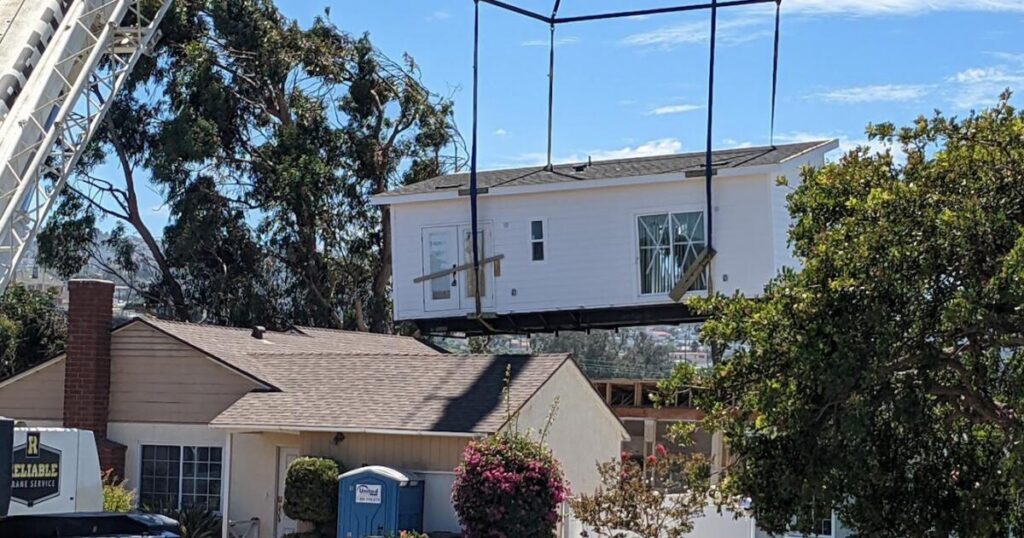
Dear Liz: We live in a high fire risk area and feel it is too risky to keep our home. Our daughter and her husband invited us to build an accessory dwelling unit on their property. With the tariffs, it is estimated the construction will cost about $600,000. We have a nest egg of about $1.3 million and could sell our current home for about $1 million (we still owe $235,000 on the mortgage).
Our advisor at the bank has recommended a “bridge loan” to pay for the construction, or we could use the money from the sale of our home and our savings, which makes us nervous. I know we need advice but are unsure where to turn.
Answer: You aren’t really facing a choice between financing the ADU and using your own resources. You’ll pay for it either way.
Bridge loans are short-term financing that typically must be repaid within a year, at most. Presumably, you would use your nest egg and/or your home sale to do that.
Another financing alternative would be a home equity line of credit or home equity loan, using your current home as collateral. The interest rate would be somewhat lower, and you wouldn’t be under the same time pressure to pay off the loan in case construction takes longer than expected. Still, the loan would need to be paid back, so the debt will reduce your resources.
If you were building or buying a replacement home, you could get a mortgage to pay off the bridge loan. But in this case you are probably pouring money into someone else’s property. Your daughter and her husband likely would own the structure that you build.
That’s not to say this is a bad idea — far from it. ADUs can help bring families closer and make caregiving easier, while allowing each generation some privacy. But understanding how this works — who pays and how, who benefits and how — can help with decision-making.
So yes, you need advice, and lots of it. You should be talking to a lawyer, a tax pro and a financial advisor who is a fiduciary (someone who is obligated to put your best interests first).
The lawyer can discuss ways to protect your investment in the ADU. The tax pro can advise you about the various tax consequences, including the likely bills for tapping your nest egg and selling your home.
A fee-only financial planner can discuss the options with you to figure out the best course. If you don’t already have an attorney and a tax pro, the planner can give you referrals.
Dear Liz: My parents set up 529 college savings accounts for my niece and nephew. The accounts are now quite substantial. My nephew chose to go to community college for his freshman year, and seems to be leaning toward not continuing in college. If he chooses to go to a trade school instead of college, can the 529 funds be used for that? Or, if he decides not to pursue either college or trade school, what becomes of those funds in his 529 account? Can they be transferred to his sister (who may not need it due to the large amount in her own account)? Is there any ability for my parents to recoup the money? What are the available options?
Answer: College savings accounts can be used at any eligible post-secondary institution, including most trade and vocational schools. In addition, up to $35,000 of unused 529 funds can be rolled tax- and penalty-free into a Roth IRA for your nephew, subject to various rules. If your nephew had student loans, up to $10,000 could be used to pay those, as well.
Your parents have many other options for unused funds. They can change the beneficiary to your niece, or any other eligible family member (which can include the original beneficiary’s spouse, children, siblings, nieces, nephews, cousins, in-laws, or parents). In addition to college expenses, 529 withdrawals can pay for up to $10,000 in annual expenses for tuition at elementary and secondary schools.
Account owners can even change the beneficiary to themselves, although they would need to incur expenses at an eligible institution to get tax-free withdrawals.
Finally, your parents could simply withdraw the money and owe income tax on the earnings plus a 10% federal penalty.
That should probably be a last resort, though. Since there’s no deadline to use the money, it can be left alone to grow for the future. Your nephew may want more education later, or your niece’s education could be more expensive than expected. Even if they don’t use the money, either or both of them may someday have kids who could use the money for their schooling.
Liz Weston, Certified Financial Planner, is a personal finance columnist. Questions may be sent to her at 3940 Laurel Canyon, No. 238, Studio City, CA 91604, or by using the “Contact” form at asklizweston.com.
The post Should I take a bridge loan to build an ADU? appeared first on Los Angeles Times.