My patient’s wife glared at me from across his bed, where she stood flanked by a half-dozen friends. My patient, lying between us, was yellow with jaundice, his face gaunt, bruises on his arms from months in the intensive care unit. He was off sedation but remained comatose.
His wife paced the room as she talked, her tone pressured. She wanted to know what we were going to do next — surely, we would transfuse and restart antibiotics. I explained our care plans for the day but reiterated, as we did daily, that her husband was dying. His liver cancer could no longer be treated and had now caused other organs to fail.
She asked about a liver transplant. I told her he was too sick. I had the sense that she felt solely responsible for her husband’s outcome — that we would let him die if it were not for her advocacy. But he would die regardless. “I don’t want to hear that. You have to do something,” she said, and turned away. Her friends waved me out of the room.
One of the nurses approached me later. “How did it go? She’s a difficult one.”
There was that word we use for patients or families who rub us the wrong way — difficult. I’ve been thinking about the word recently, while watching the second season of the HBO Max drama “The Pitt.” In contrast to many other medical shows, where patients and their families are generally portrayed as tragically sympathetic, “The Pitt” reveals the doctor-patient relationship as it is: complicated, with moments of beauty but also intense frustration and conflict. Patients can be violent. They can refuse care. They can be culpable in their own demise.
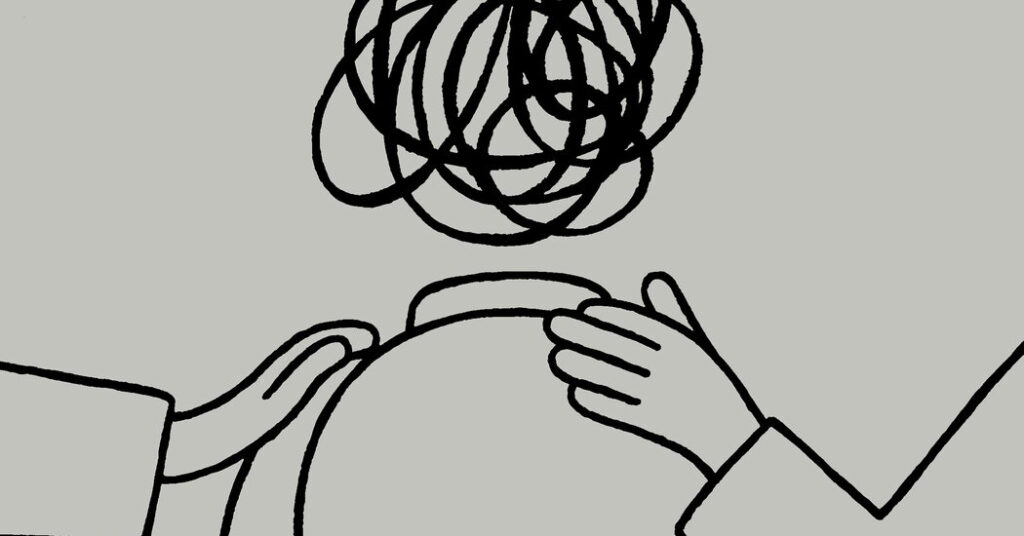
This is a refreshing take, but it isn’t the whole story. Whom we as health care professionals call difficult often has more to do with us and with how we tolerate discomfort than it does with the people themselves.
When I take over the I.C.U. from another doctor finishing a shift, most of what we discuss is the families, particularly the “difficult” ones. I learn about the family member who is so angry that he will no longer receive daily updates from the residents. I learn about the daughter who stopped visiting or returning calls after she received bad news, the son who expects the overnight doctors to call him each night before midnight.
We don’t call family members difficult if they agree with us — this is a term used only for those who challenge our advice. Difficult families ask questions in an accusatory tone and are not satisfied with our answers. They demand updates at a frequency that we find excessive, they interrogate the nurses, they make choices that we find objectionable. There is an ineffable something about them that is hard to be around, something high-maintenance or caustic or simply uncomfortable. They are considered unreasonable.
The lovely family, in contrast, knows how to be present without being overwhelming. They might ask questions, they could be medically savvy, but they ultimately follow our recommendations. They are considered reasonable. Conversations don’t feel contentious. We linger in the patient’s room to talk, even when we don’t have to. We hug them when their loved one leaves the unit. To remain lovely despite weeks at the bedside in the I.C.U. is a tremendous challenge, one that I strongly suspect I would fail.
I don’t believe that the care we deliver the lovely or difficult patient is different when it comes to clinical decisions like whether or not to move forward with surgery or which antibiotic to start. It is possible that I give even more attentive care to a difficult family’s loved one, because I am prepared for an interrogation. No matter, these labels are unhelpful. When I am told that a patient or family is “difficult,” I see all their actions and decisions through that lens. But the person we call difficult or unreasonable is often someone struggling with untenable realities and without the coping skills to do so gracefully.
I used to say that I found myself drawn to the I.C.U. because it was an honor to see people at their most amazing during moments of crisis. But the honor is really the chance to see people when they are frightened and vulnerable and angry and ugly and simply trying to do a good job for the person they love. I try to remember this, and to be gentle even to the most difficult family members. Often, we are the ones being difficult, while our patients and their families are just doing the best they can. Not everyone is likable, and it is important for us to acknowledge how our most unlikable patients and their families make us feel and not allow it to cloud our response.
As the days passed, my patient continued to worsen. It was clear that he would die and the only question was whether his wife would acknowledge that reality or would rail against it — and us — until the end. We set up a family meeting.
I sat across from my patient’s wife. Earlier that day I had seen their children for the first time. I hadn’t realized how young they were, how sweet. Her son was eating snacks from his backpack in his father’s room. She told me how well they were doing in school, how proud my patient was of their accomplishments. My patient and his wife were relatively young themselves — not much older than me — and she had carried the sole weight of decision making for weeks now. She asked me another sequence of questions about his labs and demanded yet another unnecessary transfusion, but this time I paused before I let myself feel frustrated.
“I just want to tell you that you have been a tremendous advocate for your husband,” I remember telling her. “Being a health care proxy is the hardest job. None of us have ever doubted how much you care about your husband or your willingness to go to the ends of the earth to get him better, if that were possible.”
She looked at me. I wondered what she would say. “You never listened to me,” she finally said.
The meeting was over soon after. We did not talk again. But I would later learn that a few hours later, when I left for the night, she made the decision to allow him comfort care. She was at his bedside when he died.
Daniela J. Lamas, a contributing Opinion writer, is a pulmonary and critical care physician at Brigham and Women’s Hospital in Boston.
The Times is committed to publishing a diversity of letters to the editor. We’d like to hear what you think about this or any of our articles. Here are some tips. And here’s our email: [email protected].
Follow the New York Times Opinion section on Facebook, Instagram, TikTok, Bluesky, WhatsApp and Threads.
The post My Patient Was Dying, but Would His Wife Accept It? appeared first on New York Times.