

Intrigued by automated driving? Perhaps you’ve already tried one of the real Waymo or Zoox robotaxis in the United States. (Tesla’s “robotaxis” probably don’t count yet.)
China is the other real global hotspot for automated driving, with some of its biggest companies eager to expand around the world. Yet many people in the West — even many experts — don’t really understand what’s happening on China’s streets. Often, we hear people simply claim that China is either way ahead or way behind.
Together, we have more than three decades of experience working on automated driving in industry and academia. Since meeting at Stanford University, we’ve collectively spent countless hours riding in Chinese as well as American robotaxis.
We wrote this piece to share our experiences in China and to help you plan — or even daydream — your own.
Perhaps you’ll marvel as your robotaxi skillfully navigates streets filled not just with cars but with bikes going every which way. Or you might sit sheepishly as it tries to turn itself around in a crowded intersection. You’ll see some passersby who are shocked you’re in a car without a driver, as well as others who are just annoyed you’re in their way.
In other words, you’ll encounter everyday people as they — and you — try to make sense of the robotaxis coming our way fast.
Here’s what we’ve learned about robotaxis in China on our (driverless) adventures, and here’s how you can ride too.

China’s big robototaxi players
China’s three largest robotaxi developers are Baidu Apollo, Pony.ai, and WeRide. Each operates in China and is also pursuing services in other parts of the world, including Europe and the Middle East.
Baidu Apollo is the automated driving unit of Baidu (BIDU on Nasdaq), often compared to Alphabet, which owns both Waymo and Google. You can get the Baidu Apollo Go app by searching for 萝卜快跑 in a Chinese app store. The first part of this name intentionally sounds like “robot,” but it actually means “radish.”
Pony.AI (PONY on Nasdaq) is a startup based in both China and the United States. You can get the PonyPilot app by searching for 小马智行 in a Chinese app store.
WeRide (WRD on Nasdaq) is a startup that operates robotaxis, as well as automated shuttles along specific routes. You can get the WeRide Go app by searching for 文远知行 in a Chinese app store.
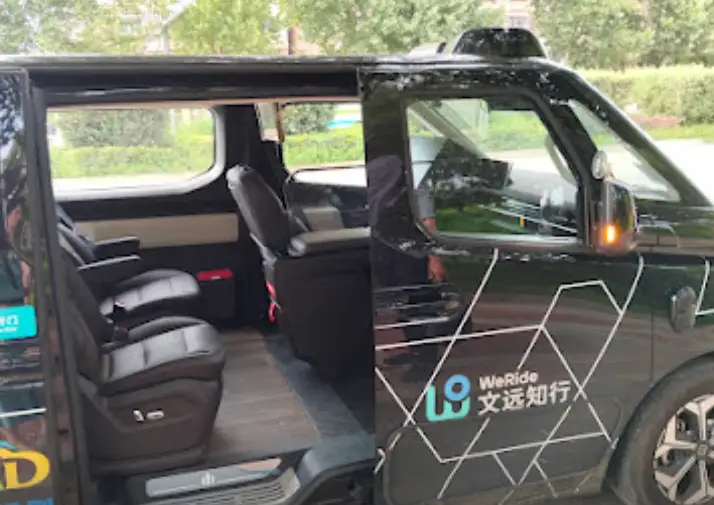
These companies differ in their approaches. For example, unlike many of its competitors, Baidu sometimes uses remote drivers rather than mere remote assistants. Perhaps as a result, Baidu already sends its robotaxis on some freeways without safety drivers inside. (Waymo only recently expanded its service to a few US freeways.)
Other companies are also developing automated vehicles in China — but, at least in our experience, they tend to be active in very limited areas or still rely heavily on safety drivers.
Many cities in China have robotaxis — if you know where to look
Many Chinese cities — including some megacities you may have never heard of — have at least some automated driving activity.
If you’re coming in search of robotaxis, you can’t go wrong with five of the more famous: Beijing (the capital), Shanghai (the financial hub), Wuhan (China’s “Chicago”), and Guangzhou and Shenzhen (neighbors in the tech-heavy province of Guangdong near Hong Kong).
Whereas Waymo’s robotaxis can pick you up almost anywhere in San Francisco or Phoenix, you’ll need to go find the robotaxis in Chinese cities. Services are generally confined to pilot zones covering only portions of each city, and an individual robotaxi company might provide truly driverless service in only part of a given pilot zone.
That said, comparisons are difficult: While Beijing’s primary pilot zone may appear small, it is roughly similar in geographic size and population to all of San Francisco.
Beijing offers a mix of robotaxis in its southern suburbs
Because Baidu, Pony, and WeRide are all active here, Beijing provides a good introduction to Chinese robotaxis. Most of the capital’s automated driving activity takes place in the southeastern Yizhuang area. (You’ll know you’re there when you see numerous automated vehicles marked with a BJHAD logo in the shape of a car.)
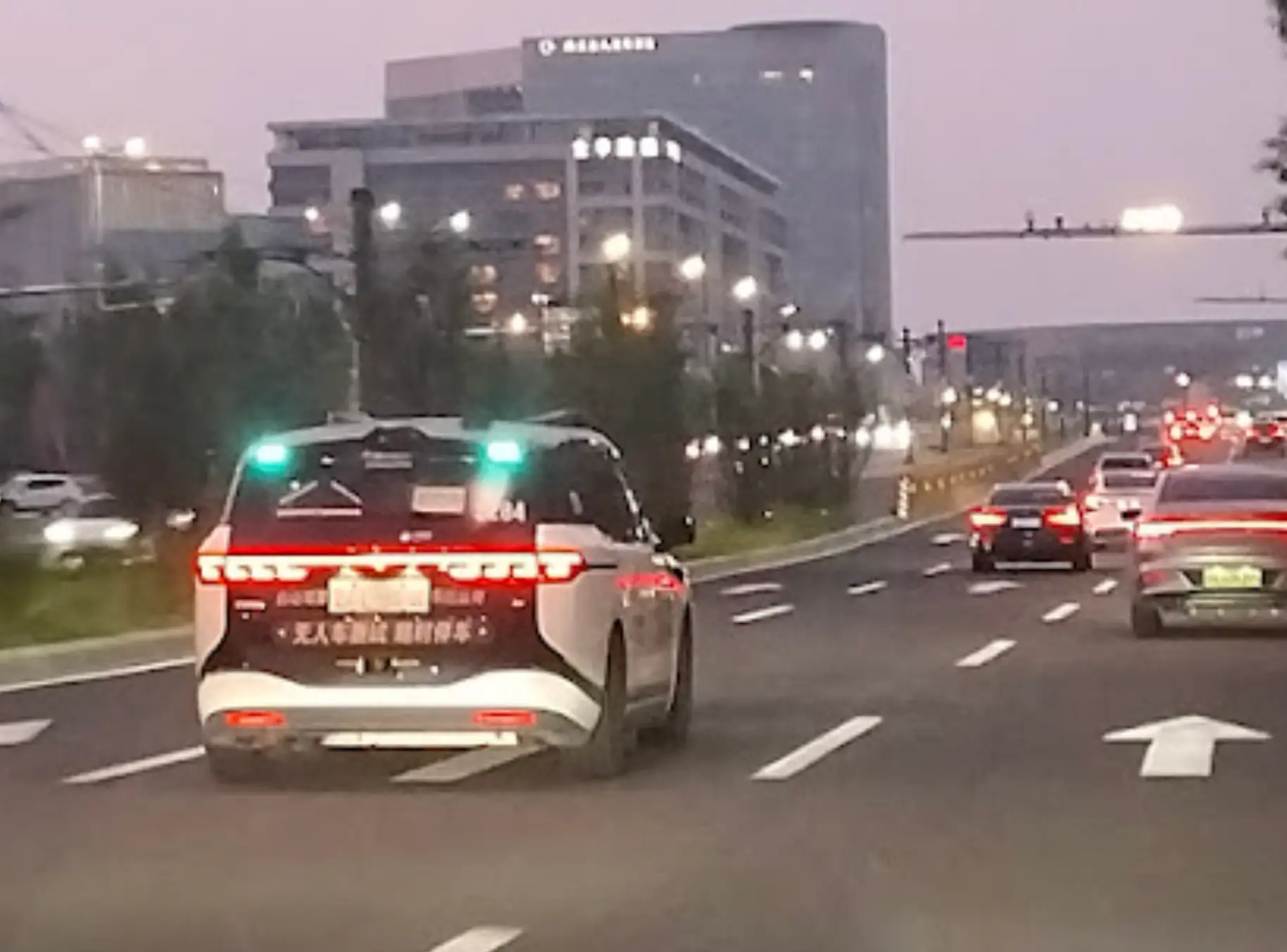
Visit Yizhuang during the day — not during rush hours when services may pause or fill up, and not at night when they generally stop. Some robotaxi companies offer connections to and from South Railway Station and Daxing Airport, but these runs can be sporadic, may require advance booking, and currently use in-vehicle safety drivers.
Shanghai also has variety, but it’s vast
Shanghai has several areas where, at least in theory, you can take a ride in a robotaxi. Remember that Shanghai is enormous; as in Beijing, you may need to travel by subway or taxi for an hour just to reach a robotaxi.
Pony serves a relatively small area east of Shanghai’s famous central business district. From the CBD (or from the super-fast maglev train that serves Pudong Airport), head to Yunshun Road station. Yunshun Road is not Yunshan Road!
If you’re near Hongqiao Airport (or its intercity rail station) on Shanghai’s far west side, explore the various services in Jiading. We recommend a bus or taxi ride to Poly International Plaza to try out Baidu and Pony. Didi Rider (滴滴出行) and SAIC (上汽集团) also have limited operations nearby.
Wuhan is Baidu’s stronghold
Locals like to say that Baidu chose Wuhan because the city’s human drivers are notoriously bad. At this point, the city’s ubiquitous Apollo robotaxis probably offer China’s best example of an automated vehicle service that ordinary commuters rely on. You can even get to and from the airport without a human at the wheel.
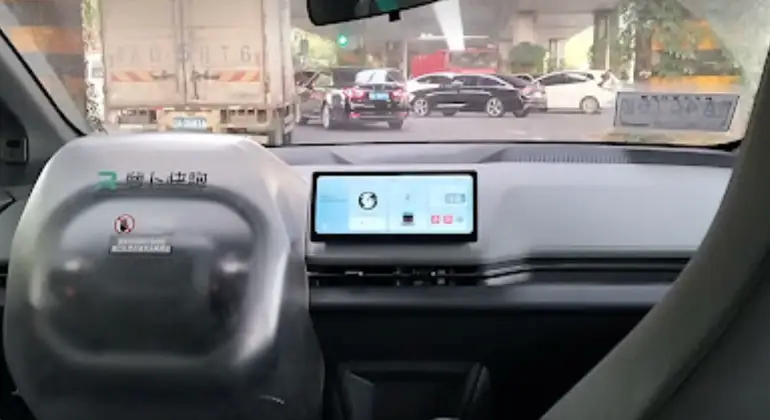
As with all the companies, there are caveats: You might be within Apollo’s service area but not near one of its designated pick-up points, and some major destinations are still just out of reach. If you’re already in the center, start at Hongtu Avenue station near Jinyingtan Hospital.
Shenzhen and Guangzhou are mixed but memorable
Some of our more exciting robotaxi experiences (other than on Wuhan’s freeways) were in Shenzhen and Guangzhou.
Many “robotaxis” in these two cities actually had human safety drivers. And some of the vehicles that were driverless perhaps should not have been.
Shenzhen has officially opened the entire metropolis to robotaxis, but in practice, companies still serve only limited areas.
Guangzhou has integrated automated shuttles into parts of its public transport network, which shows how automated mobility is more than just robotaxis.
Chinese robotaxi apps can be tricky
The apps you’ll use to book your robotaxi trips are both fun and frustrating. Most are available only in Chinese, so a screen translation app compatible with the Chinese internet is essential.
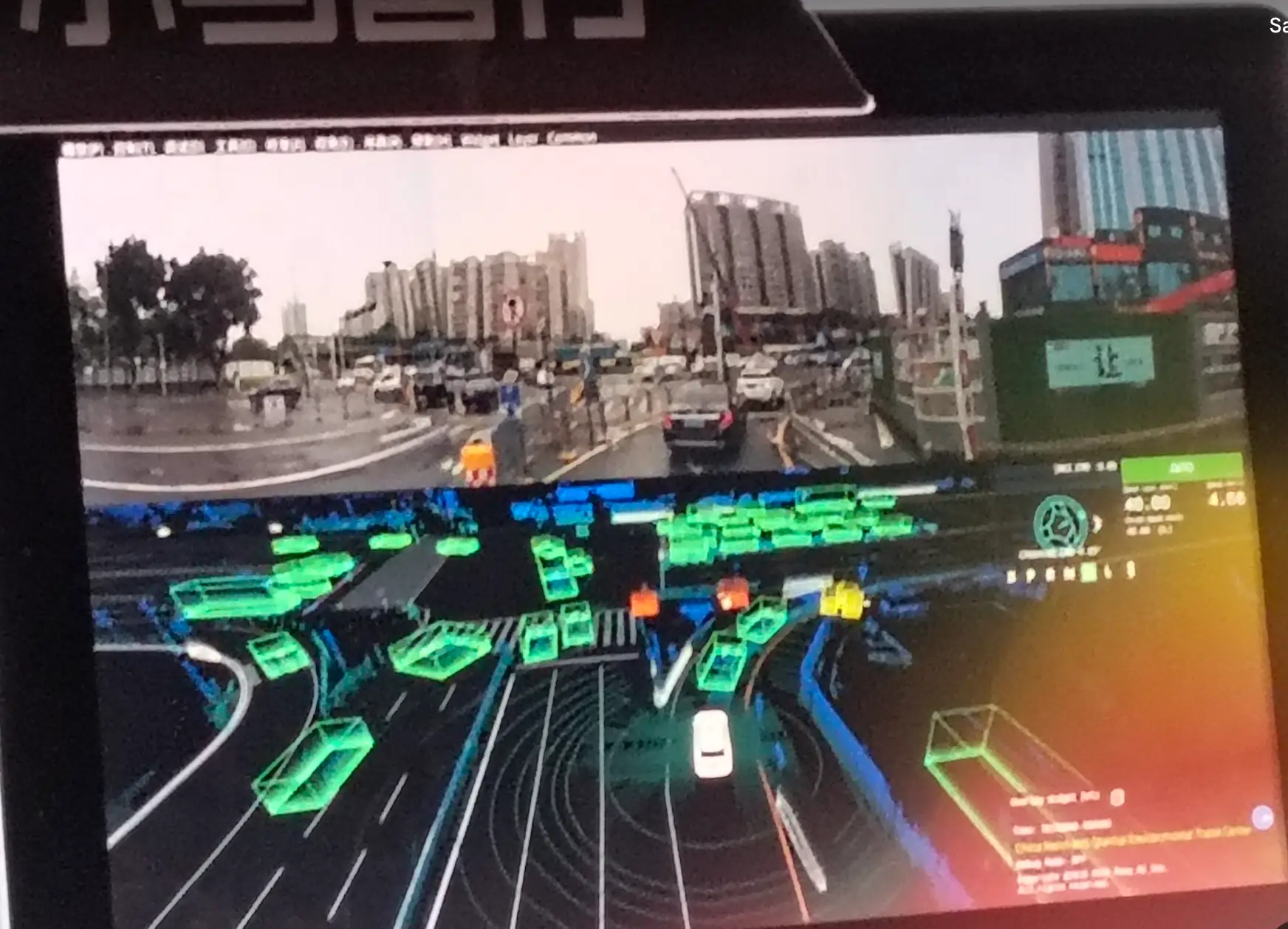
Some apps won’t show their robotaxis until you’re physically in their service area. Some require you to manually set (and, crucially, to update) your desired service area in the settings; otherwise, they may incorrectly show no availability. And some let you choose between driverless and driver-supervised rides.
Alternatively, the mapping apps Baidu Maps and Amaps each show their preferred robotaxi company if you’re in a service area and you’ve toggled the robotaxi option. (Look for the Chinese term 无人车.)
Once you request a ride, some apps indicate your queue position. But if robotaxi service has been suspended due to weather or other reasons, a perpetual queue might be your only clue that your ride isn’t coming.
You might need a travel visa to visit China
China has recently loosened some of its travel restrictions. This means citizens of many European countries do not need travel visas for short visits.
If you’re a US citizen, you do need to get a visa in advance — unless you’re spending only a few days there on your way to somewhere else.
Check with your regional Chinese consulate, or turn to a commercial visa service. It’s not onerous.
You will need a local phone number
You’ll need a mainland Chinese phone number to register for most robotaxi services — as well as to use many other Chinese apps that are linked to physical things in the real world. A foreign number, Hong Kong number, or data-only eSIM is unlikely to suffice.
Fortunately, once you arrive in China (and sometimes even in the airport), you can buy or rent a prepaid Chinese phone. Remember to bring your passport — and make sure you get an actual mainland number (+86 followed by 11 digits).
You can also ask the salesperson for the best app to translate your screen from Chinese to English. Remember that the Chinese internet is quite different from the internet you know. For example, even with a VPN, you might not be able to use any Google services.
The Western app stores for Apple and Android have international versions of major apps such as WeChat (for messaging and payments), Alipay (for payments and public transport), and Didi (for taxis). Beyond these basic functions, however, many of these apps (or the miniapps within them) may still require a Chinese phone number.
Change your destination for longer trips
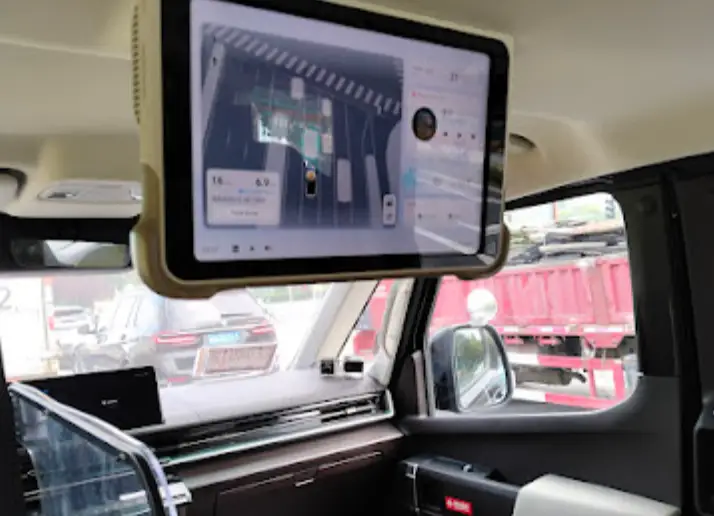
Once your robotaxi trip is underway, you can change your destination — though the number of times varies by provider.
As long as the app or in-vehicle screen lets you, this is a great way to spend more time in robotaxis rather than waiting for them.
This also shows how a company handles route changes. For example, Pony will quickly undertake U-turns (or even three-point turns), which can make for interesting maneuvers on already chaotic streets.
Be a robotaxi tourist in China
If all this sounds complicated, don’t worry: The quirks of early robotaxis are part of the experience. China is becoming more accessible to foreigners, and some of the hurdles we’ve described may have even fallen by the time you visit.
Regardless, the people you’ll meet are almost always willing to help. Even if they don’t speak English, they’re impressively proficient with translation apps.
As with any trip, carefully consult travel guidance from your government. But if you’d like to be a robotaxi tourist, China should be high on your list. The country’s robotaxis aren’t perfect, but they’re ahead of most of the world — and well worth the trip.
Bryant Walker Smith, a professor at the University of South Carolina and a visiting professor at Renmin University of China, studies the law and policy of AI generally and automated driving specifically. His publications are available at newlypossible.org.
Sven Beiker, the managing director of Silicon Valley Mobility, teaches strategies for the automotive industry at Stanford University and AI in corporate operations at the University of Borås in Sweden. He holds a PhD in mechanical engineering.
Yandeng Long and Xiang Li, law students at Renmin University of China, contributed their insights, enthusiasm, and language skills to this story.
Read the original article on Business Insider
The post We rode in dozens of driverless robotaxis in China. Here’s what we saw — and our advice for other curious travelers. appeared first on Business Insider.