MINNEAPOLIS — Jordan’s parents didn’t want her to become an ICE watcher.
But on Tuesday, after a single day of training, she climbed into her Jeep and joined hundreds of neighbors patrolling the streets of this embattled city, where federal immigration agents have shot and killed two people this month who were monitoring and attempting to disrupt their activities.
“I’m not really nervous, it’s more like, I want to prevent bad things from happening in my neighborhood,” Jordan, 40, said as she headed out. Her family, however, had deeper worries — that she too might get shot, or federal agents could identify and harass her. She agreed to be interviewed on the condition that her last name not be used, for fear of government reprisals.
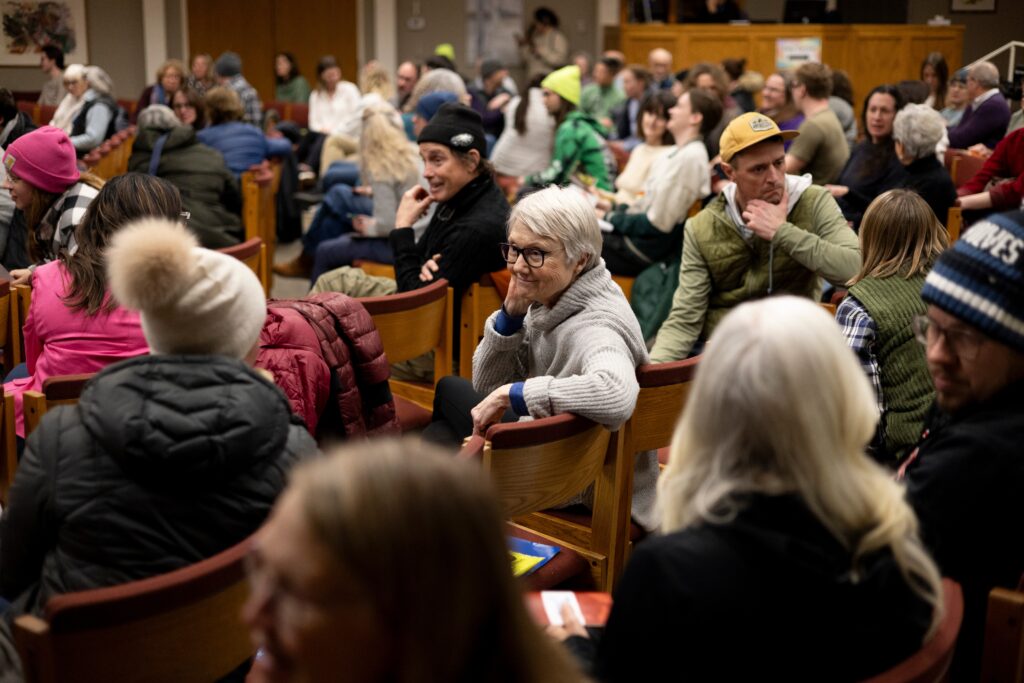
More than 34,000 Minnesotans have signed up to be trained as U.S. Immigration and Customs Enforcement observers with various activist groups in recent weeks, many of them since Jan. 7, when a federal agent shot and killed Renée Good, a poet and mother of three, after an encounter with an ICE convoy in South Minneapolis.
The killings of Good and, on Saturday, ICU nurse Alex Pretti underscore the dangers for the city’s widespread resistance movement, a loosely connected network of neighborhood volunteers who communicate on Signal, the private messaging app, as they play cat and mouse with heavily armed and masked federal agents on snowy streets.
This week these ICE observers vowed to continue their work despite signs of a political thaw on the national stage, after Trump removed controversial border patrol head Greg Bovino from Minneapolis and renewed talks with Minnesota Gov. Tim Walz (D), a frequent critic.
Bovino’s replacement, border czar Tom Homan, said at a news conference Thursday that the administration would focus on “targeted” operations and that the 3,000 agents deployed to the city could be reduced if state and local leaders cooperated more with federal authorities.
But, he warned, “justice is coming” for those who have been disrupting deportation actions in the city for weeks. Trump has called the protesters “paid agitators and insurrectionists,” and FBI Director Kash Patel said this week the agency is investigating the activists’ group chats. On Wednesday, the Justice Department announced criminal charges against 16 people in Minneapolis accused of assaulting officers or interfering with federal immigration enforcement operations.
“What we have built in Minnesota is why Bovino is no longer here. It is the reason why the tone has changed nationally,” said Edwin Torres DeSantiago, a manager for the Immigrant Defense Network, which is training more than 2,000 people a week to become “constitutional observers” — even in places as far-flung as Moorhead, a town more than 200 miles from Minneapolis where 400 showed up Tuesday.
The influx of new volunteers is a “blessing,” Torres DeSantiago said, because it means more citizens to gather video footage of immigrant removals that could be used in ongoing state and local lawsuits and in the future. “It’s a long-term game,” he said.
Jordan had never been an activist, but that changed when a neighbor sent her the video of Pretti’s shooting death. A Washington Post analysis of the videos showed that Border Patrol personnel had secured a handgun he was carrying just before they opened fire.
“I just had such a visceral reaction,” Jordan said. She was shaking and crying “angry and sad tears at the same time.”
After that, she said, “I couldn’t just not get involved. Working seems pointless at this point … it feels wrong not to want to help when they’re killing, murdering our community members on the street.”
She heard Homan’s threat, she said, but “getting arrested is the least of my worries right now.”
ICE agents were still out in full force this week in Jordan’s neighborhood, the diverse and artsy Northeast part of the city, so there was plenty to do.
On Tuesday alone, federal agents tried to enter the Ecuadorian consulate on Central Avenue, prompting a diplomatic furor, and arrested two customers at a Latino grocery store, witnesses said.
The Department of Homeland Security said in a statement that ICE officers had been pursuing a “criminal illegal alien” who fled into the diplomatic building. They were not immediately aware the building was a consulate, the statement said, because it was not clearly marked. (In fact, the building has a sign with the country’s seal over the door.)
The agency also confirmed that it arrested two “illegal aliens from Ecuador” at the grocery store Tuesday morning, one of whom had tried to flee into the street after being handcuffed.
Jordan’s observer security training in Northeast was taught by Alyssa Winter, a disabled military veteran who has trained more than 500 people in twice-daily sessions since Jan. 7.
Winter, 50, cuts an arresting figure on patrols — with gray curls held back by a headband and a lanyard around her neck that has a pin from an ICE stun grenade used as a charm.
“Remember, they look like us, they drive cars like us but they don’t behave like us,” Winter told a small group of new trainees on Tuesday.
ICE agents would likely be in groups, she warned them, masked, parked at the edge of places like the Home Depot parking lot, looking for Latino faces. She went over basic safety measures, cautioning them to stay a safe distance away while tailing ICE vehicles and filming agents.
Leave your dogs, kids and guns at home, she said.
“I would prefer nobody brings guns. Don’t give them a reason to hurt any more of us,” she said. “Even if people have concealed carry permits” — like Pretti — “please just don’t.”
After Tuesday’s training, Winter and Jordan ended up at the buzzy local coffee shop in Northeast Minneapolis that has become a haven for the resistance movement. The shelves are stacked with bottled water, boxes of granola bars, hand warmers and the brightly colored, 3D-printed whistles that the protesters blow to warn neighbors when ICE officers are near. “FREE RESOURCES. Take what you need,” the sign said.
Federal agents had come into the coffee shop that morning and threatened to return and make multiple arrests, witnesses said. Many nearby immigrant-owned businesses had locked their doors or closed early after ICE agents arrested two customers shopping in a Mexican grocery store, according to the store owner.
Now, volunteers brought a Black man in a heavy puffer coat into the coffee shop, saying he had been roughed up by federal agents in front of a local library.
Winter called for a volunteer medic and helped hide the man in a bathroom, fearful that federal agents would return. The man — who did not respond to questions — appeared overwhelmed, hiding his face in his hands.
Winter knelt down and tried to comfort him, then gave him a hug. Eventually the medic arrived and drove him away for treatment.
“Jesus Christ,” Winter muttered. The man was a Black American citizen, she said, not an immigrant or an ICE watcher. “I had no idea Central [Avenue] was going to turn into a war zone today.”
Shortly after, Jordan left for her patrol, climbing in her Jeep littered with Starbucks cups and a dog sling and calling in to the live Signal patrol chat with about three dozen others, most of them using fake nicknames inspired by fruits or cartoon characters.
She drove circles around the icy streets of her neighborhood, looping by the high school, the McDonald’s and the Target, with the call on speaker. The central dispatcher tried to keep the surveillance organized, but the frenetic pace made that difficult. A steady stream of callers reported license plates of suspected ICE vehicles and jumped out of their cars to warn immigrant-owned businesses to lock their doors when agents drew near.
At one point, Jordan heard another volunteer on the live line report that a black Jeep was following him and began reading the numbers of the license plate.
“That’s me!” Jordan said.
She drove by several ICE watchers standing guard in front of the Ecuadorian consulate, then several more outside a modest apartment complex where a suspected ICE agent sat idling in a large black Suburban. Around the time school began letting out, local folks stationed themselves on their own street corners to keep watch, like quiet little sentinels.
Jordan stood down for the day at about 6 p.m. She was exhausted and behind on her actual work — a job in marketing sales she does remotely.
She was still trying to assuage her worried parents, retirees who kept checking in on her from their snowbird perch in Arizona. On Thursday, her dad sent her a link to a Washington Post story titled, “The Powerful Tools in ICE’s Arsenal to Track Suspects — and Protesters.”
“I try to reassure them by telling them I’m always out there with a buddy, I’ve done the training and I would never get right up in an ICE agent’s face, and not do anything to agitate them deliberately,” she said.
She said she would patrol until the last immigration agent has left the city.
“Locally, nothing has changed. There is still stuff happening on our streets,” she said. “Until we feel anything differently, it’s going to be business as usual.”
María Luisa Paúl contributed to this report from Washington.
The post Thousands of new ICE watchers hit the streets after two killings appeared first on Washington Post.