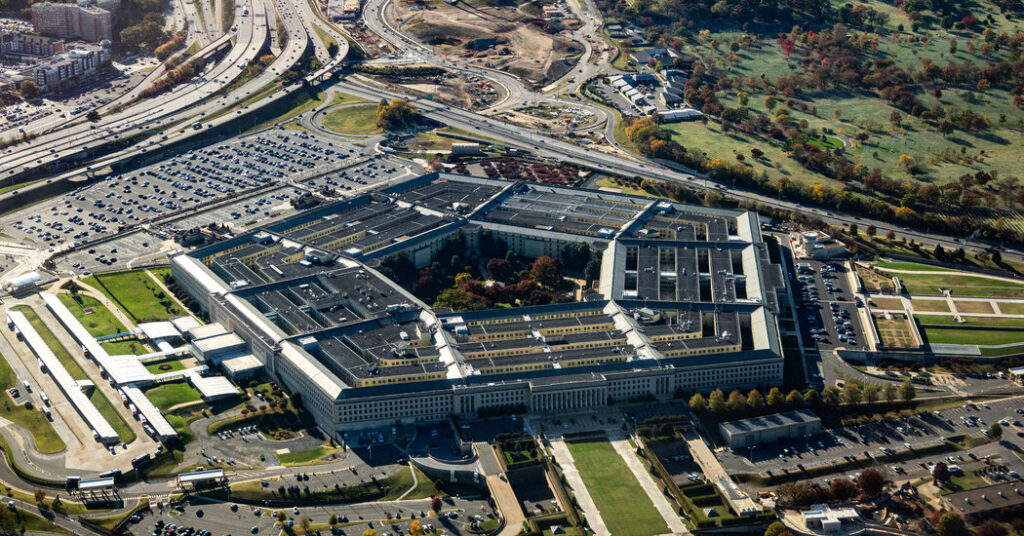
In a court filing late Friday, the Pentagon defended the restrictions it imposed on media organizations in October, calling them a reasonable initiative to balance national security with media access. The filing came in response to a lawsuit filed in December by The New York Times.
The purpose of the policy “is to secure the Pentagon and stop activity that could compromise national security,” the filing said, adding that the policy outlined “explicit and clear standards for conduct” at the Pentagon.
The rules require reporters to sign a 21-page form that sets restrictions on journalistic activities, including requests for story tips and inquiries to Pentagon sources. Reporters who don’t comply can lose their press passes. The restrictions replaced a far more streamlined set of rules.
In its complaint, The Times argued that the Pentagon policy violated the First Amendment rights of journalists, curbing their ability to “do what journalists have always done — ask questions of government employees and gather information to report stories that take the public beyond official pronouncements.” The newspaper also contended that the restrictions violated journalists’ Fifth Amendment rights to due process, because they granted the department “unfettered” discretion to revoke journalists’ press passes — even when they’re engaged in lawful news gathering activities.
For decades, properly credentialed journalists have been able to roam the hallways of the Pentagon and use an on-site work space. Shortly after his confirmation, Pete Hegseth, the defense secretary, rolled back some of the media’s privileges, moving some major news outlets from the Pentagon work space. He later curtailed the areas where journalists could venture without an escort.
In October, the Pentagon set out grounds for revoking journalists’ press passes. Dozens of journalists refused to sign the new rules and surrendered their passes, though they have continued to report on the military. In their place, the Defense Department celebrated the arrival of a revamped press corps populated by pro-President Trump commentators and influencers.
In a post on X in October, Sean Parnell, the Pentagon’s chief spokesman, defended the changes. “Americans have largely abandoned digesting their news through the lens of activists who masquerade as journalists in the mainstream media,” he wrote. “We look forward to beginning a fresh relationship with members of the new Pentagon press corps.”
The Times, in its suit, argued that Mr. Parnell’s comments reflected an effort to discriminate against some journalists on the basis of their viewpoint, in violation of the First Amendment. The Pentagon responded by pointing to negotiations in the fall with news media representatives in which it adjusted the restrictions.
“If the aim was to force out legacy news media, the department would not have accommodated so many of their requests and concerns in issuing” the policy,the department filing said.
The Pentagon claims that its policy doesn’t bar “constitutionally protected journalistic activities.” But journalists who solicit classified information or sensitive unclassified information — or encourage department personnel to violate disclosure laws and policies — could be considered a “security risk” and have their press credentials revoked.
A spokesman for The Times, Charlie Stadtlander, responded on Friday by pointing to the statement the newspaper issued when the lawsuit was filed. “The policy is an attempt to exert control over reporting the government dislikes, in violation of a free press’ right to seek information under their First and Fifth Amendment rights protected by the Constitution,” the statement read.
The Pentagon claims that its policy doesn’t bar “constitutionally protected journalistic activities.” However, a journalist who solicits classified information or a certain category of unclassified information — or encourages department personnel to “violate laws and policies” relating to its disclosure — could be considered a “security risk” and see their credentials revoked.
In its suit, The Times asked the court to vacate the policy’s provisions targeting news gathering and reinstate the previous system.
Both sides in the lawsuit agreed in December to skip discovery proceedings, placing the suit on a fast track. The lawsuit is scheduled for oral arguments on March 6.
The post Pentagon Defends Restrictions on Media Outlets appeared first on New York Times.