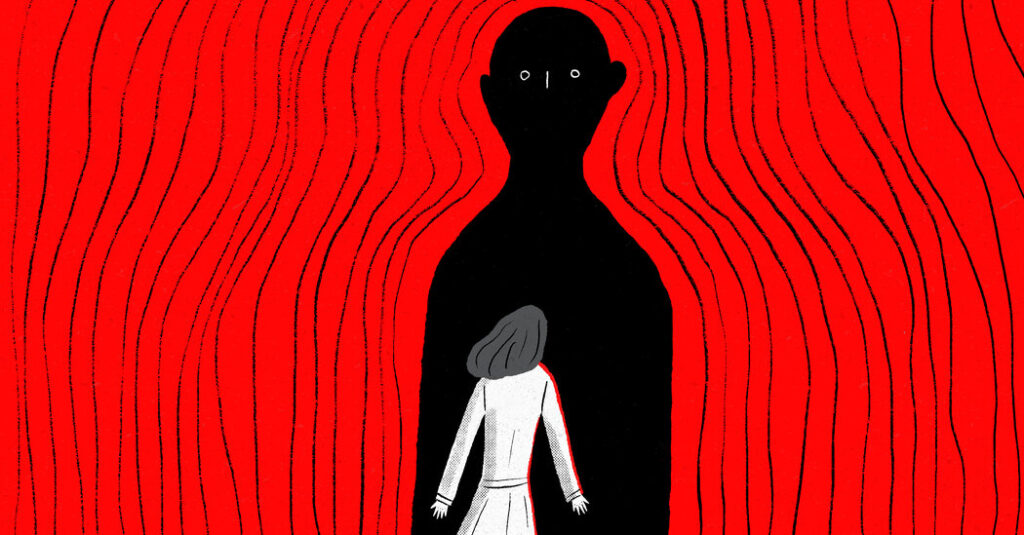
What Boys Learn
by Andromeda Romano-Lax
Benjamin Rosso is a particularly challenging teenager: virtually friendless, steeped in the online manosphere, suffused with inchoate adolescent rage. But is he a criminal? The authorities in his tony Chicago suburb seem to think so: When the bodies of two teenage girls he knows turn up, he’s an obvious suspect.
Romano-Lax’s latest novel, WHAT BOYS LEARN (Soho Crime, 464 pp., $29.95) paints an admirably nuanced portrait of Benjamin and his mother, Abby, an in-over-her-head single parent who works as the counselor at his high school and has major troubles of her own. Its worthy themes (generational trauma, criminal psychopathy, toxic masculinity, the uses and abuses of therapy) are tucked inside a plot that initially seems sleepy but then roars into gear.
It takes some time to figure out who Benjamin really is. Maybe he’s an isolated, bullied kid. Or maybe he’s an amoral maniac who murders women when they reject his sexual advances. “A harmless man is not a good man,” he’s written, alarmingly, on the cover of a notebook. “A good man is a very, very dangerous man who has that under voluntary control.”
The Final Problem
by Arturo Pérez-Reverte; translated by Frances Riddle
Lovers of old films, traditional locked room mysteries and Sherlock Holmes will revel in the cunning setup and elegant execution of Pérez-Reverte’s THE FINAL PROBLEM (Mulholland, 303 pp., $29), which pays homage to all those things. (Holmes fans will also recognize that the author, a prolific Spanish novelist and journalist, has commandeered the title from the classic short story in which the great detective plunges from the Reichenbach Falls along with his nemesis, Professor Moriarty.)
Set in 1960, the book is narrated by Ormond Basil, a past-his-prime British actor known for his exemplary portrayal of Holmes in a series of popular films. (Yes, you’re meant to think of Basil Rathbone.) Along with a small and pleasingly disparate group of guests, he’s staying at a hotel on a tiny Greek island that, in fine “And Then There Were None” fashion, is swiftly cut off from the mainland by a violent storm.
When a British woman is found dead in a cabana on the beach (suicide, or murder?), the other guests prevail on Basil to investigate, on the grounds that he can inhabit the mind of a detective better than they can. Evincing initial reluctance, he’s soon fully committing to the part — appointing another guest to be his Watson and speaking and behaving in fine Holmesian fashion. His knack for concealment is known only to the reader. “I recalled that Sherlock Holmes often played with Watson, pretending to be more ignorant than he truly was, so I resolved to do the same,” he says.
The book is a meta-delight. Particularly enjoyable are the narrator’s fictional reminiscences about real-life actors — such as his “brief but pleasant affair” with Marlene Dietrich — and real-life movies he supposedly starred in. (Basil Rathbone was actually in some of them, for an additional layer of semi-verisimilitude.) He also shares with Holmes a habit of dropping portentous bon mots. As he observes: “We mustn’t confound the extraordinary and the mysterious. The latter, once clarified, can be quite banal.”
The Briars
by Sarah Crouch
Crouch’s moody THE BRIARS (Atria, 304 pp., $29) is set in fictional Lake Lumin, a sleepy town of stunning natural beauty in Washington State, near Mount St. Helens. (Its showiest feature, the bioluminescent plankton in the lake, will become an important plot point later on.) Here Annie Heston, a newly appointed game warden reeling from a brutal divorce, finds that her job includes not just tracking and tagging the giant cougar who appears to have mauled a dead hiker, but also helping the town’s lone cop find out what happened first.
Her “breath caught in her throat,” Crouch writes, describing the moment Annie learns that the hiker might have been strangled. “Again came the thought she had carried with her through the snow. I didn’t sign up for this.”
Needless to say, not everyone in town is thrilled by the sudden appearance of a “lady officer,” as one man puts it, especially when a second body is found.
Complicating matters is Daniel Barela, a reclusive but gorgeous carpenter whose isolated property is festooned with unfriendly “no trespassing” signs. He seems to be hiding something. “Goodness knows why a young man with no family would choose to live way up there in an old boathouse at the end of a dead-end road,” Annie’s landlady tells her. “Something’s just off about him.”
Annie is a physically brave and impressively tough heroine, even if her instincts are not always spot-on. In a neat bit of gender reversal, she has a habit of thinking the men she meets in Lake Lumin are dumber than they turn out to be. The question is: Are any of them smart enough to get away with murder?
Sarah Lyall is a writer at large for The Times, writing news, features and analysis across a wide range of sections.
The post New Thrillers Spiked With Dread and Menace appeared first on New York Times.