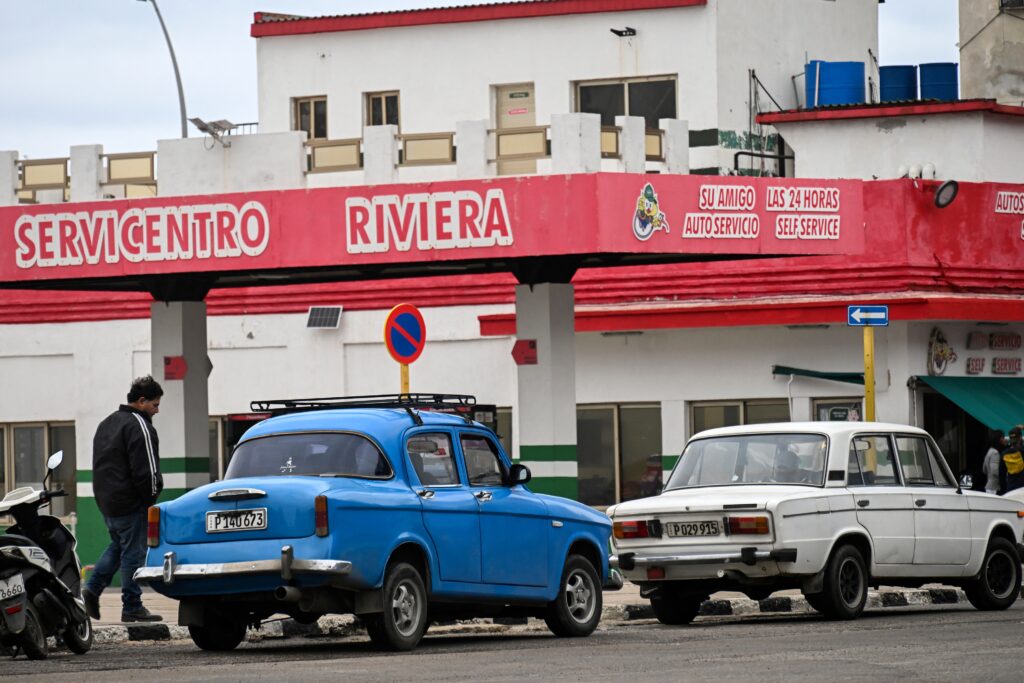
President Donald Trump on Thursday signed an executive order declaring Cuba an “unusual and extraordinary threat” to U.S. national security and said he would impose tariffs on all U.S. imports from any country that supplies the island nation with oil.
Declaring a national emergency, Trump charged that Havana’s communist government “aligns itself — and provides support to numerous hostile countries, transnational terrorist groups and malign actors adverse to the United States,” including Russia, China and Iran, provides “defense, intelligence and security assistance to adversaries in the Western Hemisphere” and violates the human rights of its citizens.
The order comes as the administration turns its attention to Cuba on the heels of a lightning military raid early this month that captured Venezuelan strongman Nicolás Maduro. Subsequently, the Trump administration took control of Venezuela’s oil exports and blocked deliveries to Cuba, which has long relied on petroleum imports from its ideological ally in Caracas.
Cuba “will be failing pretty soon,” Trump told reporters Tuesday during a visit to Iowa. “They got their oil from Venezuela. They’re not getting that anymore.”
Mexico, which has also supplied oil to Cuba, canceled its latest scheduled delivery this month under U.S. pressure. Mexican President Claudia Sheinbaum, who is due to renegotiate a free-trade pact with the United States and Canada this year, said her government had made a “sovereign decision” to temporarily stop oil shipments to Cuba.
The Cuban government did not immediately respond to Trump’s order, which was posted early Thursday evening on the White House website without announcement. In a social media post earlier in the day attempting to rally Latin American and Caribbean neighbors, Cuban Foreign Minister Bruno Rodriguez said that “the peace, security and stability of Our America are in danger” and denounced the administration for imposing “peace through force.”
In a Wednesday news conference in Miami, Cuban American Rep. Carlos A. Gimenez (R-Florida) thanked Trump and Secretary of State Marco Rubio for pushing Cuba to the brink of deprivation. He said he had asked Trump to ban U.S.-Cuba remittances and flights to the island.
Rubio, a Cuban American who was active in southern Florida politics and served 14 years as a senator from Florida before resigning to join the Trump administration, has long urged a tough line toward Havana.
Asked in an appearance before the Senate Foreign Relations Committee on Wednesday if he would rule out forcing “regime change” there, Rubio made no apologies. “I think we would like to see that regime change,” he said.
“That doesn’t mean that we’re going to make a change,” he said, “but we would love to see a change. There’s no doubt about the fact that it would be of great benefit to the United States if Cuba was no longer governed by an autocratic regime.”
Cuba produces little oil on its own and has long depended on Venezuelan supplies, for which it has exchanged security and medical personnel with Venezuela under Maduro and his predecessor, Hugo Chávez. Last year, imports averaged 37,000 barrels per day, the bulk of which came from Venezuela.
By one estimate, Cuba now has only 15-20 days of oil left, according to the Financial Times. Frequent island-wide blackouts are common, and basic human services, such as drinking water, are in danger of drying up.
Both China and Russia have maintained tight ties with Cuba and have been diplomatically supportive, although the Chinese have reportedly advised the government to move away from its ultra-centralized economy. Moscow signed a new defense cooperation pact with Havana last fall and pledged $1 billion in investment over the next five years as it tries to retain a foothold in the hemisphere.
With Trump and Rubio determined to choke off supplies and a fleet of Navy and Coast Guard ships in the Caribbean since last summer for operations against Venezuela — initially to stop alleged drug smuggling by sea — the administration had considered imposing an oil blockade against Cuba. The Trump administration has to date seized seven sanctioned oil tankers carrying Venezuelan crude, though blockading legitimate shipments to Cuba could be considered a violation of international law, experts say.
Asked immediately after Maduro was brought to the U.S. to face charges of corruption and drug trafficking, Trump said he didn’t think any additional action against Cubawas needed, since without oil from Venezuela, “Cuba looks like its ready to fall.”
According to the executive order, Trump will determine which nations should be subjected to tariffs, at what level, based on reports from the Commerce and State departments.
A White House fact sheet posted with the order said: “The President may modify the Order if Cuba or affected countries take significant steps to address the threat or align with U.S. national security and foreign policy objectives.”
The island has been under a strict U.S. embargo since shortly after revolutionary leader Fidel Castro took power in 1959. Aside from an economic uptick during the Obama administration, when the resumption of diplomatic relations between Washington and Havana led to increased tourism and slender openings for private ownership and outside investment, the Cuban economy has never really recovered from the sharp curtailment of aid that began with the 1991 collapse of the Soviet Union.
Trump imposed additional sanctions during his first term, some but not all of which were lifted during the Biden administration. He twice reimposed a designation of Cuba as a state sponsor of terrorism that both Obama and Biden had removed, and last year he limited remittances, commercial flights and cruise ships in a deep blow to the already struggling economy.
Cuba’s population of 11 million is estimated to have dropped by at least a tenth in recent years, as migrants have left the country for both economic and political reasons. Havana has had regular cooperation with the U.S. Coast Guard to apprehend and return migrants at sea and accepted monthly deportation flights until recently, when the administration canceled all talks with the Cuban government.
The post Trump tightens screws on Cuba, threatening tariffs on oil suppliers appeared first on Washington Post.