Donald Trump, JD Vance and other MAGA luminaries often proclaim that the grave danger facing the West is “civilizational erasure,” which they claim is happening in Europe: Through its dangerously misguided approach toward identity and immigration, Europe is destroying the West’s distinctive legacy.
But the West’s defining character has not been tribal or religious solidarity — that describes most of the world. The West’s precious, almost unique, achievement has been the limitation of state power. Since Magna Carta in 1215, the West gradually placed constraints on rulers — through rights for citizens, independent courts, a sovereign church and the sanctity of private property. That inheritance is what made the West democratic and prosperous. It is also what made it stable: Citizens could dissent, businesses could invest and civil society could flourish because power was bounded by law.
The second Trump administration has moved sharply to erode these traditions.
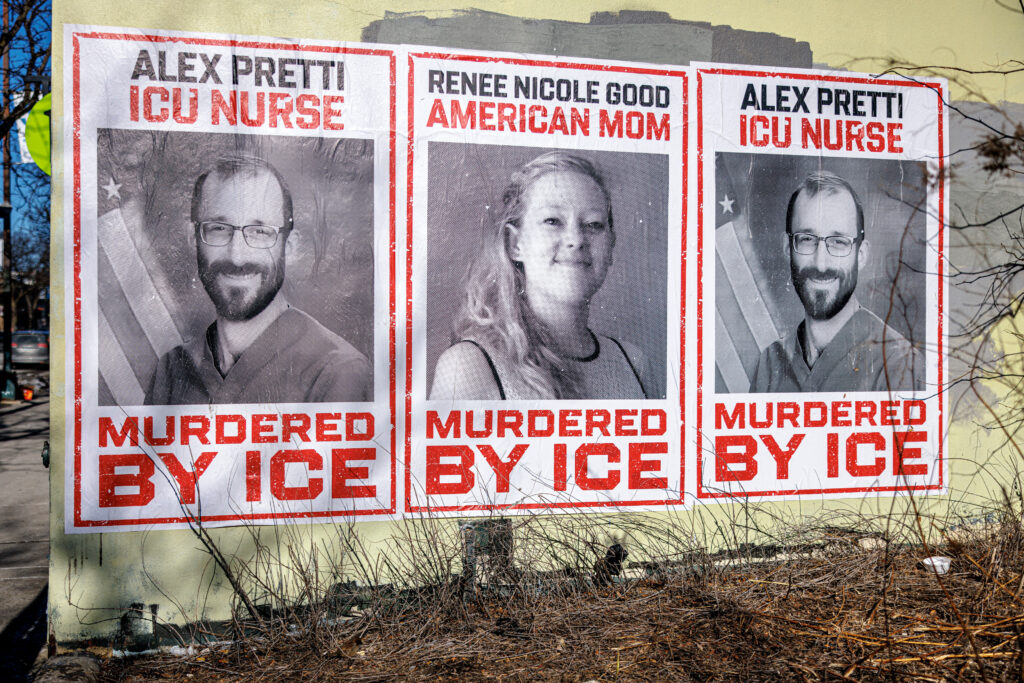
In Minneapolis, two people exercising their First Amendment rights were shot dead. There and elsewhere, federal officers have been operating masked, often in unmarked vehicles, making arrests without judicial warrants. The optics — and the felt reality — are of authoritarian policing, state power that is unbounded.
And it is more than optics. This administration has used its powers in stunningly aggressive ways, often slow-walking its obedience of court rulings, delaying them so much as to sometimes be defying them de facto.
The Trump administration has declared war on civil society — media, universities, nongovernmental institutions, law firms and even private businesses. The Justice Department’s plans to investigate organizations like George Soros’s Open Society Foundations — with the president describing it as racketeering — signals something dark: the criminalization of disfavored groups. It is the logic of Hungary and Russia imported into American politics: You do not rebut critics; you investigate them.
Then there is the legal profession. When government threatens law firms — through security clearances, access to federal buildings and the insinuation that representing the “wrong” client carries consequences — it is telling the country, quietly but unmistakably, that the protections of due process are conditional, if you choose a law firm that the state does not like.
Universities, too, have been frontally attacked and investigated on an unprecedented scale. You do not have to love the modern university to see the danger here. The state is using funding to compel political concessions from independent institutions.
The press — always the early-warning system of a free society — has faced what can only be described as relentless intimidation. Media outlets are sued and regulatory powers used publicly in an apparent attempt to coerce owners to toe the party line. In August, a federal judge found that the Trump administration’s Federal Trade Commission investigation into the left-wing group Media Matters likely violated the group’s First Amendment rights and looked like political retaliation, not neutral regulation.
The administration is expanding state power within the economy, but less as a rule-setter than as a dealmaker and disciplinarian. There is a world of difference between industrial policy that works through published criteria and competitive grants, and a system where CEOs are summoned to the White House, punished, rewarded or “encouraged” to comply. When regulators hint that routine approvals, renewals or reviews may depend on whether companies adopt (or abandon) certain policies, capitalism stops being a competitive arena and starts resembling a patronage system.
And then, hovering over all of this, is the administration’s appetite for using security-state tools not on extremists but on dissidents. Consider the push to designate some “antifa” groups as foreign terrorist organizations — a concept so vague and ill-defined that even national security experts warn it could become a catchall. Under existing law, knowingly providing “material support” for a designated foreign terrorist organization can carry up to 20 years in prison — and “support” can be construed broadly enough to include trivial assistance. That is how democracies decay: not by announcing that dissent is illegal, but by reclassifying dissent as something else.
The administration talks about “the West” as if it were a heritage museum — symbols, slogans, identity. But the West’s real genius is institutional: law that binds all, both the strong and the weak; liberty protected not by benevolent leaders, but by constrained ones; a civil society robust enough to oppose the state without fearing that opposition will be treated as a criminal act.
The West is not a bloodline. It is a bargain: power constrained, rights protected, coercion accountable. The greatest threat to the West is not that it is becoming too tolerant or too concerned about individual rights. It is the expansion of state power, making the West like every other society where the strong rule the weak.
When seen in that light, we can say plainly that “civilizational erasure” is indeed happening. But it is not in Europe, it is here — where the American government grows comfortable with unbounded power, and the country grows accustomed to living with it.
The post The real ‘civilizational erasure’ is happening in America appeared first on Washington Post.