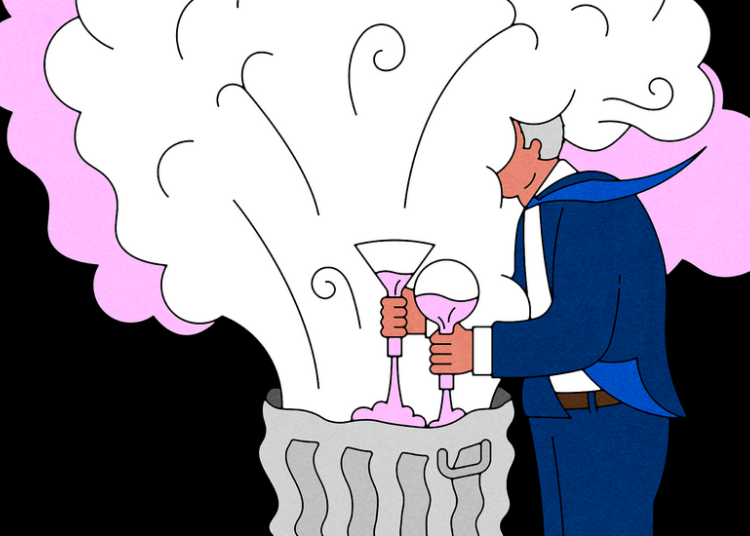
Robert Redford hovered like the ghost of cinema’s past, present and future over this year’s Sundance Film Festival. One of the most significant champions of American independent film — and the founder of the Sundance Institute, the festival’s parent organization — the actor died in September at 89.
Earlier in the year, Sundance announced that it was leaving its home in the resort town of Park City, Utah. Next January — after 41 years, thousands of movies, financial crises, legendary fights, innumerable frozen toes and a pandemic that forced the event to reinvent itself — the festival will take place in the larger mountain city of Boulder, Colo. There, it will face an uncertain future, much as it has since its creation.
If last year’s event felt distinctly muted, this year’s was openly, unsurprisingly elegiac. Couched as a “meaningful tribute” to Redford, it included a gala crowded with alumni (Ryan Coogler, Ethan Hawke, Ava DuVernay) and an inaugural annual prize, the Robert Redford Luminary Award (given to the actor Ed Harris and the Hungarian filmmaker Gyula Gazdag). This year, some of the material that precedes screenings also served as mini-commemorations of Redford. “It’s my hope,” he said in one clip, “that if we can give people the opportunity to express the unexpected perspective then that will open eyes and minds.”
That’s a lofty goal, and while Sundance can surprise as well as delight, attendees often seem happy just to be there. As usual, the audiences at the public screenings cheered and clapped, and while the applause tends to be overgenerous, this sense of excitement is crucial to the Sundance gestalt. It also helped lift the gloom, as did some of the selections, including Olivia Wilde’s energetic comedy “The Invite.” It stars Wilde and a very good Seth Rogen — his timing just gets better and better — as a married couple who face a crossroads after they invite over one evening their frisky new neighbors (Edward Norton and an ideally cast Penélope Cruz). Diverting and depthless, it inspired a bidding war won by A24.
The comedy was less effective and the pickings disappointingly slim elsewhere, including in the American dramatic competition, one of the festival’s marquee events. Adam Meeks’s low-key, plaintive drama “Union County,” about a recovering opioid addict in Ohio, features soft, pretty cinematography, nonprofessional performers and a moving turn from its versatile star, the British actor Will Poulter. Beth de Araújo’s “Josephine” centers on an 8-year-old girl (Mason Reeves) whose parents (Gemma Chan and a strong Channing Tatum) flounder after she witnesses a sexual assault. The father’s inability to rise to the emotional and psychological occasion for his child is, by far, the most convincing part of the movie.
The subtle and touching “Bedford Park” would have made an impression even in a stronger year for dramas. The writer-director Stephanie Ahn takes a clutch of familiar elements — family trauma, cultural alienation, declining parents, two lonely souls — and turns them into something surprisingly effective. The children of Korean immigrants, Audrey (Moon Choi) and Eli (Son Sukku, a discovery) enter each other’s fraught orbit by accident. Over time, they warily emerge from their respective isolation with feelings as convincing as the story’s sense of quotidian life. Before the premiere, Ahn told the packed house that Sundance had often broken her heart; she then proceeded to break the audience’s.
As has often been the case, the American documentary competition offered a nice variety of satisfactions. In “Public Access,” David Shadrack Smith marshals a mountain of archival material in his history of the promise and freewheeling early days of public-access television. There’s more sex — and too much time spent on the bloviating self-promoter Al Goldstein, a publisher of explicit material — and not enough politics, but the movie is lively and engaging. The endearing, archivally driven “Joybubbles,” directed by Rachael J. Morrison, centers on a delightful eccentric, Joe Engressia, a blind man who, by whistling pitch-perfect tones into a rotary phone, was able to make free long-distance calls. In time, this leading figure in the “phone phreak” subculture also made headlines and changed his name to Joybubbles.
The outstanding “Once Upon a Time in Harlem” began as a project from the documentarian William Greaves, who died in 2014. (He’s best remembered for the exhilarating, experimental “Symbiopsychotaxiplasm: Take One.”) In 1972, Greaves invited a fabulous coterie of Harlem Renaissance notables — writers, artists, musicians, historians — to gather for drinks and reminiscences. Greaves died before finishing this heroic endeavor, which has been elegantly completed by his son, David Greaves. For 100 absorbing minutes, these invitees laugh and chat and gently take issue with one another with sharp, touchingly personal, adamantly political remembrances that make history both thrilling and urgent.
Part of the joy of “Once Upon a Time in Harlem” and what helps make it so effective is that it focuses on a communal experience rather than one heroically framed individual. Without belaboring the comparison, a sense of shared purpose and pleasure has always been part of the Sundance experience. Each year, tens of thousands of attendees from across the globe troop in and out of often stuffy, crowded theaters over long days and nights in hopes of seeing something that will delight, engage, inspire and perhaps transport them. Every festival has its ups and downs, its stronger and weaker years. Sundance is no exception, of course, but its legacy is also undeniable.
Over the years, the festival weathered highs and lows in tandem with the movie business. It’s never been easy to be an independent, for one, and the audience has always been fickle. From the very start, Redford — once one of the biggest of Hollywood stars — invited the mainstream industry to the mountains for better, though sometimes for the worst. Some of the festival’s flashier, headline-making years, including the period when Harvey Weinstein was big-footing through the event with Miramax, were also among its most unpleasant. The hard, pragmatic realities of the American film industry haven’t always jibed with Redford’s idealism about art and community.
The festival had long outgrown Park City logistically, but the announcement of its move generated understandable hand-wringing in some quarters. A lot of details are still unknown. I heard chatter that some industry types were concerned that Boulder lacks enough ostensibly acceptable housing for V.I.P. attendees; everyone else just has to worry about finding a reasonably priced place to stay. The larger, more pressing concern, though, is what this festival will look like without Redford’s aura, his influence and connections.
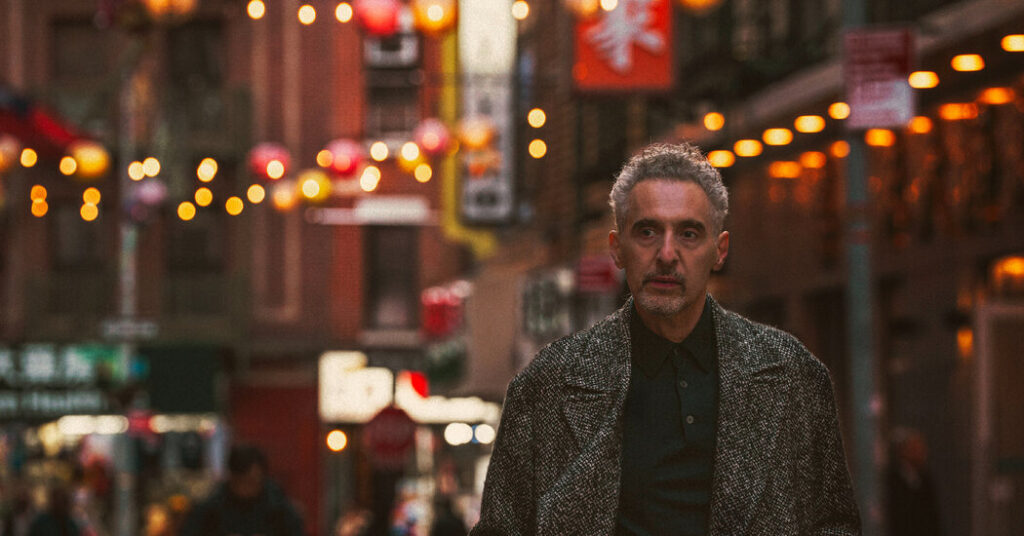
The last movie I watched in Park City, “The Only Living Pickpocket in New York,” proved a great note to end on. It centers on the title character (a wonderful John Turturro), an old-school thief in a newfangled world who blunders into danger. Steve Buscemi plays his pawnbroker pal while Giancarlo Esposito is a simpatico detective. Afterward, the actors joined the writer-director Noah Segan onstage to talk about it. Soon, though, the stars — all Sundance veterans — began reminiscing about Redford and about what both he and this event meant to them. A misty Turturro, who starred in Redford’s 1994 drama, “Quiz Show,” called him a mentor, but it was Esposito who made everyone else tear up.
Speaking with palpable intensity, Esposito — who was at Sundance in 1992 with Jim Jarmusch’s “Night on Earth”” — praised Redford for his openness and empathy, and for creating a space for experimentation. “He said tell your story,” Esposito recalled. “We didn’t come to sell a film to a big studio,” he continued with rising, infectious emotion. “We came to share our small movie with human beings that could really see themselves as a mirror on the screen.” As people began whooping and clapping, Esposito continued to hold them and to move them, reminding everyone that festivals are made not by geography but by the people who join together for the love of the art, one nation under the cinematic groove.
Manohla Dargis is the chief film critic for The Times.
The post The Last Sundance in Park City Ends on an Aptly Misty Moment appeared first on New York Times.