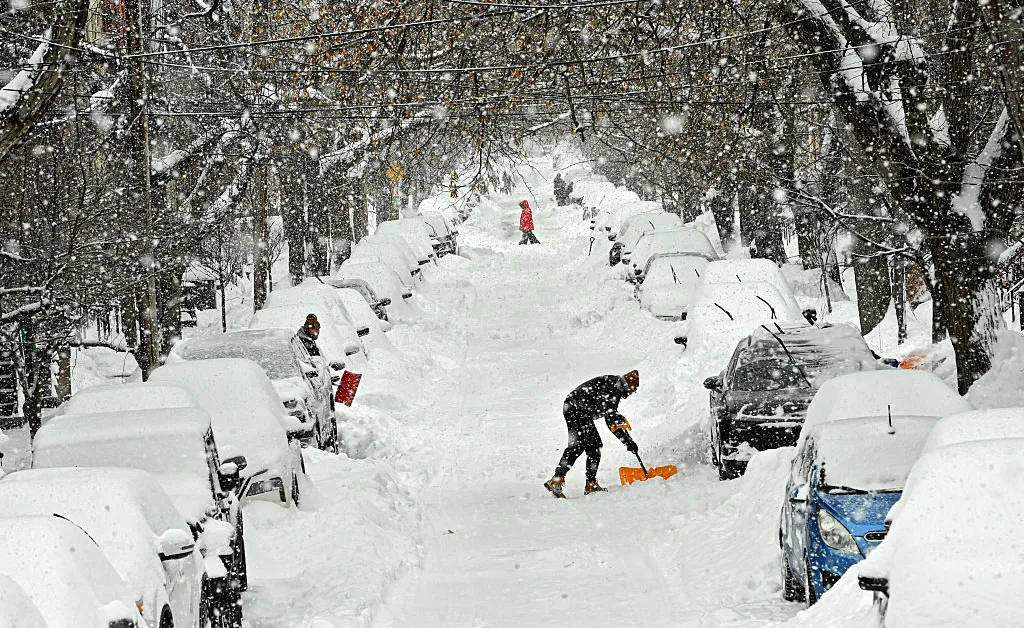
Extreme weather events are battering both ends of the world this week. In the U.S., Winter Storm Fern set snow records in parts of the country last weekend, quickly followed by one of the longest cold-air outbreaks in decades. A bomb cyclone is expected to hit the southeast over the weekend. Across the globe in southern Australia, a heat dome is setting records, with temperatures reaching 120°F—the most severe heat wave the country has experiencedin 16 years.
[time-brightcove not-tgx=”true”]
It’s difficult to outright blame climate change for any one specific weather event, but as our planet warms, it could mean that extremes of all kinds, occurring at the same time around the world, could become the norm.
“You can’t really attribute any specific single weather event to climate change,” says Gary Lackmann, professor in the department of Marine, Earth and Atmospheric Sciences at NC State University. That said, scientists are getting better at determining the degree to which climate change can make such events more likely or severe. As greenhouse gasses are released into the atmosphere, they trap heat, causing air and ocean temperatures to warm and contributing to shifting weather patterns. As Lackmann puts it: “[Climate change] loads the dice a little bit towards more extreme events.”
From hot days to snow storms, hurricanes and droughts, extreme weather events have always been natural. “We’ve had extreme weather as long as we have records of weather information,” says Lackmann. But research shows that climate change is making them more frequent and intense. “What we’re finding is that the intensity and the frequency of the most extreme events is certainly likely to have the DNA of climate change,” says Marshall Shepherd, director of the Atmospheric Sciences Program at the University of Georgia and former president of the American Meteorological Society.
In the United States alone, the frequency of U.S. billion-dollar disasters has increased dramatically since the 1980s—the country saw about three events annually during the 1980s, compared to 20 events annually during the last 10 years.
Attribution studies, which are able to quantify climate change’s influence on an individual weather event, show that climate change is playing a role in supercharging devastating and deadly weather events. A study from World Weather Attribution found that global warming made the January 2025 fires in Los Angeles 35% more likely. And the heat wave that hit the Pacific Northwest in summer 2021, during which temperatures reached 120°F, would have been “virtually impossible” without human-caused climate change, according to a report from Copernicus. World Weather Attribution also analyzed the heat in Australia earlier this month and found that extreme temperatures from the 5th to 10th were made 1.6°C hotter due to climate change.
A warmer planet means we’re more likely to see extremes—whether that be heat domes that send temperatures soaring for days to languid hurricanes that leave more water in their wake.
Warmer ocean temperatures can lead to stronger storms. “When you have really warm water adjacent to really cold land, there’s a really big temperature gradient,” says Lackmann. “Storms draw their energy from that temperature contrast.”
As average winter temperatures warm faster than any other season, we could see changes in the type of precipitation that falls. If temperatures rise above freezing, precipitation that once might have occurred as snow could come down as rain instead. A warmer atmosphere is also able to hold more moisture, which can lead to heavier rainfall, worse flooding, or even intense snow storms.
“Storms are a natural part of Earth’s system and are not going away,” William Ripple, co-lead author of the 2025 State of the Climate report, told TIME in an email. “We are not losing storms; we are getting storms that are supercharged with extra water and energy.”
Meanwhile, hotter days are also becoming more frequent—the last 11 years have been the hottest 11 years on record.
“Yes, you probably can get a heat wave naturally, but in this climate change era, they’re on steroids,” says Shepherd.
There’s no sign of that slowing down. The latest World Meteorological Organization Global Annual to Decadal Climate Update predicts that Earth’s temperatures are likely to stay at or near record levels from 2025 to 2029.
“What used to be a rare, unusually hot day is now much more common, becoming part of our new normal weather,” says Ripple. “Because of this, heat waves are happening more often, lasting longer, and reaching higher temperatures.”
What remains clear is that frigid temperatures and piles of snow by no means disproves climate change. “People will say things like, ‘Hey, it’s snowing. That must mean there’s no such thing as global warming.’” says Shepherd. “I said, ‘No, that just means it’s January in the wintertime.’”
The post Snow Storms in North America. A Record Heat Wave in Australia. Is This Climate Change? appeared first on TIME.