The first Trump administration, and the tech industry that stood up to it, are both looking quainter by the day.
Here’s one example: In 2017, when President Trump issued a series of executive orders instituting a travel ban on foreigners from certain countries (predominantly Muslim-majority ones), people from across the United States vigorously protested the policy. They included some of tech’s most elite: Google cofounder Sergey Brin, who joined a demonstration at the San Francisco airport; Amazon founder Jeff Bezos, who wrote a company-wide email outlining “legal options” that Amazon was considering to fight the ban; and Facebook founder Mark Zuckerberg, who took to Instagram to describe his own family’s immigrant roots.
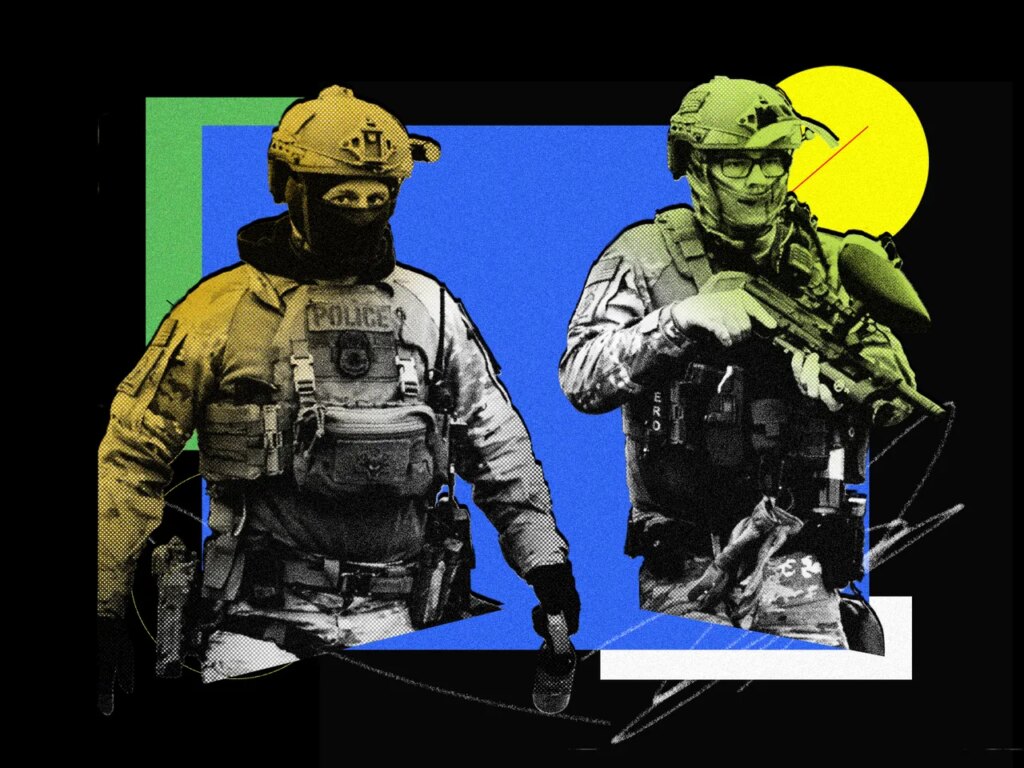
How times have changed. On Saturday, hours after federal agents shot and killed ICU nurse Alex Pretti in the streets of Minneapolis, several prominent tech executives attended a private White House screening of Melania, a documentary being released by (of course) Amazon MGM Studios. The timing was not lost on the group of Silicon Valley workers who recently launched ICEout.tech, essentially an open letter to their bosses. The letter, posted following Renee Nicole Good’s killing earlier this month, has now been signed by more than 1,000 tech employees. Those workers, who come from across the spectrum of Big Tech companies and startups, are asking that executives use their clout to demand Immigration and Customs Enforcement agents leave American cities, that they cancel company contracts with the agency, and that they speak publicly about ICE’s violent and deadly tactics.
Worker-led demands like those were commonplace during Trump 1.0, when tech employees at the world’s biggest companies often spoke out—internally and externally—about the cruelty of the US administration and the industry’s role in facilitating or tempering its most craven policies. Today, though, a movement like ICEout.tech feels downright revolutionary: Tech employees have been notably quiet this past year, as the power dynamic within their companies tilted to favor management versus frontline workers. Meanwhile, the executives leading those companies have been busy kissing the ring—over dinner at the White House or with outlandishly expensive documentaries nobody’s watching—at every opportunity.
Is the dam finally breaking? This week, Silicon Valley leaders including Anthropic heads Dario and Daniela Amodei, OpenAI CEO Sam Altman, and Apple CEO Tim Cook finally spoke out about ICE’s outrageous overreach. It’s a start, but I wanted to know more about what was happening inside tech circles, and where the industry goes from here. So I asked two early ICEout.tech signatories, Moonshine AI CEO Pete Warden and Gatheround cofounder Lisa Conn, to sit down for an emergency episode of The Big Interview.
Here’s our conversation.
This interview has been edited for length and clarity.
KATIE DRUMMOND: Pete and Lisa, thank you so much for joining me. I’m thrilled that you’re able to be here.
PETE WARDEN: It’s great to be here.
LISA CONN: Thank you for having us.
You both work in the tech industry, and you have for a long time. You’re among the many who’ve signed the ICEout.tech letter that has now been widely circulated in Silicon Valley.
That movement and the website actually launched earlier this month after the tragic shooting of Renee Nicole Good. What made you decide to put your name on this letter? At this moment in the tech industry, it is no small thing to put your name out there on a document like this.
Conn: I signed the letter for a bunch of reasons. I think one of the primary ones is that it feels like we are entering an economic and governance crisis when the government starts killing people on the streets and then denying or reframing what is clearly documented. It’s really a bad situation.
Just purely thinking about the economics of it, in those circumstances, capital starts to flee. Talent leaves, and it will take decades to recover from a situation like this. Businesses are not going to thrive when employees fear for their safety and communities are being terrorized, and tech hubs and tech leaders and employees are especially vulnerable because our talent is so mobile.
People can and will leave, start companies elsewhere, choose to work elsewhere. This is not hypothetical, this is happening in front of us right now. So I suppose it is risky within the tech community and when thinking about potential retaliation from the Trump administration, but the stakes are too high not to act and not to speak up.
It feels like a no-brainer to me to share and to put my name on this.
Pete, what about you?
Warden: Much like Lisa, there were a lot of reasons behind this for me, but a big one was seeing how much courage the people of Minneapolis were showing. They are literally putting their bodies at risk of being beaten to save their neighbors. So the fact that nobody in the tech industry was willing to risk a ding to their career in order to actually do whatever we can to stop this happening, to save people’s lives, I felt like it was the least I could do.
I spent five years at Apple, seven years at Google, and a lot of my colleagues are too afraid to speak up. I’m a startup founder, so there may be retaliation if I can’t raise funding for my startup, because people like Marc Andreessen do hold a lot of sway in the industry, but I’m not gonna get fired. A lot of my former colleagues are rightfully afraid that they will get fired if they speak up.
I want to ask you about the difference you’ve seen in the tech industry from the first Trump administration to today. How would you characterize the way that tech leadership has shown up? What about the workers? What has changed in that decade?
Conn: I think there’s been a pretty significant power shift away from the employees in the tech industry and in most industries. Until about 2021, retaining employees was a top business priority. It really mattered to companies. Talent was considered the most precious resource, and companies couldn’t hire fast enough.
Perks were abundant, and layoffs hadn’t really happened. It was considered bad leadership and a failure as a CEO to lay people off. Mark Zuckerberg was very proud of his record of never having laid people off at Meta. So employees had a lot of power. We saw this in 2020, at the peak of the movement after George Floyd’s death and the DEI moment where employees put a lot of pressure on the employers to make statements, to stand up, to speak out.
A lot did performatively, maybe some authentically. But it was clear that employees had a lot of power. As the economy started to shift and companies started to do layoffs in 2021, 2022, employees lost a lot of that power because retaining them wasn’t as important. Coinbase was a real leader in this way. Coinbase was one of the first big companies to do layoffs, and Brian Armstrong was one of the first CEOs to say there should be no talk about politics in the workplace. So there was this correction that happened in 2021, 2022, where companies were much less willing to listen, because listening to their employees just didn’t matter as much.
If they wanted to leave, they could leave. It would save the company in severance. I think that’s one big distinction in the dynamic of worker power in the tech industry, and probably also in other industries. I imagine this is gonna shift back. These things always do, but we are still in a moment where employee power is not as high as it was a decade ago, and certainly five years ago.
Warden: If I can add to that, I think another aspect is there’s a lot more willingness from the administration to go after people in industry who step out of line.
If you are a tech CEO with a large company and you do not kiss the ring, you are gonna be targeted. You are gonna have the power of the federal government used against you in a vindictive way. So in some ways, I actually sympathize with the CEOs, because this is not a choice that anybody ever expected to have to make between free speech and having your company destroyed.
At the same time, I think this is an open question—and Lisa, you alluded to this a minute ago. How much of what happened on the part of tech executives from 2016 to 2020 was performative and how much of that was sincere? I wonder to what extent some of them now see this as an open invitation to be who they really are and to practice what they have wanted to do for a long time.
Conn: I am generally an optimist, and I generally think that people are good, and when people aren’t good it’s because of their circumstances, not any kind of innate evil. My sense of the psychology of a lot of tech CEOs, especially those who are also founders—and this is speaking as a founder myself—is at some point the company becomes their ideology. And protecting the company, keeping the company safe, succeeding, protecting employees, shareholders, if you have them, investors, et cetera, is the ideology. It is the prevailing motivator.
I think when the culture and the power dynamics are such that being on one side of an issue is more favorable, it’s easier to speak up. And when there could be harm to the thing that feels like life-or-death for you as a founder, it’s a lot harder just to speak up and to be critical. It’s hard for me to truly believe that in a decade people’s ideals and values—people, meaning tech CEOs—have completely changed.
Everything I know about how people change their minds and what persuades people suggests that doesn’t really happen. So I don’t think it’s that this moment is somehow giving them permission to be their true selves, but rather that it is more beneficial to companies in 2026 to be quiet. I think that’s what’s unique about this moment and so important about this moment is, maybe that was true two weeks ago, but I actually don’t think that’s necessarily true anymore.
Right.
Conn: A key distinction between 2016 and now that we didn’t speak about is how much more brutal the Trump administration is, how much greater Trump’s corruption is, and so much more blatant.
There are a lot of things that are harmful to the tech industry. The very foundation of the tech industry, scientific research, has been cut and is underfunded, economic stability is at risk, our ability to attract global talent—all these things are hurting, and that is going to hurt these companies in turn.
Still, if this continues, I think we could reach CEOs of the top 10 tech companies and ask them to speak up because their companies are at risk.
Pete, anything to add on that?
Warden: I can’t know what’s in people’s hearts, but there’s been this dynamic—we used to lionize tech startup founders; they would be held in universally high esteem. Everybody thought what they were doing was cool. And the tech industry won, we became a dominant industry, and that came with a whole different dynamic around being held accountable, people not liking everything you’re doing.
I really feel like that shift from being given a lot of leeway because you were the scrappy underdog to owning massive parts of the economy means that you are gonna get a lot more criticism. I have to believe that that was shocking to a lot of people, a lot of the top-end tech CEOs, who’d been used to very friendly treatment by the media and the public. Suddenly they were being treated like the CEO of Exxon or something, and that had to be a shock.
Conn: I think it’s hard for people to change their self-perception away from being the underdog. When you’re the underdog, punching is not as bad as when you are the bully and you’re punching down. So if you see yourself as punching up, but the world sees you as punching down, it’s challenging to change that.
Lisa, you mentioned a minute ago that what has happened in Minneapolis in the last few weeks has tipped the scales. It has really changed the conversation. I’m curious to hear from both of you what the conversation among your colleagues has been like over these past few weeks. What are people saying? What are they worried about? What are they thinking?
Conn: One thing I’ve observed is this is not just folks on the left. There’s a really, really big tent. We’re hearing from people who identify as moderates and independents and libertarians and Republicans, and people who have never really been politically active before. We’re seeing that people in a big range of roles—engineers, CEOs, directors, VPs, people at the big tech companies, people at the AI labs, startup founders, VCs—have been troubled about this administration from the beginning, but these violent attacks on our neighbors and desire to suppress dissent is a breaking point. We’ve seen in the last 18, 19 days since this pledge has circulated, exponential growth and interest from all these companies across the political spectrum and across a variety of roles. That is unique.
Warden: Even people who do not follow politics, and I can totally understand why people do not want to deal with everything that’s been going on for the last few years, just people couldn’t ignore that and people really responded to that by saying, look, this is wrong. Like this is obviously wrong, and I think that that has been the big difference I’ve seen in conversations with people across the political spectrum.
When WIRED first reported on this open letter a couple weeks ago, you had a few hundred signatures. You now have over a thousand in just a few days. That is remarkable. But the tech industry is a huge business. Amazon alone employs over a million people in the United States. Pete, you talked earlier about fear. I have to ask, why do you think this list isn’t in the tens or hundreds of thousands of names by now? Where is everybody else?
Warden: There’s a very real fear of retaliation if you are in a big tech company. By speaking out, you are marking yourself as somebody that the Trump administration will demand be fired, or the tech company will suffer harm to its business. Even if you are a startup. We think of startups as these crazy renegades, who sort of march to the beat of our own drummer, but the reality of the venture capital industry is if somebody like Marc Andreessen is saying he will not do business with people who are against the Trump administration—which really feels like a lot of what’s coming from some of the top people in the VC industry, even VCs who are sympathetic—they’re gonna have to do deals with Andreessen Horowitz in the future.
So just having a few key influential people in the venture capital industry means that even startups who are all supposed to be about “think different” and all of these other slogans we’ve been throwing around for years, glorifying ourselves, there’s actually a very centralized system that makes it very costly to go against the handful of big figures who are at the top of this industry.
Have either of you spoken with anyone directly who didn’t want to sign on, who decided not to?
Warden: I definitely have multiple people at Google that I’ve spoken to who are absolute believers in this, but they are too afraid to put their names behind this.
Conn: People I’ve spoken to are putting their ethics above any fears that they have. I’ve talked to a couple people who said, “I don’t think I’m allowed to sign this.” That was sort of the end of it. But those same people might be more comfortable posting internally in Slack or having a conversation internally in Slack.
For instance, there was reporting that there was a Slack channel within Palantir where folks were expressing concerns about this. That’s a different effort than our effort, which is great. If employees of companies get inspired reading about this or seeing it, but maybe feel that handling things internally is more effective, that’s fabulous. Do it.
I wanted to ask you about Palantir, actually. Some companies’ work is tied to ICE, and reliant on government contracts. So the argument goes that companies being asked to cancel the contracts they have with ICE, which is one of the asks in the ICEout.tech letter, might not be in the realm of possibility. How do you respond to that idea?
Warden: If you look at Palantir, it’s not like they’re gonna go bust if they turn down the ICE contracts. I think what a lot of people aren’t realizing on the business side is that Trump is not gonna be in power forever, and people are looking at what these companies are doing. For the long term, people are not going to forget that Palantir was a key enabler of ICE. That has benefits for them right now with this administration, but down the line, they have publicly allied themselves as keen supporters of this horrific brutality. Even not thinking about morality, that’s not gonna be good for business.
It’s short-term thinking versus long-term, absolutely. Do you both feel, from your own experience, does that kind of internal pressure work? Are they listening? Is it effective?
Conn: Kim Scott, a former Google employee and amazing author, wrote about this effect for The New York Times last year where she talked about how CEOs are rarely the first to break with perceived political consensus, and that only when they feel pressure from a range of folks in their organizations, from their peers, from their friends and family, and from their employees, will they seriously consider shifting their positions.
So yes, if it becomes untenable, it does work. We’ve seen Sam Altman make a statement internally in response to pressure from employees. We’ve seen Dario and Daniela from Anthropic, and a number of other leaders have made statements in response to this. So it does work. There’s no question that it works.
What I think is interesting is we may not know what’s working because it is totally fair game for CEOs, who maybe are in tuxedos at movie screenings at the White House, to be having private conversations that are never reported. That may be more effective than making public statements; that may be more effective than speaking up at an all-hands meeting and making declarative statements.
Trump was in Washington over the weekend and he was with a lot of these people this weekend. It does seem as of [Wednesday] that things are changing in Minnesota. So we may not know exactly what’s going on, but there’s no question that being a thorn in the side of a lot of these leaders, they notice that there’s a thorn in their side, and they wanna pull it out one way or another.
Sure.
Warden: Just to add to that, one of the first places that pressure shows up is in recruiting. Even though general tech employees are now treated as essentially disposable, and they’ve lost a lot of their bargaining power and leverage, in the field of AI, there’s still very fierce competition for talent.
If you are an AI researcher and you’re looking around and you look at a company that’s doing all of this really controversial, brutal stuff, that’s not gonna be attractive to you. You’re gonna worry about your own reputation, having that on your résumé. So that’s the most immediate place where once candidates start turning down offers at these companies, and the feedback is that they don’t want to work for somebody who’s causing this much harm, that is very quick to go up the chain in my experience.
That’s a good point. You mentioned that several of these executives were at the Melania screening at the White House over the weekend, but you’re right that prior to that, and then subsequently this week, Tim Cook issued a public statement. Sam Altman issued a statement internally. What do you make of that? Is it too little, too late? Does it feel performative, or are you of the mind that the more of these leaders speaking out the better?
Conn: I applaud it.
You applaud it.
Warden: Absolutely, like come join us. This is a broad coalition. This is not about purity tests. This is about trying to make practical change happen. Anybody who’s helping with that, we are super happy to be working alongside them.
Who are we still waiting to hear from? Whose voice in this have we not heard, who might really move the needle? Who really matters in Silicon Valley?
Conn: Alphabet. I don’t know if we’re getting anything, but who knows what’s being said behind closed doors.
Warden: As a startup founder, I’m hoping to see more from the venture capital industry. Like I said, the dynamics of that industry make it very hard to break from the pack. Even though everyone likes to think of themselves as contrarian, the costs of doing that in the VC industry can be very high.
Once it becomes acceptable to speak out about this, I think that that’s gonna open up. You know, Vinod Khosla, who was an investor in my first startup, it’s been great to see him being very vocal about comments by [Khosla Ventures partner] Keith Rabois that were pretty ghoulish.
These are the comments on X.
Warden: Exactly. So I want to give Vinod props. He’s one of the giants of the industry, so having him come out and say that, I was so thankful to see that. I’m really hoping we get to see more leaders like him coming out and doing the right thing.
I wanted to ask you both, before we wrap up, about the nature of being a startup founder. Pete, you’ve mentioned it a few times. You’re both entrepreneurs, right? You are not strangers to relying on VC money to fund your companies. A lot of startup founders, as you’ve said, have chosen to stay quiet when it comes to politics. They don’t want to put their business at risk. What do you say to them, if any are listening, about that stance and that decision?
Warden: I just say, do what you can. You know, I’ll never judge. I’m never gonna judge somebody for not sticking their neck out because, you know, I’m older. I’m not gonna be out on the street if I get blacklisted. A lot of younger entrepreneurs don’t have that privilege, and what I would say is just please try and find other ways to help. Try and get involved with your local community. You know, in San Francisco we are still having the Tesla Takedown protests a year after it started. I sometimes show up there in a Portland frog costume to dance around.
Do you really?
Warden: I do, yeah. I can send you the video.
Please do.
Warden: If you feel like, “I didn’t have any way of using my voice in tech to protest what was happening, but hey, I could turn up on a street corner and dance around like a goofball,” it will make you feel better.
It helps the world, but you will also not feel powerless, which is what I hear from a lot of startup founders right now. They don’t know what to do. They hate this, but they feel so constrained. And that’s where it doesn’t have to be public, it doesn’t have to be a big statement. Just join the community that’s formed around this. Just help with donations. Anything you can do. Internal conversations. There’s lots of ways to help that don’t involve a high level of risk.
Conn: I have two thoughts. One, I don’t think being opposed to state-sanctioned violence and being lied to by our government leaders is very controversial. There’s a large range of things that you could be worried about and be vocal about. This is one that I don’t think is that controversial. So if this is the moment where you feel compelled to speak up and you’re a little afraid, I think the risk is low, personally.
The second thing I will say to startup founders is: Focus on building a great company. If you build a great company, people will want to invest. Investors are capitalists, they’re not ideologues, most of them.
If you are ideologically in opposition to one that is an ideologue, they might not be a good fit for you anyway. So focus on building a great company. If you build something great, if you do something interesting, investors want to be part of it. They won’t necessarily care that you oppose state-sanctioned violence. Be respectful and diplomatic. You don’t need to be extreme about anything. I don’t think it’s effective most of the time. Assuming that you’re respectful, but you speak your mind and you speak your truth and build a great company at the same time, I think you’re OK. I think investors will still be thrilled to write you a check.
Warden: If I can just jump in on that as well, if you can get to cash-flow positive, then the dynamic changes. So get those customers, get that revenue that buys you the power, that buys you the freedom. That’s part of why I’m willing to stick my neck out. I know if funding dries up we have customers who are paying us money, and we can make the rent and we can make payroll.
Yeah, exactly what you’re saying, Lisa, just build the company and you do get a lot of ability to really get your voice out there once you’ve done that.
The list has over a thousand signatories. What’s next? Are you guys collectively planning anything else? How do you maintain and build on the momentum that you have?
Conn: We wanna get to 2,000. That’s our next goal.
I have every confidence that you will.
Warden: And these are verified signatures, so I think there are more being verified, but each one of these is verified and we confirm it’s a real person.
From my side, and this is still an idea that’s just bubbling around my head, not an official idea from ICEout.tech, but I would love to have an in-person meetup in San Francisco. Let people just see and hear that there are all of these other people who share the same beliefs, who believe this is wrong.
We’ve seen in Minneapolis the power of people coming together. I really want this to be the start of us forming a community that’s dedicated to being decent to people. It doesn’t have to be political beyond, “Hey, let’s stick to the Constitution. Let’s care about human rights. Let’s not murder people in the street.”
Thank you both, so much. And Pete, if you go ahead with that meetup, please give WIRED a heads-up.
How to Listen
You can always listen to this week’s podcast through the audio player on this page, but if you want to subscribe for free to get every episode, here’s how:
If you’re on an iPhone or iPad, open the app called Podcasts, or just tap this link. You can also download an app like Overcast or Pocket Casts and search for “Uncanny Valley.” We’re on Spotify too.
The post Silicon Valley Tech Workers Are Campaigning to Get ICE Out of US Cities appeared first on Wired.