The Senate passed a bipartisan spending package on Friday to fund most of the government and keep the Department of Homeland Security running for two weeks while Democrats and President Trump negotiate restrictions on the administration’s immigration crackdown.
The agreement, the culmination of an intense round of haggling between the White House and Democrats, did not come together in time to avert a brief lapse in federal funding over the weekend, starting on Saturday morning. The House still must clear it for Mr. Trump’s signature, but is not expected to return to Washington to do so before Monday.
But it amounted to a major breakthrough fueled by a sharp pivot by the president and Republicans in Congress, who have rushed in recent days to distance themselves from the chaos and violence wrought by federal agents carrying out Mr. Trump’s deportation drive.
“We don’t have that many leverage points in the Senate, but obviously spending is one of them,” Senator Chuck Schumer, the New York Democrat and minority leader who brokered the deal with Mr. Trump, said in an interview. “We realized we had to reform and really rein in ICE.”
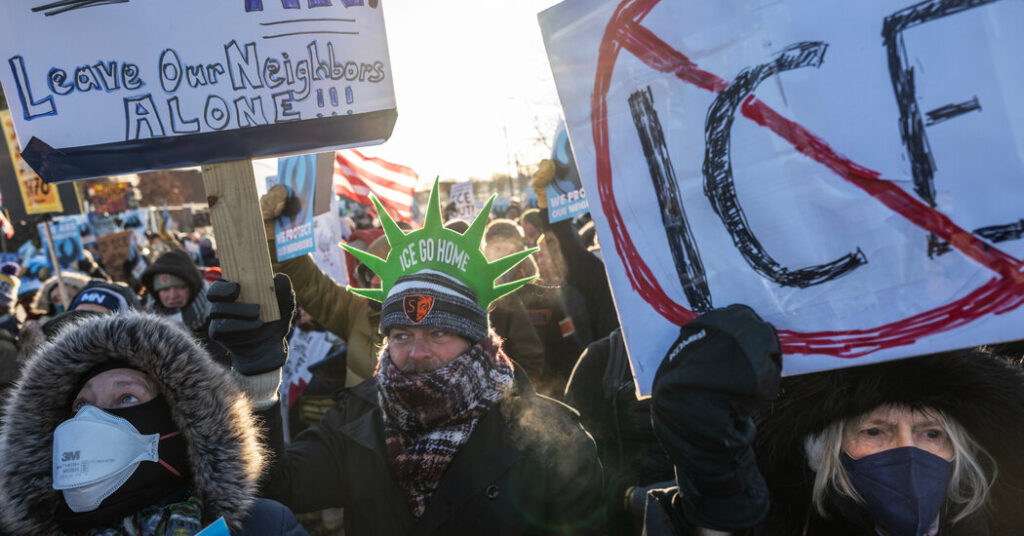
It came after the fatal shootings by immigration officers of two American citizens in Minneapolis this month crystallized what polls were already showing was a broad repudiation of Immigration and Customs Enforcement’s tactics, a potential area of vulnerability for the G.O.P. ahead of this year’s midterm elections.
“I’ve never seen a political party take its best issue and turn it into its worst issue in the period of time that it has happened in the last few weeks,” Senator John Kennedy, Republican of Louisiana, told reporters before the vote on the deal on Friday night.
The vote was 71 to 29, with 24 Democrats and five Republicans voting in opposition. With the House unable to pass it before Monday, funding for the Homeland Security Department and an array of others, including the Pentagon and health and transportation programs, was on track to lapse after midnight on Friday.
“We may inevitably be in a short shutdown situation,” Speaker Mike Johnson told reporters Thursday night at a screening of “Melania” at the Kennedy Center. “But the House is going to do its job.”
Republican leaders hoped that Mr. Trump’s endorsement would ease passage of the deal in the House, where a number of conservatives had previously opposed Democratic entreaties to split the homeland security bill from the spending package and were expressing outrage about it.
Passage of the legislation came the day after Democrats blocked a broader spending package that included $64.4 billion for the Department of Homeland Security, as well as money to fund several other agencies for the remainder of the fiscal year.
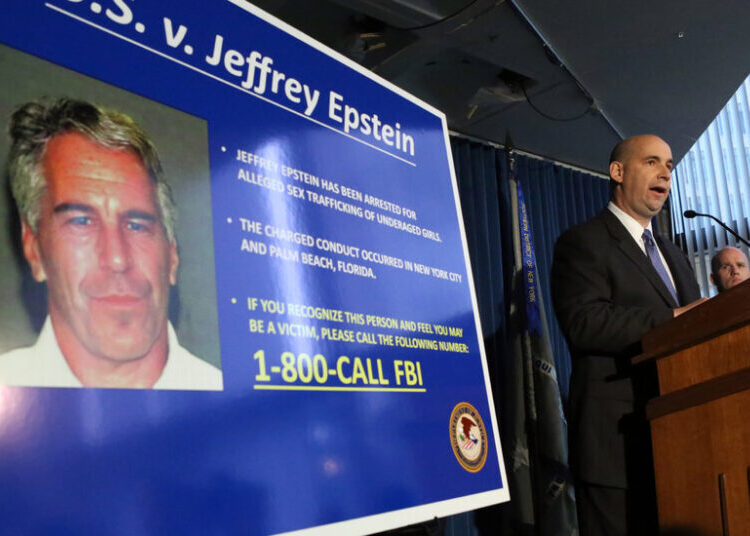
After the fatal shooting of Alex Pretti last weekend by a federal immigration agent in Minneapolis, Democrats said they would not vote for any further funding for the Department of Homeland Security unless strict limits were added to curtail immigration officers’ tactics. They demanded that the homeland security portion be separated from the rest of the spending package and held up while they tried to strike a deal with Mr. Trump and Republicans for new restrictions on the president’s immigration crackdown.
Mr. Schumer and Mr. Trump began negotiations late Wednesday to resolve the dispute, and by Thursday afternoon, the president and Republicans had agreed to strip out most of the homeland security money and provide just two weeks of continued funding at current levels while they discussed potential measures to rein in the department’s deportation operations.
That negotiation promises to be an intense and difficult one. Democrats are pressing to bar immigration officers from wearing masks and require them to wear body cameras and visible identification. They also want an end to random immigration sweeps, to require judicial warrants for stop and searches, and to subject immigration officers to the same use-of-force standards as community law enforcement.
And Democrats have called for an independent investigation of the two fatal shootings in Minneapolis, something that many Republicans have also called for.
Several Republicans have said they are open to some of those limits, but have also demanded that the measure target states and municipalities that decline to cooperate with federal immigration authorities.
“You can convince me ICE can be made better,” said Senator Lindsey Graham, Republican of South Carolina. “I don’t think I will ever convince you to abandon sanctuary cities because you’re wedded to it on the Democratic side.”
Others have bristled at the concept of negotiating with Democrats at all, and lamented a deal they said signaled a retreat on their party’s best issue.
“We must look closely at the specific demands now being advanced, and what each one is designed to accomplish,” Senator Eric Schmitt, Republican of Missouri, said in a speech on the Senate floor. “The Democratic vision does not begin by repealing the law. It begins by making enforcement personally dangerous and professionally impossible.”
The agreement contained five other spending bills to fund a large portion of the government, including the departments of defense, state, treasury, transportation, labor, health and education.
Those measures, which passed the House last week, reject the deepest spending cuts that Mr. Trump requested, including a 50 percent reduction to the Centers for Disease Control and Prevention and a 40 percent cut to the National Institutes of Health, which would instead receive a $415 million boost. The spending package overall made small trims across many government agencies, an outcome that Republican leaders heralded.
Catie Edmondson covers Congress for The Times.
The post Senate Passes Deal to Fund Government and Negotiate ICE Limits appeared first on New York Times.