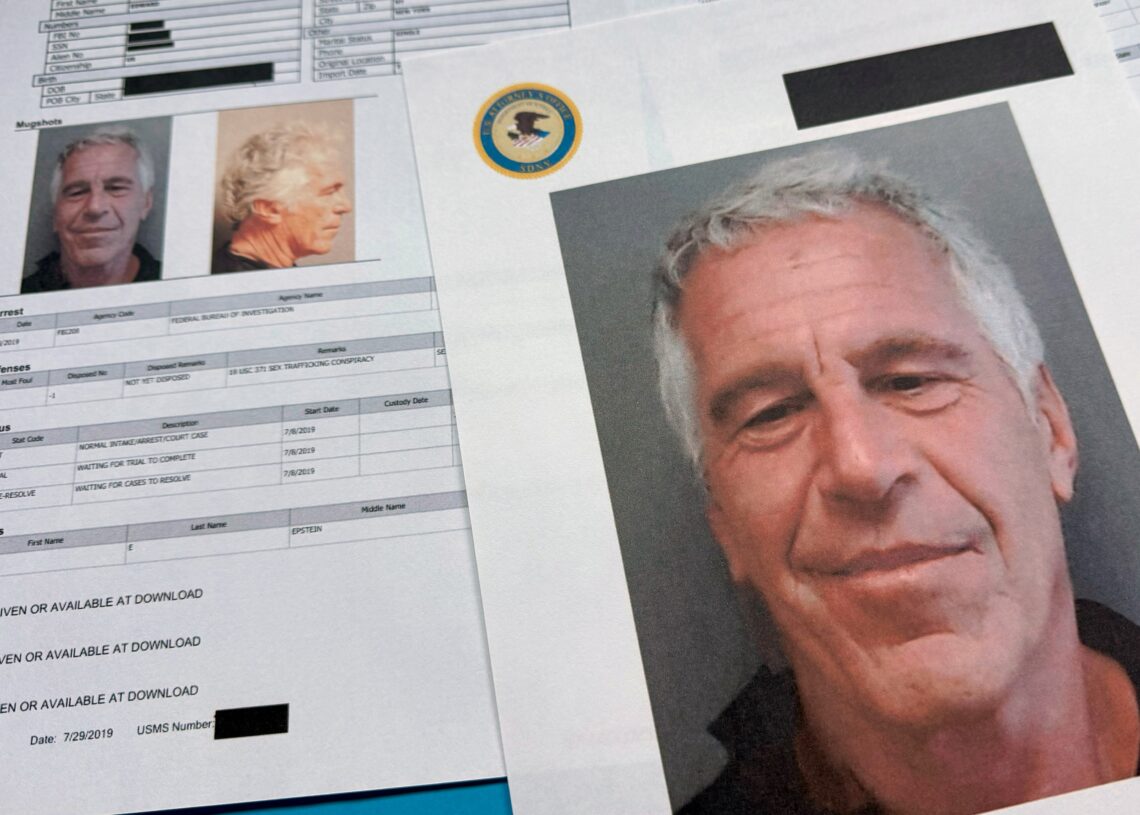
The Justice Department said it released 3 million more pages on Friday from the investigation of convicted sex offender Jeffrey Epstein, the latest drop in the agency’s troubled scramble to comply with a federal law that requires the public release of files from the high-profile case.
Deputy Attorney General Todd Blanche said at a news conference Friday that this tranche of files — which include 2,000 videos and 180,000 images — is expected to be the last major release of Epstein materials.
The release, more than a month after the Dec. 19 deadline set by law, was the result of work by hundreds of lawyers across the Justice Department who have spent weeks reviewing the files and redacting any information that might identify victims, Blanche said. The effort required significant time and personnel resources from the Justice Department, pulling top prosecutors from D.C., Florida and New York to review the files.
The documents are expected to provide an extensive look at the evidence the department gathered in its effort to prosecute Epstein, a politically connected financier who was charged with sex trafficking in 2019 and died later that year while in federal custody. His death was ruled a suicide.
Lawmakers have criticized the Justice Department for not meeting the legal deadline, but Trump administration officials have defended their process and said that protecting the victims’ identities takes precedence over a speedy release. Blanche defended the department’s handling of the release, saying that it has scrupulously sifted through millions of pages of FBI emails, court files and more to comply with the law. He said that the Justice Department has redacted the files for any information that could identify a victim.
Blanche said that every photo and video that includes women has been redacted. Lawyers did not redact any images of men, unless it was impossible to redact a woman without also redacting a man, he said.
He said the names of powerful men who were associated with Epstein were not redacted from the materials.
Blanche also said the files contain uncorroborated FBI tips related to Epstein and his associates. He noted there is no evidence in the files that is enough to criminally implicate anyone else — an assertion that the Justice Department has previously made.
“I take umbrage at the suggestion, which is totally false, that the attorney general or this department does not take child exploitation or sex trafficking seriously, or that we somehow do not want to protect victims,” Blanche said. “We do.”
Since Congress passed the bipartisan Epstein Files Transparency Act in November and President Donald Trump signed it into law, the Justice Department has struggled to get its arms around the massive project and find an orderly way to make the files available to the public.
The agency released an initial batch of about 100,000 pages on Dec. 19. That release included photos of former president Bill Clinton, which administration officials trumpeted on social media.
Spokespeople for Clinton accused the administration of trying to distract attention from Trump’s own long-standing relationship with Epstein. A spokesman for Clinton has said the former president met Epstein several times and took four trips on his airplane but knew nothing about Epstein’s crimes.
“This isn’t about Bill Clinton,” spokesman Angel Ureña said. “Never has [been], never will be.”
Being mentioned in a mass trove of investigatory documents does not demonstrate criminal wrongdoing. Trump had a years-long friendship with Epstein that ended in the mid-2000s. Trump has not been accused of being involved in Epstein’s criminal activities.
The Epstein case has fueled conspiracy theories for years, with lawmakers and online influencers at times suggesting that the Justice Department is protecting powerful people by not releasing the materials. Online influencers have floated unfounded theories that Epstein may be tied to U.S. intelligence agencies.
Blanche attempted to bat down conspiracy theories Friday and said that there was no classified material in the Epstein files. The congressional law allowed the Justice Department to withhold classified materials from the public release.
The law also allowed the Justice Department to withhold materials if they could compromise ongoing criminal investigations. Blanche suggested that some documents were not released for this reason, but he would not elaborate on what investigations releasing the materials could undermine.
As part of the law, the Justice Department must submit a report to Congress detailing the reasons behind their redactions.
Trump has said he did not know about Epstein’s criminal behavior, and White House press secretary Karoline Leavitt has said he kicked Epstein out of his Mar-a-Lago Club for being a “creep.”
“Everybody was friendly with this guy, either friendly or not friendly,” Trump said last month after files were released. “But I mean, he was around. He was all over Palm Beach and other places,” Trump said, adding, “I actually threw him out of Mar-a-Lago.”
The files stem from sex-trafficking investigations of Epstein in 2008 and 2019 and the 2021 trial and conviction of his accomplice Ghislaine Maxwell on sex-trafficking charges. Epstein pleaded guilty in 2008 to state charges of soliciting a minor for prostitution. Images of Maxwell were not redacted in this release, Blanche said.
The documents released previously contained some often hard-to-explain redactions, prompting accusations from lawmakers and some of Epstein’s victims and their lawyers that the Justice Department was violating the newly passed law, which states that no document should be withheld or redacted on the basis of “embarrassment, reputational harm, or political sensitivity.” The law provided for redactions to protect the privacy of victims.
Justice Department officials have said they are following the law and not redacting information to protect reputations. In a letter to Congress last month, Blanche said, however, that the department did plan to withhold some documents covered by legal privileges that he said the new law did not waive. Among those were documents that would reveal internal deliberations at the Justice Department, he wrote.
On Friday, Rep. Robert Garcia (California), the top Democrat on the House Oversight Committee, reiterated that the Justice Department had already defied the committee’s Aug. 5 subpoena. Unlike the Epstein Files Transparency Act, which allows for redactions, the subpoena requires Attorney General Pam Bondi to release the full, unredacted Epstein files to the committee, including any classified materials and information tied to ongoing investigations.
“They are in violation of the law,” Garcia said in a statement, referring to the Justice Department. “We are demanding the names of Epstein’s co-conspirators and the men and pedophiles who abused women and girls. We will begin a thorough review of this latest limited production, but let’s be clear: our work and investigation are just getting started.”
The post Justice Department releases large cache of additional Epstein files appeared first on Washington Post.