Subscribe here: Apple Podcasts | Spotify | YouTube
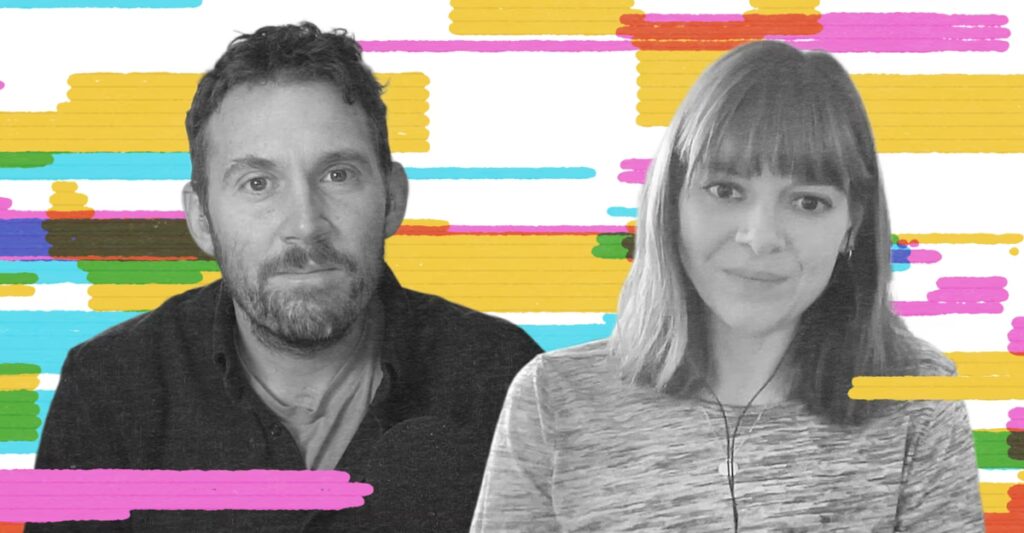
On this week’s Galaxy Brain, Charlie Warzel opens with what it means to live in 2026, when our phones can drop us into graphic, real-time violence without warning—and when documenting that violence can be both traumatizing and politically consequential. Using recent footage out of Minneapolis as a lens, he explores the uneasy collision of algorithmic feeds, misinformation, and the moral weight of witnessing. Charlie also traces how viral documentation can puncture official narratives, pushing stories beyond political circles and even into “apolitical” corners of the internet. Then, Charlie is joined by Amanda Litman, a political digital strategist and the co-founder of Run for Something. They discuss how to be a good citizen in the information war without losing your mind. Specifically: In an age of algorithmic fragmentation and billionaire-owned platforms, does sharing that devastating image or news article actually accomplish anything? Or is it just performative activism? Together they explore how nonpolitical creators and everyday people can be especially persuasive messengers, and how to pair online engagement with offline activism. It’s an episode about how to stay engaged without surrendering your nervous system and how to use the internet as a tool for connection, clarity, and action, not just despair.
The following is a transcript of the episode:
Amanda Litman: I think there’s a hesitation that some people have, especially after the last five years, of like, I don’t just want to post and have, like, performative activism. I don’t just want to do virtue signaling. I think virtue signaling is good. I think it is good to want to show people you’re a good person.
[Music]
Charlie Warzel: I’m Charlie Warzel, and this is Galaxy Brain. For the last few weeks, I’ve been obsessing over a question, the answer to which may be impossible to know: What do we do with this window we have to the world?
We’re living in this moment of genuine chaos in a decade that’s already been full of global conflicts, a botched insurrection, a pandemic, political dysfunction. All of that colliding on an internet full of conspiracy theorizing, synthetic AI slop, endless memes. Our phones bring us delights and numbing distractions, but also fresh horrors every day.
Maybe you, like me, woke up last week and found yourself faced with a series of auto-playing videos of agents mobbing Alex Pretti in Minneapolis. Maybe you watched as an agent shot him while he lay on his knees on the street. Or maybe a few weeks ago, your phone showed you the amateur video taken from multiple angles of Renee Good’s last moments before she was shot by an ICE agent at close range. Or maybe you logged on this fall and had to witness Charlie Kirk’s gruesome assassination in your feed.
Social media has enabled us to vicariously witness terrifying scenes. This is especially true in recent weeks in the Twin Cities. Sometimes we seek them out, but other times they find us in moments when we’re especially unprepared to see them. A colleague of mine recounted checking his phone and accidentally stumbling upon an auto-play video of Pretti Saturday morning while at the aquarium with his daughter.
A reality of being alive in 2026 is that you may accidentally open your phone and witness a man being shot to death and then have to figure out how to continue on with your day. The cognitive dissonance here is extremely difficult to sit with. To say nothing of the psychological trauma of witnessing such violence, even if you’re able to stay away from the worst of it. Watching armed, masked agents pulling elderly people out of their homes in the cold or detaining young children—that takes a toll, especially when you close your device and you find yourself back in your own life. The world feels on fire, and your life is just moving on.
It can feel alienating, and it can make a person feel so angry, sad, and ultimately powerless. And yet, the power of this kind of documentation—the kind that’s being performed by observers in Minnesota every day, who are risking their lives to film clashes between agents and protestors—that cannot be understated.
Pretti’s last seconds were captured from multiple angles in sickening footage that was widely distributed on social media and news organizations. It is able, though, to be seen and dissected online precisely because of the observers who were there to document it, who did not drop their phones when the gunshots rang out, and who kept recording when federal agents piled atop Pretti. All of it has had an immediate effect, in countering the administration’s smears that Pretti was a “would-be assassin” who “tried to murder federal law enforcement.” The news and the footage of Pretti’s death managed to break through the usual informational chaos.
On Reddit and Instagram and Facebook pages, the videos of Pretti’s last moments appear to have galvanized people who don’t normally engage or post about politics at all. You have sports-meme pages and golf influencers. The climbing subreddit, knitting accounts, not-safe-for-work pages. I mean, even a Facebook page as apolitical as the “Gravestones of New England” was calling out ICE’s excessive force in the aftermath.
Something has changed.
All of this underscores that if the truth is ever going to win out over propaganda, it can only do so in the face of overwhelming evidence—the collection of which has become ever more treacherous in the second year of Trump’s second presidency.
You can understand the power of documentation and of witnessing, but you can also struggle with how to consume it all yourself. I’m reminded of this great and sobering essay by The New York Times writer Amanda Hess. It’s about witnessing sensitive content videos on Instagram from the conflict in Gaza: this wrenching series of videos and photos of dead children, all on an app dominated by ads and influencers and algorithmically chosen photos of friends doing fun stuff.
Of that, she wrote, “Sometimes, when I tap on a post from a journalist in Gaza, Instagram suggests next steps. ‘Are you sure you want to see this video?’ it asks. It tries to point me instead to ‘resources’ for coping with ‘sensitive topics.’ It suggests a crisis hotline for disaster survivors and responders, but I am not a survivor or a responder. I’m a witness, or a voyeur. The distress I am feeling is shame.”
What Hess is getting at here in part is how what we might witness on our devices isn’t just traumatizing or radicalizing, but it’s also linked explicitly to the specific platforms that serve this content up to us. And these platforms are incredibly fraught curators. Many of them are owned by billionaires with their own political agendas. For example, late last week, TikTok finalized the sale of its U.S. operations to an American investor group. And that includes, among others, Oracle, the private-equity firm Silver Lake, and the investment firm MGX.
Now, this became relevant over the weekend when Pretti was killed, because influencers attempted to upload videos to the platform, criticizing ICE. And some found that they couldn’t do that. Others got the videos up, but noticed they’d received zero views. And that was very suspect. So many of them naturally took to social media to express their outrage. They said that they’d been censored by the new leadership. “With Larry Ellison’s takeover, TikTok is already silencing voices on the left and anti-ICE, anti-Trump content.” That was what the popular podcast I’ve Had It posted on X on Monday morning.
This is just a perfect encapsulation of this moment, right? TikTok noted that it had suffered a data-center outage and that user uploads and views had been affected. The transfer of ownership from ByteDance, TikTok’s parent company, to the U.S. ownership group, paired with a data-center outage, might mess with the platform. That’s an entirely plausible scenario. There’s also the fact that nonpolitical content on the platform, like posts from the NFL’s primary account, also showed zero views on Monday, which suggests a broader issue here. But others just refuse to believe that. The only thing in this that is clear right now is that there are so many people who are extremely and understandably wary of TikTok’s ownership and seem to assume at all times that somebody’s thumbs are on the scales.
All of this makes the job of being an informed citizen just tortured. Do you stare at the misery machine? If so, how much? What do you take from it? Is the misery machine real life? Is it not real life? “Don’t be a doomer!” they say. “But also don’t underreact!” The truth out there is probably as bad, maybe even worse, than you think. But if you remove yourself from it all, it’s easy to slip back into something that is like complacency. It is crucial to pay attention right now. It’s also crucial not to lose resolve or get sucked in or traumatize yourself. There’s a real world out there. Touch grass, people say. The real world is likely full of people around you who tether you to your community. People you love, and who love you. But the trauma in our screens—that is also the real world.
So what are we supposed to do with this window to the world? It is such an unanswerable and essential question right now. Sometimes it seems like this window has only made people grow apart, more callous, more self-interested, more addled. And yet that very same window often shows us that people are good and decent and that they care about each other and organize and have these huge reservoirs of empathy.
We’ve seen that in Minnesota this month. So with all that, how should you or I—how should we all—think about posting and consuming and being a good citizen in the information war? To answer that, I spoke with Amanda Litman. She’s the co-founder and president of Run for Something, which is an organization that recruits and supports young and diverse progressive candidates running for down-ballot office. She’s the author of multiple books, including When We’re in Charge: The Next Generation’s Guide to Leadership. And most recently, she’s been writing on her Substack about the ways that people and politicians can calibrate themselves to the internet to feel some agency and make a difference in the world.
She joins me now to talk about it all.
[Music]
Warzel: Amanda, welcome to Galaxy Brain.
Litman: Thank you for having me.
Warzel: So you’ve been in politics awhile as an organizer, a digital strategist. And I get the sense from following you online that you’re a pretty online person, and that you’ve been closely following what’s been happening in Minnesota online. And so I want to start by getting a sense from you of what you’ve witnessed these past three weeks—what the experience has been like watching this—but then also what you’ve been seeing in terms of the broad effect of other people watching this collectively.
Litman: It’s been so interesting, because my algorithm very clearly knows who I am. It knows I like politics, it knows I work in politics, it knows I’m a mom. It’s nice to feel seen in some ways—
Warzel: —by Big Tech—
Litman: —recognition is recognition. But the people I follow are, generally speaking, people who work in politics, for the most part. Or people I’ve met through the political circle. Those folks have been tuned in since the beginning. What I have noticed over the last three weeks, both from the folks I follow from other parts of my life, but also from the cultural creators, especially from the parenting creators, from the book people, from the romance writers, from the other parts of my life that are not politics—and I think this has been true across the internet—is people feeling like the shooting of Alex Pretti is the last straw. That this is the thing where you cannot stay silent. And it has felt so reminiscent of 2020 in that way, in that there is a tipping point where the conversation cannot continue as normal. In a way that I have found shocking, to be honest.
Warzel: Yeah; it’s really wild to see it. I’ve seen it too, and I think a lot of people have remarked on this. In my other life, I like to play golf. And so I follow a lot of people who are golf influencers or whatever, or my algorithm gives me people like that. And that is usually a pretty, like, We’re staying out of politics crew of people, you know? And there was one image I saw posted online of a golf influencer. He’s just at a driving rage, just hitting a shot. And he’s like, This normally wouldn’t be a political account, but golf is political because you can’t play it if you get shot by an agent of the state in the street. And it was like this moment for me of, This has bled through in a really, really shocking way.
Litman: It feels like the conversation has shifted from it being a thing that political people are talking about to a thing that everyone is talking about—in a way that doesn’t feel like it’s happened, honestly, since Jimmy Kimmel was fired. Which feels like the last big cultural moment that sort of broke through, at least in the online space.
Warzel: And so you wrote this piece—this is one of the reasons I wanted to talk to you today—about the politics of posting, and this idea of what we do on these platforms, whether it matters. But I think that this is a great context for it—this idea that there has been this shift. And you wrote it, I think, before Alex Pretti was shot, a day or two before. And you started the piece by describing seeing this now-famous photo of this 5-year-old boy who was detained by ICE. In the image, he’s wearing this little backpack and this hat. And it’s an extremely, I think, difficult thing for anyone to see—but especially a lot of parents. It really broke through online. And you talked about posting that image yourself on your own platforms in order to put some pressure on ICE or raise awareness here. And then you wrote, “But: Did my posting (or any of our posting, on any platform) do anything to further that effort?” Walk me through your process there. Did it?
Litman: Yes and no. I’m not sure if I actually wrote this, but I have come full circle here. Used to be, back in my digital-strategist days—so when I worked for the [Barack] Obama campaign in 2012, that was my first job out of college. I was doing online fundraising. I then did digital strategy for the [Florida] governor’s race and then did online fundraising for Hillary [Clinton]. I was kind of, maybe counterintuitively, Posting doesn’t matter. It is important in that it is participatory, but it doesn’t change things. It’s like, It’s not enough. You can’t just post and be like, “Great job; done!”
Over the last now 10 years of the work I’ve done in seeing how things have shifted, I have moved my barometer for success a little bit. I think in this moment, as you have written so much about, there is no singular media source. Everyone is getting a slightly different algorithm, a slightly different, fractured media diet. They’re seeing something a little bit different. So if I post the picture of Liam Ramos or the headlines from the Minneapolis paper, it might be the only thing that someone sees about that story if they follow me. Even though it feels like my entire newsfeed is 100 percent that, it might be the only thing. And there’s actually some really interesting research about this, that I think Wired wrote about in December: how political content posted by nonpolitical creators has more influence than political creators doing it. Like, it does more to move people to the left, in part because of the parasocial relationship that people have with folks who are talking about golf or parenting or books or whatever it might be.
And like, I’m not a creator; you’re not a creator. We’re not influencers in that same way. Although maybe we are, which is sort of a separate conversation.
Warzel: We’re all creators now.
Litman: But that idea that you—as a trusted source for your friends, your family—they know you. They know where you’re coming from. Seeing you speak up about it—“you” in the broad sense—that can be really, really powerful. And it takes the place of having a conversation in person, that most people are a little bit too afraid to have these days.
Warzel: It’s such a great point about the influencer thing. When you look at—I think this is something, and we can get into this a little later down the line—but when you think about how different ideologies have harnessed the media. Like, there was this whole long conversation after the 2024 election of Who is the Joe Rogan of the left?, right? And the smartest people on this subject who study this type of stuff, who really understand these dynamics, all said, You can’t create that. Because Joe Rogan is a guy who is a standup comedian who started a podcast about standup comedy where he interviewed comedians, then got into mixed martial arts and did that, and built this huge audience that loved and trusted him for whatever reason. And then he started to get interested in conspiracy theories, and then politics. And all of the work that you do for a decade of building that trust in that audience, when you do turn on the politics jet—like as you said—this is such a powerful source for people who have that relationship with them. And I think that it’s really interesting to think about with our social feeds. This happening in a very, one-to-one, very kind of community-level aspect. I think that’s really, really smart.
Litman: Well, and I think there’s a hesitation that some people have, especially after the last five years, of like, I don’t just want to post and have, like, performative activism. I don’t just want to do virtue signaling. I think virtue signaling is good. I think it is good to want to show people you’re a good person. And I write this, like, it feels a little self-righteous. It can be a little bit annoying. But one, the right has tried to make vice signaling very cool. They have tried to make being an asshole and a bigot and a piece of shit on the internet the hot, cool thing, and shame you if you’re a good person. I think that’s dumb. We should be proud of being, of doing good things. And it should be okay to post things that signal your values. And I will tell you, as somebody who runs a nonprofit, if you’re making the donation so that you get the receipt to share: I don’t care. That money spends all the same. It doesn’t matter why you’re doing it, as long as you are doing it and actually taking action in a meaningful way that moves the needle forward.
Warzel: You write that it could also be a way to find your people. I think a lot of people don’t believe that. But can you give the case for finding community through some of these platforms and networks?
Litman: I mean, it’s hard for me personally to articulate this, because everyone knows I work in politics. This is my life. But I hear this from the people who engage with this material all the time, which is like—it’s so validating to see someone say something or post something you agree with in a way that might surprise you. Like, I didn’t know that writer felt that way. I didn’t know that creator felt that way. And especially for people in real life, like, I didn’t know that fellow parent at school that I only follow because we see each other at the playground every so often feels similarly. Now we can have a conversation. Now maybe next time I want to volunteer in a campaign, I could reach out to them.
It often can feel either like screaming into the void or preaching to the choir. But at least when it comes to preaching to the choir, you might reach someone who just didn’t feel like they could sing loud enough, and you might encourage them to speak up. And it feels so cringey to say out loud. It really does. And I get that. But in this moment—especially with the propaganda war that the government is trying to instill—it really, really matters that there’s a different kind of dispersion of information.
Warzel: I think there’s something to the cringey thing. I’ve heard other people say this, so this is not a deeply original thought, but: I think, broadly speaking, the whole idea of cringe is really, I think, toxic. The idea of labeling everything as this. In the same way that virtue signaling is good when the world is full of this vice signaling, when there is a terminal irony that is basically poisoning all these different platforms—and the White House posts like they’re a 4chan moderator or something like that—I feel like cringe is good. Bring us some cringe, right? Because it basically just means you care a lot. And I think that that is something that I would like to see more people not be afraid to show. That they’re caring in that way.
Litman: Rachel Karten had a thing, I think it was last week, about like the Mister Rogersification of marketing this year, of how more and more brands and marketing are moving into Mister Rogers vibes in their social media and leaning into this idea of kindness and hope. And I have been thinking about this a lot, even in 2025. Like, my hottest take is: I think that the Democratic nominee in 2028 is going to be whoever can appropriately balance fight like hell with kindness and joy. I don’t know if you ever see that meme that’s like “The people yearn for Glee.” They just want Glee to be on. We want that Glee joy, like the television show. There is something real to that. It is nice to see nice things. Fear and rage, it just burns you out. Whereas when you remember that people care, and they believe that better things are possible, it makes you feel like you can get out of bed in the morning.
Warzel: Not to put you on the spot, but are there good examples of brands or whatever that have done this? Successfully pivoting to the cringe slightly, or the Mister Rogersification?
Litman: Okay, so I’m gonna quote from Rachel Karten’s newsletter, because I thought it was … like it really spoke to me. She talks about a Nurses Week video from Fig. She talks about Elmo: just checking in, how’s everybody doing? There’s a post from Willy Chavarria, who’s a fashion designer, leaning into the sort of joy that people are experiencing. I think you see this a lot with content creators in particular, talking about the beautiful things in their life. Like, the aesthetics of happiness feel really engaging.
Warzel: And that speaks a little, though, to the tension here, right? I know a lot of people who—I know somebody, a friend, just happens to be, they planned their one vacation for the year, you know, a year ago. And it just happens to be during this time in American life that is just awful and very chaotic, and feels just like, you know, something has shifted and changed. And there’s this, I think everyone makes all these different calculations of Do I post a photo of the beach? Like, Am I a bad person if I’m doing this? And I think it’s interesting to think of it from this lens of, you don’t want to say “The world just goes on,” right? But there is this way of thinking—that sharing and joy. And, I don’t know, there’s a way that you can create community that feels a little generative, as opposed to the constant soul-sucking nature of We are on the brink.
Litman: And not to bring everything in social media and politics back to Zohran Mamdani, but I do think this is something Mamdani did so, so well—which was that his stuff was joyful. Like, it was heavily layered with Millennial optimism and a little bit of cringe in a way that really, especially, spoke in opposition to the way that [Andrew] Cuomo or anyone else was campaigning. If you believe that better things are possible and you are inherently an optimist—because I think to participate in activism, you have to be a little bit of an optimist, even if you hate that about yourself—it is contagious. Because it’s what gives you the forward momentum to keep doing the work. So I had a friend who was doing that too; was like, I just was surfing in Costa Rica, and the world is falling apart. Can I post? I was like, Yeah, of course you can. Because the next day you’ll be back, you know, donating and marching and doing what you can. Post away.
Warzel: Or shoveling snow and doomscrolling; yeah. I wanted to ask broadly, we’ve touched on this in a lot of ways. But something that I have thought so much about—and, to be very candid, like agonized about for the last decade—is: What do we do with this window to the world that we have? I think whether it’s seeing atrocities abroad, as we have for so long, or the dysfunction here at home, there’s a feeling right now that part of just being alive today is being confronted with auto-playing videos of people being shot to death. And that’s something that I think is beyond just being hyper online. If you are in these spaces at all, you may be confronted with fresh, genuine horrors—that if you open yourself to them fully, it’s easy to shut down or to feel just so alienated, because you are going throughout your day, in the way that you are. I’m curious how you think about how we bear witness. How we think about showing and sharing these things with people because they matter to us, and how not to get demoralized in doing so.
Litman: One of my general rules of thumb for online-content consumption, especially as it relates to the news, is to only take the poison I have the antidote for.
Warzel: I love that.
Litman: I can’t always do this. But generally speaking, that means that there are huge parts of the things happening in the world that I just like, I scroll past. There’s nothing I can do about that. That doesn’t mean it’s not important. That doesn’t mean it doesn’t matter. It’s just the things that I have chosen to dedicate my life and my career and my work to, and my personal outside-of-work interests to, are not that. Now the things that I have—like what is happening in Minneapolis, like what’s happening in the United States, like what’s happening with Trump, like what’s happening in New York City, where I live—yeah, I’m diving deep. But you know what? That’s because I can do something about it. Whether that’s voting in an election, giving money, subscribing to media, thinking about all the different sort of things I could do that affect it. Pick the poison I’ve got the antidote for. And I think the key is remembering that the antidotes, to extend the metaphor a little bit, are more varied than you might think.
I was talking to someone who was telling me they felt so hopeless about what was happening in Minneapolis. They’re like, There’s nothing I can do. This person was like, I’ve worked in politics, worked as a facilitator. It’s so hard, but there’s nothing I can do. I was like, You live in D.C. There’s a D.C. mayoral election in the upcoming year. It actually is going to be really, really, really important who the D.C. mayor is, because this shit is going to come back to your city soon enough. Like, dedicate all of your energy to that. And that—while it might not feel like a direct solution to what’s happening in Minneapolis—that is a solution, and it’s a concrete thing you could do. It’s a thing you can show up in person for. It’s a thing you’ll be able to live the results of. Be expansive in what your idea of antidote is, and it allows you, I think, a little bit more possibility.
Warzel: We’re talking a lot about the personal-political media consumption, how to be online as a person. We’ve also touched, but I want to go deeper on, the idea of politicians and being online. You’ve written a lot about leadership, especially in younger generations: about ways that people can leverage these platforms to connect, to get messages out, but also to inspire people to affect actual political change. And something that I feel, and I think a lot of people feel, is that there are really just—especially when you look at, say, our politicians, they fall into two camps. They’re either hyper-online, really cocooned, troubling edgelords. Or you have people who are kind of thinking and regarding the internet on dial-up terms, right? You’ve said that we need to find elected officials who are the right amount of online. What is the right amount of online for an elected official?
Litman: So I think it’s folks who are enough of a consumer that they can be a producer without the brain rot. Like, J. D. Vance has brain rot. Trump has brain rot. Like, they’re so online that they’re unable to see that it is an ecosystem—an echo chamber that they cannot get out of. They’re sucked into it. And I think there’s actually a lot of, you know, Republican electeds, candidly, who—whether it’s Twitter or Fox News—same idea. Like, there’s not some secret source of information. They’re doing the same shit. We saw that in the photo from the Venezuela attack, or coup, I guess. Where they’re scrolling Twitter as they’re, you know, kidnapping dictators.
Warzel: Right. This is the, sort of, not Situation Room, but the Mar-a-Lago command center during the Venezuela raid, where they are conducting an operation. And Pete Hegseth has a screen behind him that is showing a Twitter feed, or an X feed.
Litman: That is too online. And then, as you say, the politicians who clearly have no idea how the internet works; don’t understand. They don’t know the language of a forward-facing video, so they can’t do it in a way that feels genuine or authentic. Which means they can’t communicate in this moment. That is 80 percent of a politician’s job—is communication. And if they can’t do it in the way that works for 2026, they can’t be a good politician right now. You’ve got some politicians, I think, like AOC [Alexandria Ocasio-Cortez], Maxwell Frost—I actually think Chris Murphy and Brian Schatz, it’s not all younger—like the ones who are online enough that they know how to use the tools. Even if they don’t actually know how to, like, edit the video themselves. While still understanding that the internet is not real life, but it is a huge part of your life for a ton of people, and it is how people understand real life. Like, it’s a mediation for how we will understand real life.
Warzel: When you see something good from a politician, like a piece of content that they’ve produced or a response, what are some of the flavors of that? Like, what is a taxonomy of a good response or a good post from an elected official? How does that work for you?
Litman: Does it feel like it credibly could have come from them? Do I buy that this is a thing? That even if, like I said, like their Zoomer digital staffer told them, Hey, this is a thing you should have, you should make, we’re gonna edit it—does it feel like it credibly could have come from them? Does it feel like they’re responding to a post that they probably could have seen? Does it look like they’re copy-pasting talking points they’ve been emailed? Which you see politicians often do, and then forget to delete the copy-paste notes on top of, which is such a flag. How much did their staff have to explain to them the format, the function, how it works? One of my favorite questions to ask politicians of any age, but especially the older ones, is “Tell me about what side of the internet you’re on.” What side of TikTok are you on? What Reddit subreddits are you in? Are you on Pinterest? Are you on Ravelry, if you’re a knitter? I don’t know; tell me about the internet that you’re on. And the ones who don’t even understand the question are the ones who are not well suited for this moment.
Warzel: It’s interesting. I once asked—I had an opportunity via The New York Times editorial board to interview Bernie Sanders, and my job was to ask him a tech question. And I was just like, Show me some of the apps on your phone. And he just yelled at me and said he doesn’t have any. And yet, somehow that works, right? Like somehow, there are some people, because he is authentic to that, like Hey man, like, miss me with all of this.
Litman: But you can tell the ones who are actually really good at it don’t do meme-y stuff. Like, they’re not making memes. They’re being, like, genuine personal communicators, who maybe are using different formats and functions. But I think part of it is they so clearly know themselves and know what they believe that the question becomes, What tactics am I using to communicate it? As opposed to, Which memes am I jumping on to become trendy?
Warzel: This is what I noticed, and other people pointed this out, about Mamdani. Again, politics aside. What was so—and also even beyond the “joy” part of it aside—what I thought was so interesting from a media perspective about some of his videos, especially the first ones that he did when he was out in Queens on the street, was he was taking a very popular online form of content. Which is the “man on the street asking random people, with a microphone in their face, some kind of question.” Right? And then that getting chopped up and put online. Like, that’s how we found Hawk Tuah Girl, who became like the other side of it. But he was just asking these questions, about like, Why did you vote for Donald Trump in 2024, right? And having that man-on-the-street thing. It’s that fluency with a type of content that people are familiar with, but it’s also a type of content that you can do in your own way that is not going to, or that is going to then spread naturally, right? Because the internet is primed to take that type of content and just get it out to a lot of different people. I thought that was a really great example of pairing form, regardless of even the politics, with something that is actually gonna spread.
Litman: Well, and that’s because he’s the right amount of online. Like, that’s a dude that has an FYP that is carefully calculated to his interests. And he’s talked about this. And I think that is telling of a guy who, at the very least, knows the language. Like, he can speak enough of it that he can get by. And I think that is true for so many of the politicians who are really effective in this moment—is they’re good enough. They’ve done enough days on Duolingo to get by.
Warzel: They’re not being guilted by the Duolingo owl logo. That’s very important, I think, in general. So if you could give advice—and I’m sure you are—but if you could give advice to the Democrats right now. And that’s even just like in choosing candidates, like how important is that part of it, like the online strategy in assessing overall whether a candidate’s gonna be good. Obviously you don’t want a candidate who is just hyper online and great at it and, you know, not good at the realpoliticking or whatever. But how do you—how should they judge that? That category “being online”?
Litman: I don’t want to say it’s everything. But I think it is a bigger part than most people would like to admit, because I think, one, it’s how people get information. But two—as we learned with Joe Biden—if you cannot effectively sell the good stuff you’re doing, it doesn’t matter how good the stuff is. Like, you’ve got to be able to continually communicate in all the ways people get information, in all of the platforms. And part of that is being sufficiently online.
But it’s also being a normal person who can show up in nonpolitical spaces and still be a normal person. I think a lot about how many members of Congress could credibly go on basically any nonpolitical podcast—chat show, influencer—and not sound like a robot. Maybe a dozen? If you’re being generous. Which doesn’t mean they’re bad people or bad politicians or bad legislators. It just means that the skillset for what you need to be an effective leader in 2026 is not the same skillset that you needed in 1990 or 2000 or even 2010, when a lot of these folks got elected. And I think it’s the same thing that you’re seeing CEOs struggle with, too: where if you are too online as a CEO, you will suffer. But if you’re not online enough, you’re not gonna know how to perpetuate the brand; you’re not going to know how to sell the work. You’re not going to know even how to influence internal communication, which is driven off of external communication, in many ways. It really matters.
Warzel: Something that I really appreciate about your writing on this entire subject is always that it draws back to IRL, right? It’s always focused on the idea of actual civic engagement, actual community. The stuff that we do online driving change in the real world. You’ve written about things —you’ve written a long list on one of your Substacks of things that people can do. Some of it is political; some of it is civic engagement and relationship building. Can you tell me some of the things that you have found most helpful in just building community, and giving people just a broader sense of agency?
Litman: Go to a city-council or school-board or library-board meeting. Go to a state legislative hearing. Go to a neighborhood cleanup. Stock your neighborhood fridge, if it has a free fridge. Participate in mutual aid. Support a local artist. Buy something from a local artist. Share the thing that you bought online, so that more people can buy things from that local artist. Subscribe to local media. Bring a dish to someone who just had a baby or lost a loved one, or just because. Start a neighborhood group chat. Sustain the neighborhood group chat and make sure it’s not that annoying. My favorite one—and I’ve written about this a lot, it’s sort of like the other thing that I’ve been clinging to this year—
Warzel: I think I was gonna ask you about this one. Is this your experiment?
Litman: Yeah.
Warzel: Tell the people.
Litman: In 2025, and I’ve written about this a bunch and talked about it lately, my husband and I—in order to combat our new-parent isolation—decided to host people for dinner every Saturday in 2025. Every Saturday we were in town, which since we started the year with a 2-year-old and a two-month-old, was every Saturday, because we didn’t travel with them. And we ended up succeeding. We had 52 dinners. More than 100-some-odd people came to our home over the year, 40-some-odd kids. And it was hard in many cases, but so magical. And as I think about, like, Okay, what happens when ICE comes to New York—which they will, they are, I see it in the neighborhood chats already. Like, When they send tanks rolling down Flatbush Avenue in Brooklyn—not a crazy thing to say might happen at some point in the next couple years—who are the people that I’m gonna text? Who are the people I’m gonna turn to? It’s the folks who’ve come over to my home for dinner, and their friends, and their networks. I described it as the most political thing I did in 2025. And I am a political operative who voted in two different elections in 2025—thank you, New York City—and give money and read and engage. Having people over for dinner was the most political thing I did. And as I read about what’s happening in Minneapolis, I feel even more affirmed in that. Like, building strong relationships with the people around you is what will get us through this.
Warzel: What did you learn about being social in 2025, 2026? This era where people do feel really isolated a lot? There is a quote-unquote “loneliness epidemic,” however you want to describe it. What did you learn about being social from having 52 dinners at your house?
Litman: One, that it really surprised people to be invited over. People were shocked that we were inviting them into our home. Two, that the tone that we set really mattered. How casual could we make it? I’d often text people morning of to be like, Hey, just FYI, one of my children is not wearing pants and I’m still in my pajamas. See you later. Like, being really aggressive about making it clear—this is not fancy; this is as real as it can get. Because it’s all we can do at this stage in our lives. But come into our home anyway.
I would say some of the questions that I’ve gotten since I’ve written about this and posted about it—because always be posting—really have stunned me. People would ask, like, So what did you talk about? Books, movies, vacations, our kids, the dog, all kinds of things. But I do think that social muscle—and I don’t mean to embarrass anyone by saying that, it’s a real question—that social muscle has so clearly atrophied, and you so deeply overthink it to the point that you have forgotten that actually you can just let go. Not to Mel Robbins you, but you can just let it go.
Warzel: You know, I love—I’m probably butchering it, but I believe it’s like a [Kurt] Vonnegut quote. I think it’s like, The humans were put on this earth to to fart around is the quote, right? And it’s like, I think about that. I thought of it when I read your post, and I think about it sometimes when I am out with my community, engaging in whatever. And a lot of that time is like … it’s not structured, right? It’s not like, “Here’s the list of what we’re gonna talk about today, and the eight political actions we’re gonna take, and the 12 things.” It’s like, I almost sometimes can’t remember what we talked about, right? But it’s this, leave with this feeling of, like, That was so great and unproductive, because it was unproductive. It’s like a wonderful thing. And it feels like it’s something that we just like, we need to have. Just that unstructured hang.
Litman: It’s really hard to be on your phone when it’s just four or six people in your house hanging out and having dinner, drinking wine, whatever it might be. Which I think is also big part of this; it’s two or three hours in which I am not on the internet. And I wish that was more of my life. I wish I was better about not being on my phone. But like, especially when people are over, it is so valuable to unplug. So valuable.
Warzel: Well, I think we will let people unplug by wrapping this. Amanda, thank you.
Litman: Excellent segue.
Warzel: I’m trying. This is still new to me here. We’re working on it. Amanda, this is lovely. Thank you so much for helping people try to understand how to use these tools to feel like a person in the world, instead of being tossed by the algorithmic winds. Thank you so much.
Litman: Well, it’s my pleasure. I would just say—I know it feels bad. We’re winning. We’re going to win. I think that’s the thing I’ve taken away from the last couple days of the internet. It’s like—they’re not popular. What they’re doing is not popular. They’re getting cat-bongo Reddit subthreads to vocally disagree with them. They are not popular. This is terrible, but we will win. And I find that to be really comforting.
Warzel: Amanda, thank you so much. Really appreciate it.
Litman: Thanks.
[Music]
Warzel: That’s it for us here. Thank you again to my guest, Amanda Litman. If you liked what you saw here, new episodes of Galaxy Brain drop every Friday. You can subscribe to The Atlantic’s YouTube channel or to Apple or Spotify or wherever it is that you get your podcasts.
And if you want to support the work that I am doing, and the work that all of my colleagues at The Atlantic are doing, you can subscribe to the publication at TheAtlantic.com/Listener.
Thanks so much. See you on the internet.
[Music]
The post How to Be a Citizen in the Information War (And Stay Sane) appeared first on The Atlantic.