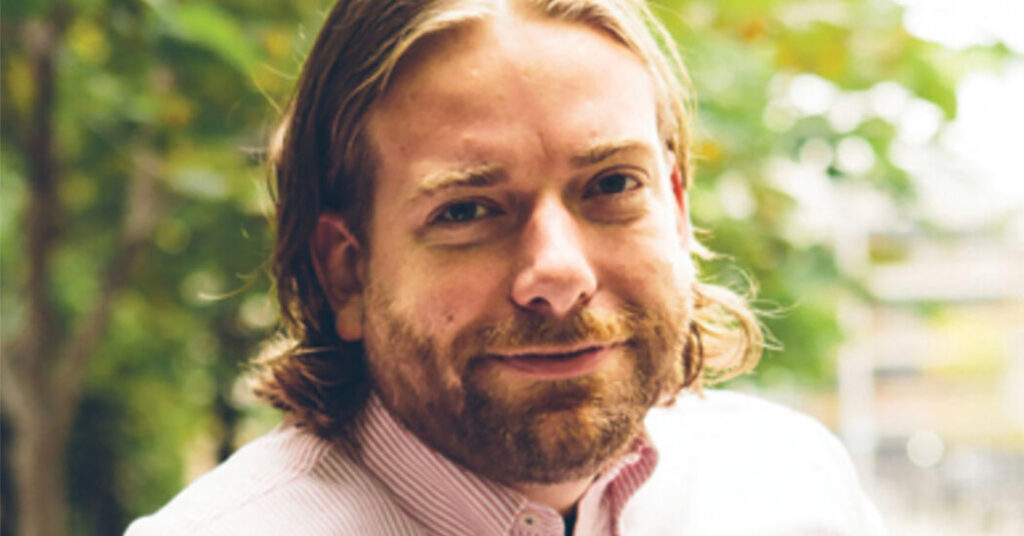
Dan McQuade, a Philadelphia journalist whose video of a standup comedian in 2014 calling Bill Cosby a rapist became an online sensation and spurred intense media and legal scrutiny of that powerful entertainer over allegations of sex crimes, died on Wednesday in Bensalem, Pa. He was 43.
His death, at his parents’ home outside Philadelphia, was confirmed by his wife, Jan Cohen. He was diagnosed with neuroendocrine cancer, which had spread from his pancreas, in 2024.
On Oct. 16, 2014, Mr. McQuade joined a friend to see Hannibal Buress, an established stand-up comedian if not a household name, perform at the Trocadero Theater in Philadelphia. As part of his routine, Mr. Buress name-checked Mr. Cosby, a Philadelphia native.
Mr. Buress, who is Black, criticized what he described as Mr. Cosby’s “smuggest old Black man public persona,” alluding to a 2004 speech in which Mr. Cosby upbraided young Black people over how they dressed and spoke. “Yeah, but you rape women, Bill Cosby,” Mr. Buress continued, “so turn the crazy down a couple notches.”
At the time, Mr. Cosby had been accused by roughly a dozen women of drugging and assaulting them, though the allegations had not yet drawn widespread public attention. Mr. Buress’s language was a jarring way to describe Mr. Cosby, who had been celebrated for decades as a pathbreaking, family-friendly comedian and whose role as the patriarch on the hit sitcom “The Cosby Show” (1984-92) earned him the nickname “America’s Dad.”
Mr. McQuade, then a staff member of Philadelphia magazine, recorded Mr. Buress’s joke about Mr. Cosby on his cellphone and posted a 1 minute, 40 second video along with a short article in a magazine blog the next day. Friends said he knew his audience and realized that Mr. Buress’s remarks would be compelling. Still, he said, he never intended for his post to blow up the way it did.
“I just pulled my phone out and immediately hit record,” Mr. McQuade told the Billy Penn news site in 2014. “And then when I finished, I was, like, ‘That’s a post.’ It was newsworthy.”
The video prompted many more women to come forward with accusations against Mr. Cosby and broader news media coverage of the allegations. Eventually, more than 50 women accused him of sexual misconduct. He maintained that any sexual encounters he had with the women were consensual.
In 2018, Mr. Cosby was found guilty of three counts of aggravated indecent assault against Andrea Constand, a Temple University employee he had mentored. In 2021, three years into a possible 10-year prison sentence that he was serving, the conviction was overturned by the Pennsylvania Supreme Court, which ruled that he had been denied a fair trial.
Eleven civil cases against him ended in settlements, The New York Times reported in 2022. That year, a jury in a civil trial found that Mr. Cosby had sexually assaulted Judy Huth in 1975, when she was 16, at the Playboy Mansion in Los Angeles. The jury awarded Ms. Huth $500,000 in compensatory damages.
Mr. McQuade had complicated feelings about the Buress video, his father, Drew McQuade, said in an interview. While his son didn’t want to be known “as the guy who took down Bill Cosby,” Mr. McQuade said, “the accusations were horrible.”
Daniel Hall McQuade was born on Jan. 27, 1983, in Philadelphia. His father retired as an assistant sports editor at The Philadelphia Daily News. His mother, Denise (Hall) McQuade, is a retired financial analyst. In addition to his parents and his wife, Ms. Cohen, a teacher he married in 2019, he is survived by a 2-year-old son, Simon.
At the University of Pennsylvania, from which he graduated in 2004 with a bachelor’s degree in English, Mr. McQuade was sports editor and a columnist for the student newspaper.
He wrote for numerous print and online publications and most recently was the visual editor at Defector.com, a sports and culture website. He had a granular knowledge of his hometown and embraced its quirks and culture.
In 2013, while working for Philadelphia magazine, Mr. McQuade charted the training footpath that Rocky Balboa, the celluloid boxer played by Sylvester Stallone, took in the 1979 movie “Rocky II.” He established that had Rocky run that path in real life, it would have covered an absurd 30.6 miles. Thus began the annual, unsanctioned Rocky 50k Run.
His work that had the most impact was the Buress video.
“He knew the importance of what he did in a news sense,” Ms. Cohen said, “but I don’t think he ever really internalized what he probably did for the victims in amplifying their voices.”
Jeré Longman is a Times reporter on the Obituaries desk who writes the occasional sports-related story.
The post Dan McQuade, a Catalyst in Cosby’s Downfall, Dies at 43 appeared first on New York Times.