Something seemed off about the cadence of Andy Shield’s mail.
Twenty-four Christmas cards came in a single day to his home in northwest England, despite having different postmarks. A stretch went by without urgent letters he was expecting, including new bank cards and a speeding ticket. Eventually, he went to collect the mail himself from the local sorting facility, saying the wait was “just unacceptably too long.”
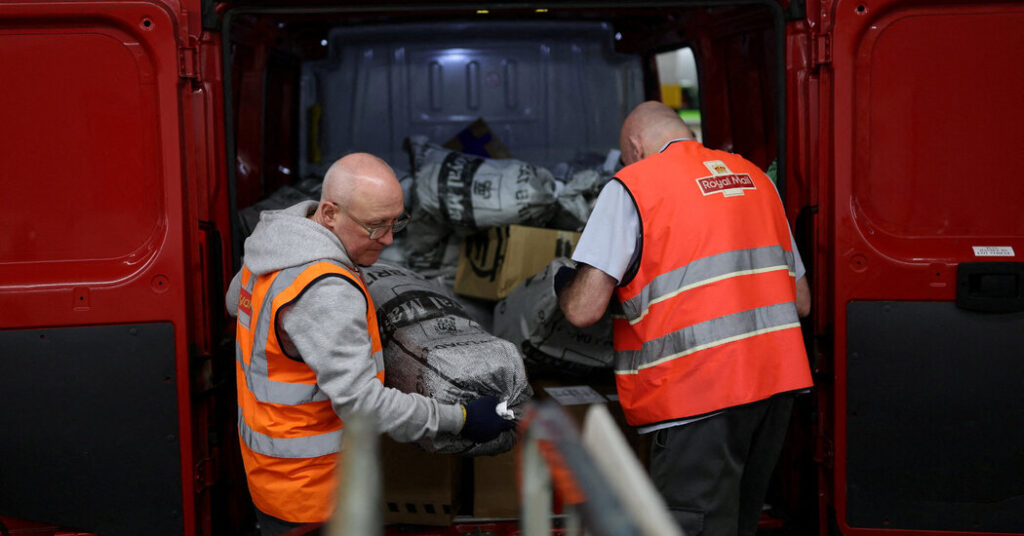
Mr. Shield is hardly alone. Residents around Britain in recent months have raised concerns that Royal Mail, Britain’s once-admired postal service, is taking too long to deliver the mail.
It is a striking descent for a 500-year-old institution that once pushed the frontiers of mail delivery.
As the service evolved from horse-drawn coaches to train and airmail, households once waited eagerly for the daily rounds of their “posties.” Dogged mail carriers trekked through remote terrain or funneled letters through a now-defunct network of tunnels beneath London.
Two decades ago, Royal Mail delivered more than 20 billion pieces of mail each year. Today’s volume is about a third of that.
Royal Mail, like postal services in other countries, has struggled with service issues and financial troubles in the digital age. The service faced significant losses as traditional postage gave way to emails, apps and private courier companies. Workers have staged strikes to demand higher pay and better working conditions.
Long run by the state, the service was privatized in 2013. Last year Daniel Kretinsky, a Czech billionaire, finished the process of buying the company from its shareholders. (The company reported a return to profit last year for the first time in three years.)
Though most late deliveries prompt grumbles and little else, the consequences can be serious and have prompted inquiries by Parliament and watchdogs. In some cases, one lawmaker said, people had missed medical procedures because appointment letters arrived after the treatment date.
Last year, Ofcom, the British regulator overseeing the service, fined the company 21 million pounds (about $29 million) for failing to reach its service targets, the third such fine in recent years.
Citizens Advice, a charity that also helps oversee Royal Mail, has said it is concerned about Royal Mail’s reliability. An annual survey commissioned by the charity and released this week found that 29 percent of people it polled in January said they had experienced delays over the past month. Of that group, a third said they had experienced a “serious negative consequences,” like missing bills or health appointment letters.
Ofcom has said it will cut the number of weekday letter deliveries to help the service survive, while still requiring 99 percent of mail to be delivered no more than two days late. Citizens Advice has argued that reducing the frequency could worsen the situation.
In a statement responding to questions from The New York Times, Royal Mail said that it shares areas that are experiencing service delays or disruptions on its website, and that only a small number of its 1,200 delivery offices across Britain were currently experiencing difficulties. While noting that the company’s formal delivery targets are suspended around Christmas, its busiest time of year, the spokesman said that more than 99 percent of items mailed at least four to seven days before Christmas — the service’s recommended dates — were delivered in time for the holiday.
Gareth Jones, who lives in Greater Manchester, said that he had noticed mail delays since last summer. In September, he said, a letter meant to notify him of an upcoming medical appointment arrived three days after the appointment day. Luckily, he said, he already knew about the appointment via an app.
James Naish, a member of Parliament representing Rushcliffe, in England’s East Midlands, said that he had heard from more than 600 of his constituents over the past few weeks who had experienced delays with receiving the mail.
“People are frustrated, and in some cases, these delays have caused real problems and extra costs. It’s unacceptable,” he said in a statement.
Another member of Parliament, for Thornbury and Yate, where Mr. Shield lives, said that about 45 people there had contacted her office over mail delay issues. “It’s not the individual postman or woman’s fault, Royal Mail needs to urgently address staff shortages,” Claire Young, the lawmaker, said in a statement..
Amanda Fergusson, the chief executive of the Greeting Card Association, a trade group, said that Royal Mail remained crucial because “they hold the monopoly on the ‘one-price goes-anywhere’ service to every U.K. household.” Although there were some “localized issues,” over the holiday period, Ms. Fergusson said the group’s members had not reported significant concerns.
But Mr. Shield said he no longer assumes that important mail will arrive on time. For now, he plans to keep collecting it himself from the post office.
“We need a good service and we’re not getting it at the moment,” he said.
Isabella Kwai is a Times reporter based in London, covering breaking news and other trends.
The post A Challenge for Britain’s Royal Mail: Proving it Can Deliver the Mail appeared first on New York Times.