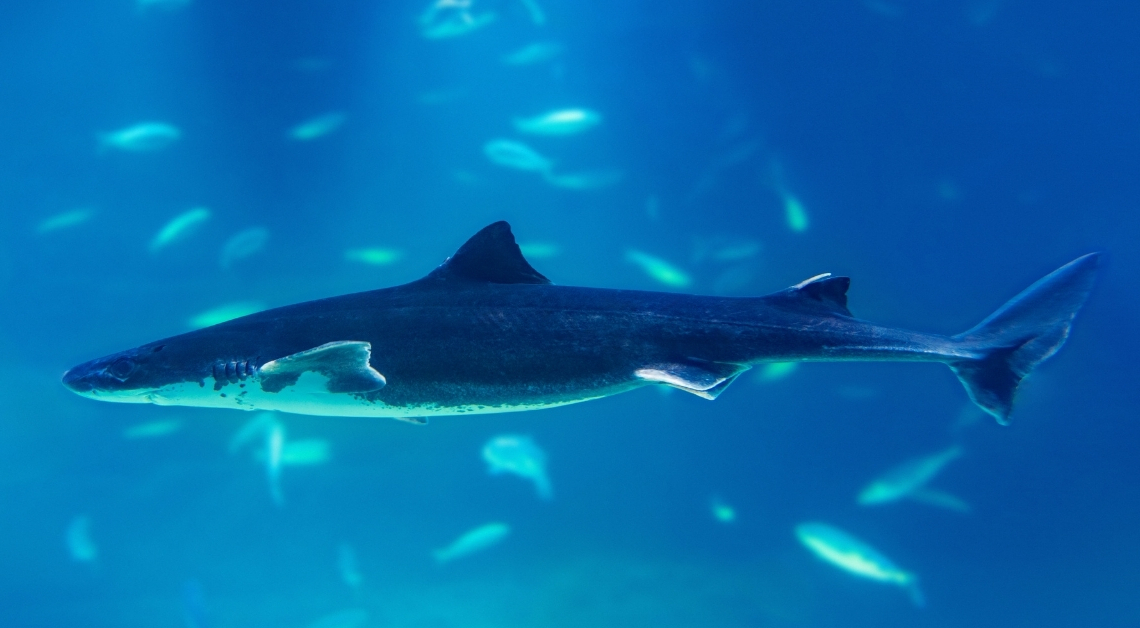
The Greenland shark looks dead. It’s nearly blind. It’s incredibly slow for a shark. Did I mention that it looks dead… like it’s about a third of the way through the decomposition process? Everything about it screams old and ancient. But that might’ve all been incorrect, scientifically speaking.
It all started with new research published this month, detailed by The Guardian, which shows that Greenland sharks aren’t blind at all. Despite cloudy eyes and parasitic copepods clinging to their corneas, their retinas are structurally intact and can detect light and contrast. The sharks can see just fine; we just assumed they couldn’t because they looked like they shouldn’t, given how their eyes looked to us.
That discovery is a part of a broader awakening. Everything we knew, or, really, everything we assumed, about the Greenland shark was wrong. They move slowly… but if they are slow, why have they been found with polar bears, caribou, and seals in their stomachs?
Maybe they aren’t scavengers, as previously assumed. Footage captured via submersible off the coast of Norway showed Greenland sharks diving vertically through the water, maneuvering with surprising speed and precision.
What’s Going on With Greenland Sharks? Here’s What We Don’t KNow.
Researchers once thought Greenland sharks could live up to 500 years. That’s what a widely cited 2016 study said. The researchers in that 2016 study used carbon dating of eye tissue to get that estimate. The problem is that while carbon dating is great for fossils that are millions of years old, there are huge margins of error when the timescales are shorter. Greenland very well could reach some ripe old age, but nothing quite as mythic and epic as 500 years.
There is still some mystery surrounding the Greenland shark. Scientists still don’t know where or how they breed. They haven’t even documented a single pregnant female Greenland shark since 1950. They are presumably out there perpetuating the species; we have no direct evidence of this other than the fact that Greenland sharks are still around.
For so long, it felt like we had barely scratched the surface of our knowledge of the Greenland shark. Now, it seems that we’ve got to throw away what little we knew and start from scratch. And since the Greenland shark can actually be found in different parts of the world, including the warm cerulean waters of the Caribbean, maybe we don’t need to call them Greenland sharks at all.
The post Why Scientists Are Rethinking What They Know About Greenland Sharks appeared first on VICE.