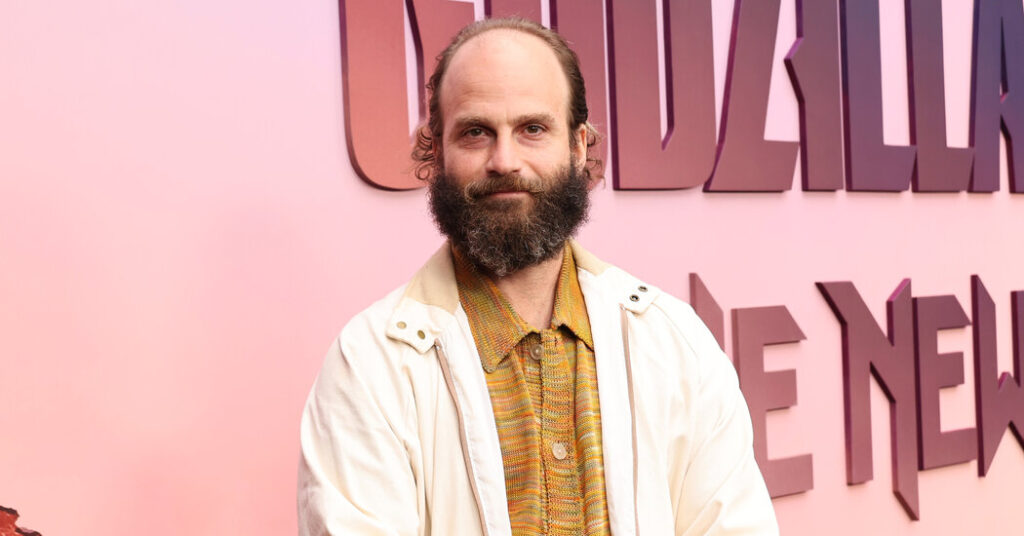
As “The Guy,” Ben Sinclair — the writer, director and star of the comedy “High Maintenance,” which ran on HBO from 2016 to 2020 — was an affable stoner and pot dealer whose scrappy business gained us entry into the homes, and lives, of New Yorkers. But Mr. Sinclair, 41, is now giving us a glimpse into his efforts to decouple weed from his own life.
Mr. Sinclair’s career grew around his relationship with marijuana. In his new Substack, “Low Maintenance,” he writes about how his attachment to the drug had started to feel like “gripping the rope for dear life,” but he also makes it clear that he’s still figuring it out. “This isn’t a sobriety blog,” he wrote.
The essays, which are vulnerable and reflective, can also feel, at times, like the opposite of his role as the slightly inscrutable drug dealer on a show that was first released as a web series on Vimeo in 2012, and later picked up by HBO.
“The Guy has this reputation for being there for people,” Mr. Sinclair said in an interview. “But he’s also leaving all the time. He’s always out the door.”
The newsletter is a way to support people who identify with his experience of addiction, he said, and he doesn’t shy away from painful subjects. In a post titled “Bro Maintenance,” Mr. Sinclair reflects on his friendship with the screenwriter and director Jeff Baena, who died by suicide in January of last year.
In interviews, edited and condensed for length and clarity, Mr. Sinclair talked about connecting with an audience again, re-evaluating his relationship to marijuana and making something new after a hit TV show.
Given the reaction to your Substack, a lot of people seem excited to reconnect with you.
I’m surprised. I’m shocked, actually.
You reflect very openly in “Low Maintenance” about your drug use and dependence on marijuana, but does it ever cross your mind that “High Maintenance” was a show that, in some ways, glamorizes drug use?
Yeah, the answer is yes. As I say in the first “Low Maintenance” post, everyone who is a fan of the show knows that’s not really what it’s about, that that’s really just the way into it. And “glamorizes” is a little too glamorous of a word. I think “recognizes” is probably the word I would use to more aptly describe it. It recognizes that people use drugs, and it tries to, at some times, minimize people’s drug use at its worst. But I think the whole show has a nonjudgmental air about it. It just takes the negative charge out of drug use. Its initial attempt was to make weed-smoking not the main part of a stoner’s life.
You write that your partner, Jess Damuck, suggested you start the Substack. Did it take a lot of persuasion?
In the past five years, I have, as my Substack shows, tried so many things in my pitches. I keep remembering all these things I pitched, and there were pages and reams of pages of writing to pitch somebody something, and then they would just be basically thrown in the garbage can after all of that work. So it just seemed like a way to get back out there without having to get permission from a corporate entity.
During the filming of “High Maintenance,” what was the situation with weed?
The usual way things went is, if we had a morning shoot, I would not be stoned in the morning, and then I would get grouchy and then somebody — my joint bearer — would come through. I’d go get stoned during lunch and have a way lighter, messier attitude about things in the afternoon. And then through editing, I was always stoned.
After building a career around marijuana, are you surprised that your relationship to it has changed?
The whole time I’ve been smoking — even when I was given a lot of positive attention for it — I always had this nagging feeling in the back of my mind, whether it was deserved or undeserved, that I was holding myself back from a fuller potential.
How long have you been re-evaluating your relationship with weed?
If I’m being completely honest, for many years. I would say even before “High Maintenance.”
I would say for 20 years, I’ve been like, Man I’m dependent on this stuff. And there would be times of extreme use and then times of backing off. Since Covid, maybe for the past three or four years, I’ve had, like, a “You’ve got to cut this out,” and would quit for 90 days or would quit for 45 days. Then one hit would turn into smoking all day again.
After “High Maintenance,” can you share a bit about what you would like to make next?
We don’t know what is real anymore on the screen. Anything that is on a screen is probably 50 percent up for grabs in terms of veracity. So I want to play with that.
What kind of form would something like that take?
I’ve been trying to find a form for my formless ideas, and every time I put them in a form, it kind of falls apart, and it becomes, like, unbearable and not interesting and meta. I feel like Substack is formless still. It can be a podcast, it can be a video, it can be an essay.
Any parting thoughts?
I’m not a spokesperson for sobriety, and it’s not that I’m worried about that. I think my two skills in life are: I’m able to marshal the talents of a lot of people and get them to join me to right near the cliff’s edge. The other one is: I’m able to speak very candidly about what’s happening, and sometimes overshare.
The post What Happens When TV’s Favorite Weed Dealer Tries to Quit? appeared first on New York Times.