George E. Bogden, a senior fellow at Yorktown Institute and a fellow at the Steamboat Institute, served as executive director of the Office of Trade Relations at U.S. Customs and Border Protection in 2025.
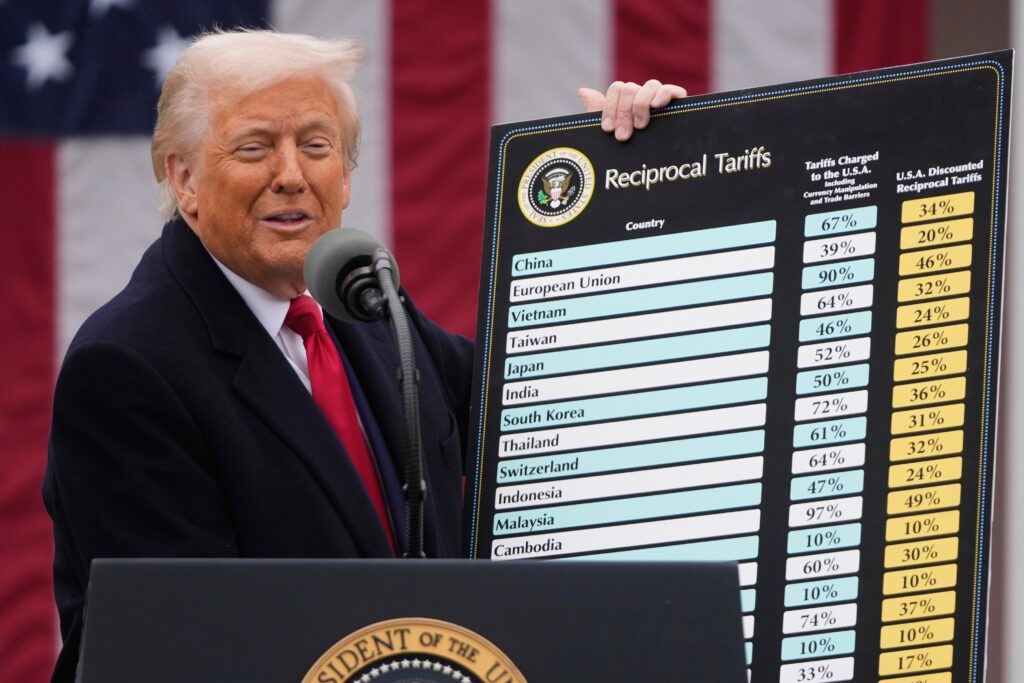
For months, a spiteful acronym has passed for analysis in Washington and on Wall Street: TACO, or “Trump always chickens out.” Tariffs would be announced with theatrical menace, critics said, only to be paused, trimmed or forgotten at the first sign of consequences.
But all along, from Inauguration Day to Liberation Day to Davos, the president has been eating his favorite dish: TACO salad. And the unsung ingredient is GUAC. Donald Trump has been “gaining unmatched American clout” through his strategic use of economic pressure.
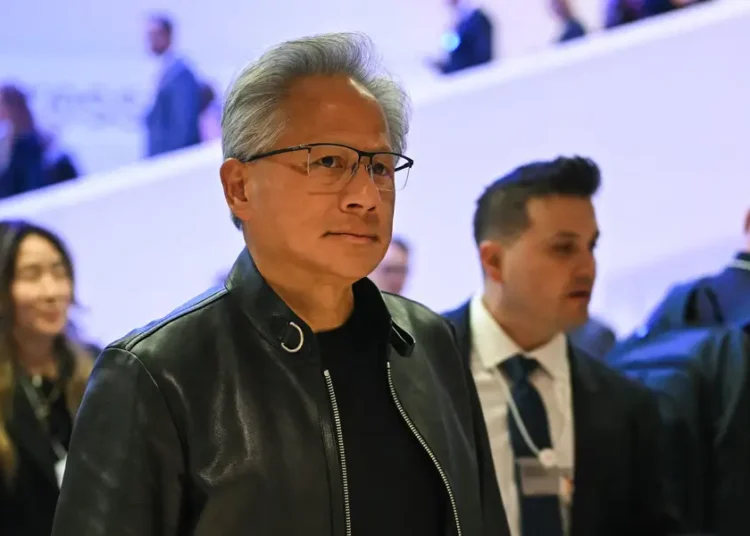
At Davos, Trump did what the diplomats gathered in Switzerland fear most: He went off-script, pausing to bring up the elephant in the forum: “Would you like me to say a few words on Greenland?” There, Trump reiterated the case for acquiring the island, insisted he wouldn’t use force, but added: “You can say yes, and we will be very appreciative. Or you can say no, and we will remember.”
His legions of detractors decried what they saw as merely more crude intimidation, but within hours Trump was again talking about tariffs — this time, about canceling them. No Marines dispatched. Just an ultimatum to price certain European exports out of the U.S. market and a negotiation channel suddenly bearing fruit.
Pugilists on X declared it the latest TACO. But what actually happened underscores Trump’s zero tolerance for festering national security vulnerabilities and his willingness to use economic force to resolve them.
America’s Arctic posture and homeland defense depend on the U.S. military foothold at Pituffik Space Base, where an early-warning radar feeds North American missile defense. In an era of revived great power competition, that radar is as close to a home-alarm system as the United States can get. Basing rights are not trivial. Nor are critical minerals. And Greenland has those vital ingredients of national defense in spades.
Allies huff, of course. Canada’s prime minister lamented that world order lays “in the midst of a rupture.” But this drama distracts from Denmark’s renewed provisos against Russian and Chinese encroachment in the high north.
Furthermore, the same pressure that vindicated America’s Greenland gambit also steadied U.S.-Taiwan trade relations. Tariffs, if applied with determination, can clear long-simmering irritants, tighten supply chain security and safeguard the vital semiconductor market of an imperiled democracy. In the age of GUAC, pass the chips.
Tariff opponents judge the policy on whether it conforms to an economist’s ideal of friction-free markets. Yet to assess the president’s strategy impartially, it’s better to ask whether his economic brinkmanship has worked as a tool of statecraft. On this score, the wins keep piling up.
Tariffs impose economic pain, to be sure. But that pressure can force policy amendments without bloodshed. They are no cure-all. Compared with alternatives, however, they are a remarkably peaceful way to settle disputes that, in another era, might have spiraled toward carnage. A world worried about nuclear proliferation should prefer Trump’s weapons of mass disruption.
Less ambitious measures — typically called “sanctions” — lack the track record of Trump’s tariffs. And no matter how tailored, they have tended to punish populations rather than elites, while becoming politically impossible to lift. Tariff threats work differently. They are broad, time-bound and reversible. They create urgency and provoke deals. The pattern is not chaos but sequencing: announce a deadline, invite concessions, then trade pressure for commitments.
The White House’s GUAC recipe relies on a premise that polite Washington usually whispers: The United States underwrites the global trading system. It won the world war that made the globe safe for capitalism and designed the system that spread that way of life across borders. What’s more, Americans sustain the reserve currency that lubricates trade. Its people pay — year after year — to keep transportation lanes open so goods move across the high seas.
So when Washington reaches for tariffs, it is reminding allies and rivals alike that access to the U.S. market — and most others — depends on those foundations. It’s a primacy earned by the United States, and it has never come cheaply.
Consider Mexico. As it braces for a high-stakes review of its North American trade relationship, its Senate approved tariffs as high as 50 percent on cars, steel and other goods from China. Although Beijing loudly objected, it became too costly to launder Chinese overcapacity through friendly ports. Mexico’s alternative was to lose its privileged access to the U.S. market.
Naysayers deny such progress. When tariff threats arise, they’re unconscionable. When concessions arrive and duties abate, it’s all proof of the president’s infinite bluff. Apparently, you can have TACO — and eat it too!
The empty slogan ignores the long history of these dynamics. Thucydides, describing Athens’ successful siege of Melos, wrote that the Athenians “drew a line of circumvallation round the Melians” when persuasion failed. The U.S. need not build physical blockades around islands. Washington can raise tariff walls around markets. The aim is the same: to press a decision without sending troops over parapets.
The movement on Greenland shows how this works in practice. A dispute that could have lessened NATO’s credibility — or worse — settled in negotiations without a shot fired. If the deal delivers durable denial to adversaries seeking Arctic chokepoints, it will be a landmark achievement.
A risk remains. Litigation currently at the Supreme Court places necessary tariff powers in jeopardy. Observers focus on the potential for refunds if this tool is taken out of Trump’s hand. They forget the potential disgorgement of the peace dividend the president has derived by substituting economic pressure for force.
What unfolded in real time at Davos should remind the chalet class that globalization rests on power. In the past, America might have indulged the pretense that markets alone define global commerce. The hour cometh for new manners. Today’s rules of international order are smothered in GUAC.
The post On Trump’s tariffs, it’s the GUAC that matters, not the TACO appeared first on Washington Post.