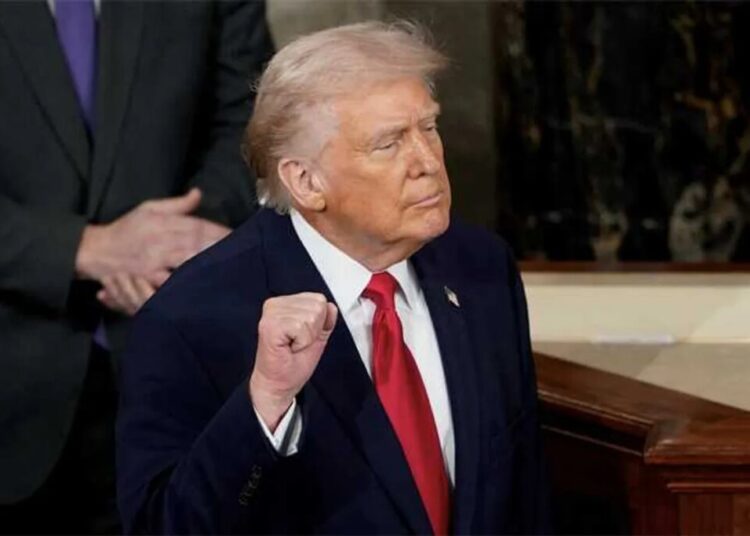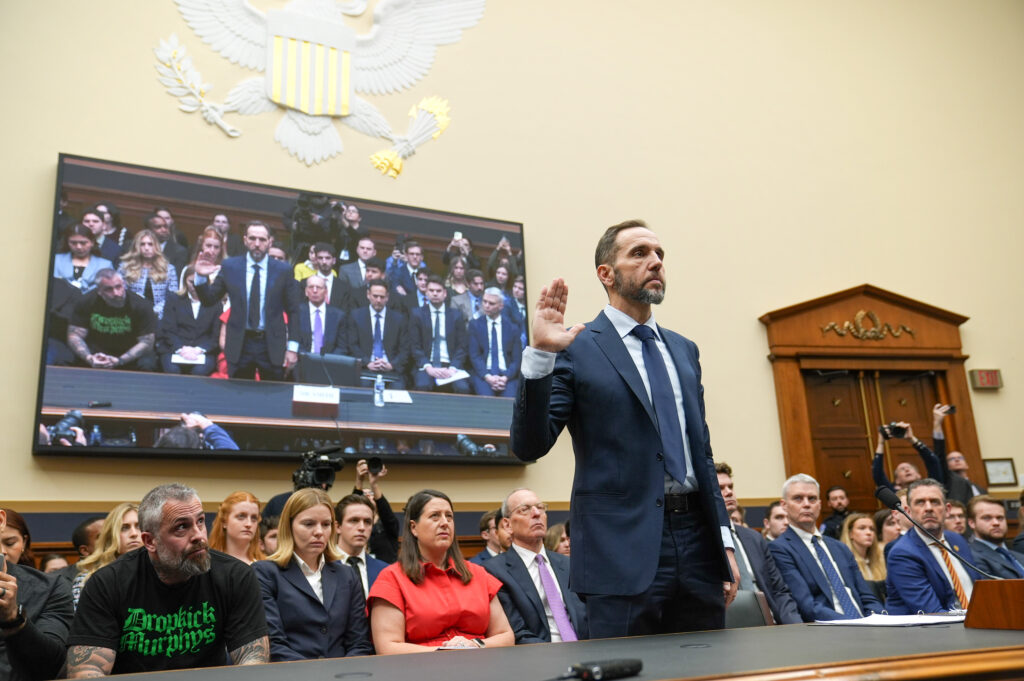
Jason Willick argued in his Jan. 26 op-ed, “Jack Smith is in First Amendment denial,” that the special counsel’s proposed gag order against Donald Trump revealed dangerous prosecutorial overreach. But the sequence Willick described is the constitutional process working as designed: Prosecutors request broad restrictions, courts narrow them and defendants retain the ability to make political arguments.
Yes, Smith’s initial filing was expansive. Prosecutors routinely ask for more than they expect to receive; judges routinely trim such requests to fit constitutional requirements. District Judge Tanya S. Chutkan, and then the U.S. Court of Appeals for the District of Columbia Circuit, did exactly that. Willick framed judicial narrowing as evidence of prosecutorial bad faith. But it is actually evidence of judicial oversight functioning properly.
The column’s deeper implication was that prosecuting a political candidate requires abandoning standard tools of case management. But campaigning does not exempt any defendant from rules designed to protect witnesses and judicial proceedings.
Willick concedes the Trump Justice Department is behaving more recklessly than Joe Biden’s, yet argues the lesson is that prosecutors should have shown greater restraint toward Trump. This inverts the actual problem. The threat to constitutional order comes not from prosecutors whose requests are narrowed by courts, but from an administration that treats lawful prosecution as persecution and retribution as justice.
Jordan Ryan, Belchertown, Massachusetts
The writer is a former U.N. assistant secretary-general.
Hands off VMI
Regarding the Jan. 22 Metro article “State leaders focused on VMI”:
Two proposals pending in Richmond would fundamentally alter Virginia Military Institute’s future. One calls for a study to determine whether the institute should continue receiving state funding. Another would dissolve VMI’s independent Board of Visitors and place the school under the control of another state university with a different mission and governance structure. Together, these measures would weaken the framework that has allowed VMI to succeed for nearly two centuries.
I am a 2001 graduate of VMI, and I serve as an active-duty Army colonel. I have led soldiers in combat in Iraq and Afghanistan, and I can state without hesitation that the leadership foundation I gained at VMI was critical to that responsibility. The values instilled there — honor, selfless service and commitment to something larger than oneself — are habits forged through discipline and accountability.
VMI remains one of the nation’s largest producers of commissioned officers outside the federal service academies and is also a highly ranked liberal arts institution, with nearly all graduates employed or in graduate school within months of graduation. That record reflects a distinct mission and an independent governance structure that should be preserved, not dismantled.
Kevin Consedine, Alexandria
I was one of three Canadian citizens at Virginia Military Institute in 1992, having received my green card only months before matriculation after a difficult immigration journey. VMI provided the financial assistance that made my education possible.
After graduating in 1996, I went on to medical school with scholarship support supplemented by VMI alumni. Just months later, Justice Ruth Bader Ginsburg wrote the Supreme Court opinion that made VMI coeducational.
Years later, my three daughters and my son chose to attend VMI over my initial objections. I left VMI believing it needed to change, but my children’s experiences have shown me that it has changed. Two of my daughters were elected among the first three women to serve on the Honor Court, and one became the first woman elected valedictorian by her class. Academic standards have improved, and the corps today is made up of young women and men from all backgrounds that are held to the same demanding expectations.
Targeting VMI’s funding over ideological disagreements punishes some of America’s hardest-working youth. Going to a garage doesn’t make you a mechanic — and attending VMI doesn’t make you a bigot.
Mark D. Townsend, Crozier, Virginia
Snow tips from an expert
I enjoyed the Jan. 25 news article “6 tips for shoveling snow from Post staff from the Midwest,” but as a fellow Midwesterner, I would like to fill it out with some more vital information.
First, on dressing: Cover yourself from head to toe. Start with a non-cotton base layer that warms you and wicks moisture. Around the house, I wear a second layer, often a turtleneck. Over all that goes a sweater and a windbreaker. Work toward a balance that keeps you warm but prevents you from overheating. If you are cold, change the windbreaker for a coat. Personally, I also wear a neck gaiter, which helps my body core to stay warm.
As far as tools go, you’ll need a steel-blade, wood-handle snow shovel. Plastic shovels are breakable and useful mainly for small amounts of loose snow. I also recommend an ice scraper. It is the definitive answer to ice. My ice scraper helped several of my neighbors clear the ice after this latest storm.
Snow shoveling is hard work, and some adults suffer heart attacks while shoveling. I’m 76 years old, so I need to take pauses to bring my heart rate down. About once an hour, take a break, go indoors, drink liquids and take stock. And one final tip: Poultry grit (i.e., granite chips) is the best grit to use when your car is stuck; it’s far superior to kitty litter, which on snow becomes a glutinous mass. Get the larger “rough” grit over the smaller variety. A 50-pound bag of poultry grit in your trunk will also put some stabilizing weight over your rear wheels.
Paul Rood, Silver Spring
The post Jack Smith and the real threat to constitutional order appeared first on Washington Post.