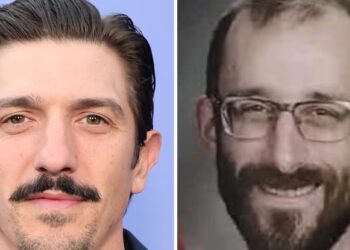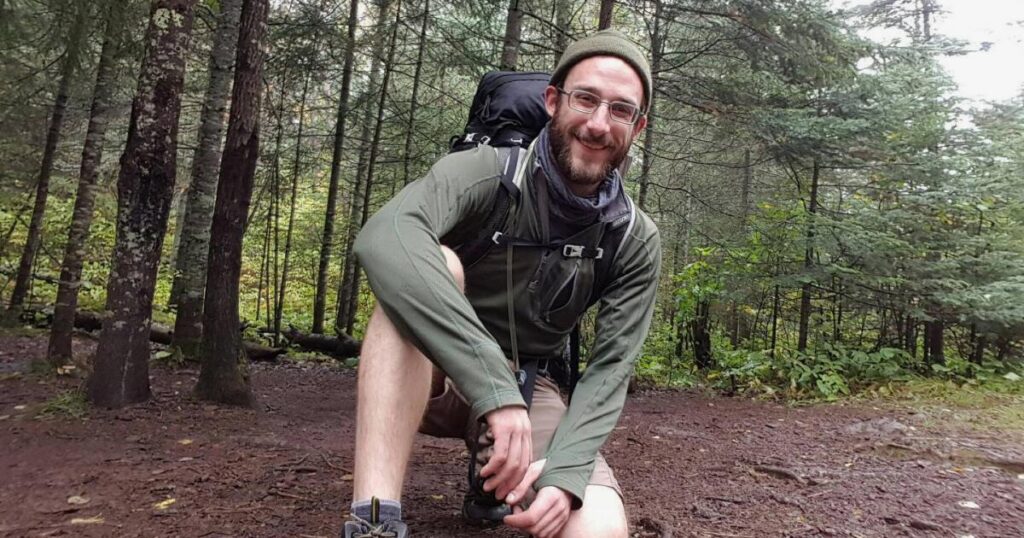
Renee Good and Alex Pretti were shot and killed this month in Minnesota. Silverio Villegas González was shot and killed in September in a Chicago suburb. Keith Porter Jr. was gunned down on New Year’s Eve in front of the Northridge apartment building where he lived.
All of them were slain by ICE agents.
In the past few months alone, America has repeatedly witnessed — from multiple angles and at varying playback speeds — groups of aggressive, twitchy, masked men conduct immigration sweeps on the order of President Trump and his Department of Homeland Security. The scenes are the stuff of nightmares, and even villainy.
After agent Jonathan Ross shot legal observer Good three times, including once in the head, he mumbled the expletives “f— b—” as her SUV drifted into a light post. Two weeks later, at least one ICE agent was seen clapping after Pretti was shot multiple times as he lay pinned on the ground.
If the intention of the Stephen Miller-run White House was to crush the resistance with violence, it has backfired. The number of protests in cities around the nation has grown in size and frequency. And local networks that offer instruction and training for how to legally observe ICE raids are proliferating by the day. In short, as ICE has ramped up its operations, so too has the resistance.
Now, a consortium of various civil rights and advocacy groups is calling for the largest anti-ICE demonstration to date, a national shutdown. “The people of the Twin Cities have shown the way for the whole country — to stop ICE’s reign of terror, we need to SHUT IT DOWN,” reads nationalshutdown.org. “On Friday, January 30, join a nationwide day of no school, no work and no shopping.”
Given the sense of urgency triggered by the invasive and deadly tactics of federal officers over the past few months, Friday’s planned shutdown could be huge. But unlike other major demonstrations, like the “No Kings” marches, it asks folks to take off work, school and stop shopping (yes, even online) in the name of democracy.
Taking time off work is not economically feasible for many Americans, especially given today’s affordability crisis (a concept that Trump believes was invented by Democrats). With that in mind, it may not be the most effective way to show solidarity with Minneapolis, Chicago, L.A. and other cities where a trip to Home Depot might include getting caught in an immigration raid. But it might be the safest option in an otherwise dangerously heated time, when peaceful protests are ending in violent killings.
We’ve been here before, even if the current images of killer goons in mismatched military gear might seem foreign and dystopian. Peaceful Civil Rights-era marches and protests often turned into bloody, brutal and murderous affairs, fueled by inhumane law enforcement tactics and vigilantes operating with impunity. But the majority of Americans — i.e. those who weren’t Black — didn’t see folks who looked like them slain by government agents who also looked like them. The naive notion that America protects its own has remained largely intact, until the current administration declared that anyone who’s not with them is against them.
Today, Washington’s on-high interpretation of Us and Them equals those who are pro-Trump (Us) and those who are not (Them). There are, of course, plenty of racist and bigoted caveats within that lunk-headed quotient, but generally, one side is dispensable while the other is not.
The Trump administration has characterized Pretti, who was carrying a concealed, permitted weapon at the time of his killing, as a domestic terrorist who essentially got what he deserved: “You cannot bring a firearm loaded with multiple magazines to any sort of protest that you want. It is that simple,” said FBI Director Kash Patel.
But when then-17-year-old Kyle Rittenhouse shot three #BLM protesters, killing two, at a 2020 Kenosha, Wis., demonstration decrying police brutality, he was — and still is —canonized as a hero by Trump and the right.
Historical data shows that when 3.5% of a population is actively involved in peaceful, sustained resistance, they can influence significant political shifts. Those numbers likely don’t differentiate between who makes it out of the peaceful protest alive and who emerges as a martyr for the cause. But one shouldn’t have to choose between exercising their 1st Amendment rights and making it home alive.
The post Is there such a thing as a peaceful protest in today’s ICE age? Friday’s planned rebellion will be a test appeared first on Los Angeles Times.