When Will Eisner’s “A Contract with God and Other Tenement Stories” hit shelves in 1978, it attracted literary attention to comics and helped popularize the term “graphic novel.” Now it’s on sale, along with rights to the rest of Eisner’s intellectual property.
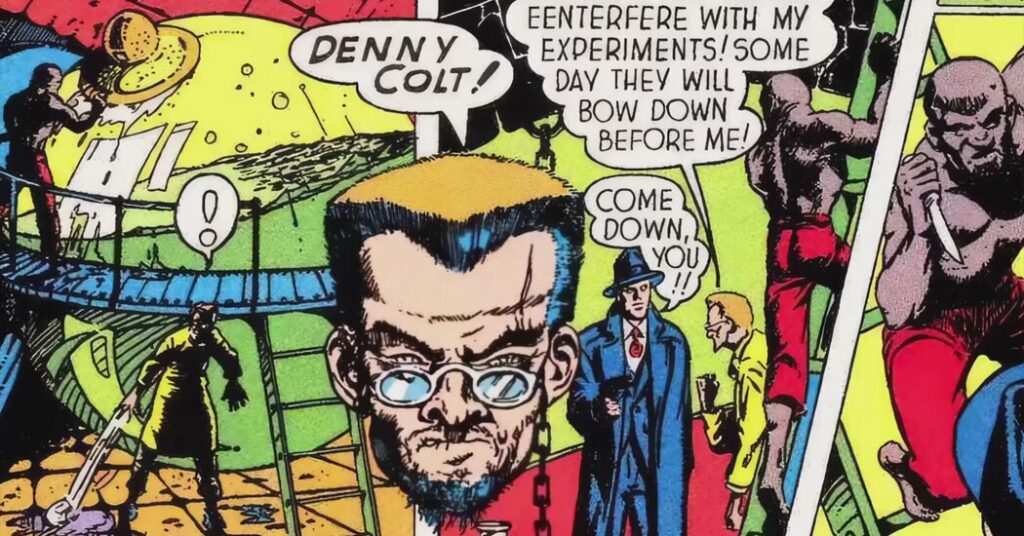
Up for grabs are Eisner’s graphic novels, children’s books and instruction manuals for creating comics. Also included in the sale are the many characters he created, most notably the Spirit, the influential masked crime fighter who debuted in 1940 and featured in stories that are noteworthy for their moral realism, mature themes, genre fluidity and inventive page design.
Eisner’s last work featuring the Spirit, a 72-page story from 1996 called “The Spirit Returns,” was never published. It, too, is up for sale.
Eisner died in 2005, followed by his wife, Ann Weingarten Eisner, in 2020. Since then, Carl Gropper, Ann’s nephew, and his wife, Nancy Gropper, have run the estate. Now in their 70s, they hope to find a buyer eager to keep Eisner’s work, especially the Spirit, in the public eye.
“We expect either a movie or an animated feature, we hope, in the future,” Mr. Gropper said.
The family is aware that the Spirit’s 2008 sojourn to the big screen did not fare well despite its comics world star power. “The Spirit,” written and directed by a fellow comics innovator, Frank Miller, had an estimated budget of $60 million but earned less than $40 million worldwide.
“You need to have a good story that’s consistent with the character, and that clearly was not consistent with the essence of the character,” said Lloyd Greif, the president and chief executive of Greif & Co., the investment bank handling the sale. “And frankly, the story didn’t make a whole lot of sense.”
Calculating the value of an artist’s archive is not an exact science. “Basically, there’s three different methods that are commonly used to value intellectual property,” said Lori E. Lesser, who leads the intellectual property practice at the law firm Simpson Thacher & Bartlett. “And they’re called, in shorthand, the income, market and cost method.”
Applying the first two methods, she explained, “you can price the asset based on your own estimated future income stream from products and licensing fees, or you can analyze data of other similar characters that were sold.”
The cost method, Lesser said, is better for assessing the worth of something like software, for which an investor could reasonably estimate the cost of resources put into coding and infrastructure by the seller. In the creative arts, Lesser said, that method is less easy to apply.
“It is low-cost for someone to have a moment of genius to create a new superhero,” Lesser said.
The costs may be low, but iconic characters aren’t created every day. Hearing about an unearthed story by Eisner featuring the Spirit elicited a gasp from Maggie Thompson, a former editor of the defunct comic book trade magazine Comics Buyer’s Guide and a judge on the Hall of Fame panel of the Will Eisner Comic Industry Awards since it was established in 2024.
“I’m so excited to hear there’s still more that we haven’t seen,” she said. “I hope that this will mean that people who don’t already really know who he is familiarize themselves and enjoy the work he created over decades and decades and, by the way, decades.”
Creators with Eisner’s brand and staying power are rare. “He believed very early on that comics would be one day regarded as literature with adult themes,” Ms. Gropper said. “And he really was responsible for getting to that point.”
George Gene Gustines has been writing about comic books for The Times for more than two decades.
The post Graphic Novels Wouldn’t Be the Same Without Him. Who Will Keep His Work Alive? appeared first on New York Times.