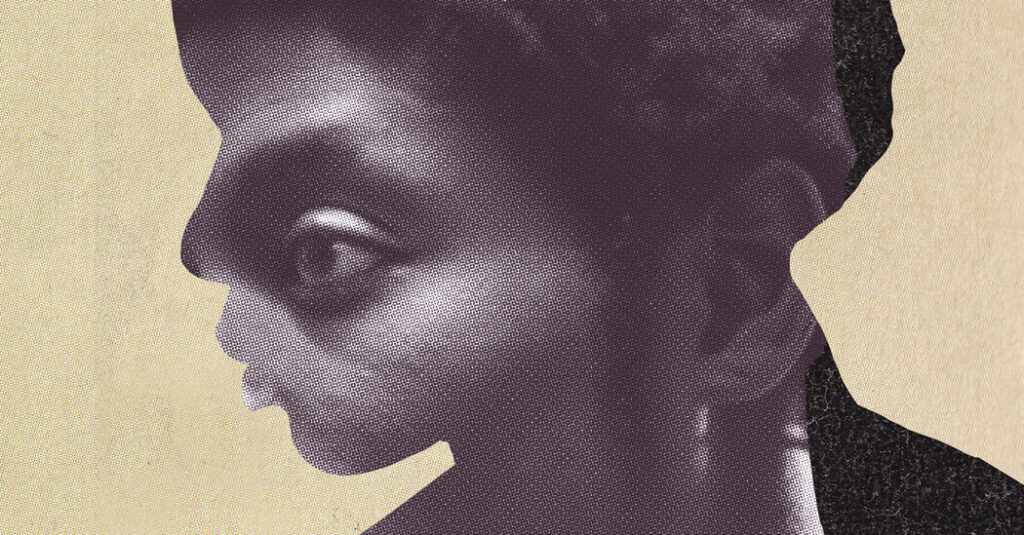
Do you ever hide the true you?
Your true opinions. Your true feelings. Your true self.
If so, you are not alone. We all “mask” our thoughts and behaviors to fit in or stay safe at times. But does that protection come with a price?
In “Everyone Uses This Coping Strategy. When Does It Become a Problem?,” Christina Caron writes that while masking is a common part of life, especially for those with autism or A.D.H.D., hiding your true self comes with a significant cost:
When Amara Brook was training to be a clinical psychologist, a supervisor offered some advice before an important meeting about a patient: Stay quiet and listen to your superiors.
In the hierarchical medical field, deferring to authority figures and navigating big egos is the norm. But for Dr. Brook, who has attention-deficit hyperactivity disorder and autism, the unwritten social rules were tough to follow.
So Dr. Brook clamped down on a Jolly Rancher. The candy formed a type of cement between the teeth — a “muzzle,” Dr. Brook said; without it, the strong urge to speak up would have prevailed and “definitely ruffled feathers.”
Dr. Brook was using a coping skill called masking: concealing thoughts or behaviors to fit in.
“Sometimes we just have to do what’s effective, you know?” Dr. Brook said, but there’s a downside — when you’re “putting on a show all the time, it’s exhausting.”
Masking can help anyone navigate challenging environments, like the workplace. But for people with autism and A.D.H.D., covering up unconventional social behavior can become a nonstop survival strategy. And when masking feels constant and unavoidable, it can create or exacerbate mental health problems.
Ms. Caron defines masking, also sometimes referred to as camouflaging, as a way of “managing how we present ourselves by hiding things that others might find objectionable in order to create a more positive impression.”
She continues with a discussion of when masking is useful:
Everyone, whether neurodivergent or not, needs to mask sometimes. It helps people feel accepted by a group. And believing that you belong is “one of the best predictors of well-being,” said Mark Leary, a professor emeritus of psychology and neuroscience at Duke University who has studied social motivation.
Masking can be empowering when it’s done according to a person’s own values and by choice, said Iris Mauss, a professor of psychology and director of the Institute of Personality and Social Research at the University of California, Berkeley.
For example, if you value being kind and patient, then you might choose to avoid expressing boredom and frustration during a seemingly interminable work meeting, Dr. Mauss explained.
And explores when masking is problematic:
Sometimes masking goes too far. Concealing important parts of ourselves can harm close relationships and cause shame or guilt, said John Pachankis, a professor of social and behavioral sciences at the Yale School of Public Health.
Masking can lead to depression, anxiety, burnout, missed mental health diagnoses and even suicidal behavior.
Masking all the time “suggests that the way you fundamentally are is a problem,” said Sara Woods, a clinical psychologist at the University of Washington Autism Center and in private practice at Discover Psychology. She added: “There’s a lot of effort that goes into that on a daily basis.”
Students, read the entire article and then tell us:
-
Do you ever feel like you are hiding your true self? Does “masking” — hiding things “that others might find objectionable in order to create a more positive impression” — accurately describe any experiences in your own life?
-
If so, share an experience when you masked who you really were: What did you choose to conceal and why? What did you gain or lose by masking? How did you feel about yourself afterward?
-
Ms. Caron notes that masking is a double-edged sword — it can be a helpful tool for navigating social situations, but it can also be exhausting and harmful to your mental health. Which benefits and costs described in the article resonate most for you?
-
How much of an issue is masking in your daily life? Do you wish you could be your authentic self more?
-
When, if ever, do you let down your mask? In school? With family? In your diary? If you could be your 100 percent authentic self for one full week without any social consequences, what would change about the way you act, speak or dress?
-
Devon Price, who has autism and is a social psychologist, recommends finding “pockets of safety” and gradually letting your mask down with supportive family members or friends, as well as finding a group that matches your identity. What do you think of this advice? What other suggestions would you give to someone who feels they have to hide who they are?
Students 13 and older in the United States and Britain, and 16 and older elsewhere, are invited to comment. All comments are moderated by the Learning Network staff, but please keep in mind that once your comment is accepted, it will be made public and may appear in print.
Find more Student Opinion questions here. Teachers, check out this guide to learn how you can incorporate these prompts into your classroom.
Jeremy Engle is an editor of The Learning Network who worked in teaching for more than 20 years before joining The Times.
The post Do You Ever Feel Like You Are Hiding Your True Self? appeared first on New York Times.