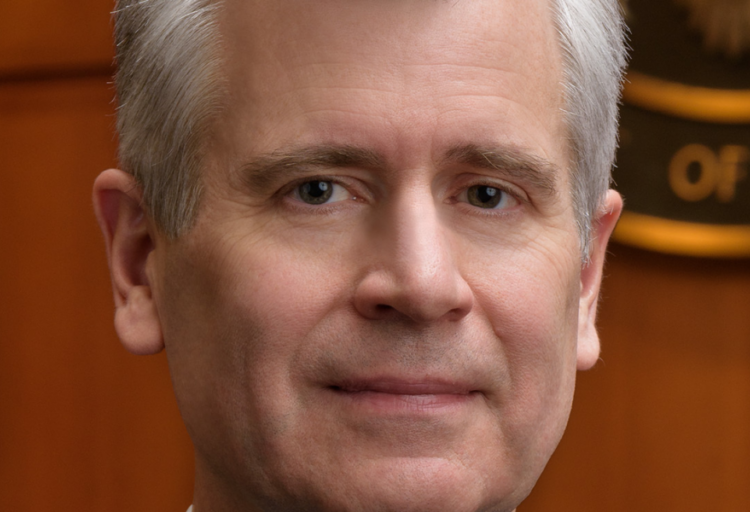
There are a lot of things on my bucket list. Diving between the tectonic plates in Iceland. Learning to speak Welsh. Painting a mural with my daughter. And getting a ride in Jon Caramanica’s car in New York City to talk music!
Jon’s a legend. He’s our pop music critic. He’s the co-host of the “Popcast” podcast. And he reviews songs while driving through New York City (though his car is currently in for repairs). Since the Grammys are coming up on Sunday, I thought I’d give him a call to ask where pop music is heading. (Spoiler alert: The era of American primacy is over.)
It’s not quite the same as getting a ride, but it will have to do for now.
Where pop music is headed
So, Jon. Let’s talk Grammys. There are a bunch of familiar names: Kendrick Lamar, who won big last year, Lady Gaga, Bad Bunny. Who do you think should win?
I feel like this should be Bad Bunny’s year.
It would be a real capstone moment for someone who, over the last 10 years, has shown a new path to global stardom that didn’t rely on any of the old models. He is Puerto Rican, he sings and raps almost entirely in Spanish, he’s nominated in the biggest categories at the Grammys, and he’s headlining the Super Bowl a week later.
What does Bad Bunny’s mega-success tell us? He’s the most-streamed artist on the planet.
Bad Bunny is hugely talented and creative and unusual. But he also became famous at the confluence of two huge threads of musical and cultural history: the internet as a distribution platform, and the way streaming has linked language communities around the world.
The biggest beneficiary has been Spanish-language music. Bad Bunny happens to arrive when that is really starting to take off. You see a similar dynamic with BTS and K-pop: the right act at the right time, dovetailing with technology that amplifies them beyond their traditional audience.
America has forever been a giant music melting pot. But what you’re describing is a new kind of global music melting pot.
Yes! Genres like K-pop, Latin trap and reggaeton often take some inspiration from American inputs, recontextualize them through local frameworks and then re-export them back out to the world.altho
So the blessing of the internet and streaming platforms is that they help elevate a bunch of viewpoints that maybe wouldn’t have been elevated previously. You can now have a kid who’s 15, has an idea, uploads it to the internet and somewhat immediately changes the world. As a pop music critic, that’s the place I want to live.
There is streaming, but there’s also TikTok. That’s where my kids seem to discover most of their music.
Yes, and if you look at the nominations for the Grammys, one thing really stands out: In the best new artist category, you see how normal social media has become as the proving ground. Addison Rae, Katseye, Sombr — they all started on social media or got huge boosts there. Five to 10 years ago, “started on social media” was a red flag, like it wasn’t real. Now it’s just a standard path.
Does this decade have a musical identity the way the ’70s, ’80s and ’90s did?
It’s the first decade where almost all music is a product of people everywhere listening to one another — a constant loop between communities and scenes. And it’s also the decade of the decline of American primacy in pop.
In the ’80s and ’90s, a huge amount of global pop emanated from the U.S. Those days are over: Great and terrible pop is made everywhere, and a single idea from a random place can shift the conversation quickly.
This is also the decade of artificial intelligence. How is that playing out in your world?
A.I. is already inside music in small, hard-to-label ways. A lyric suggestion. A backing vocal. A fake choir because you didn’t have 10 singers on hand in the studio. But I think people haven’t yet figured out how to use it in a truly artistically generative way.
A lot of what we’ve seen is low-hanging fruit — “sing this like Shania Twain.” That’s just shtick. The more likely near-term use is as a tool inside the creative process: a producer in a studio generating a twang version, an R&B version, because they don’t have the background vocalists that day. It’ll show up as scaffolding before it shows up as meaningful “art from whole cloth.”
Will A.I. eventually be better at making music than humans?
A.I. might become better at making it right, but it won’t become better at making it wrong. And wrong is where innovation is. Wrong is where the magic is.
Spoken like a true critic. I’m curious: What music do you personally listen to right now?
Look, I grew up on hip-hop — I wrote for rap magazines before I worked at The Times. That’s where I come from. But my job here is to see the world.
I’d point people to my No. 1 album from last year, by a Korean rapper and singer named Effie. It’s post-hyperpop in the shadow of K-pop — what you make when you’re surrounded by a huge industry and want something raucous, bold, colorful and different. That’s the lane I’m interested in as a pop critic: innovation, disruption, the next thing.
Finally, my most important question: When can I ride with you, Jon?
When the car is out of the garage!
MORE TOP NEWS
A Britain-China reset
Prime Minister Keir Starmer of Britain met in Beijing yesterday with President Xi Jinping of China and they both agreed to pull their relationship out of a yearslong “ice age.”
For Starmer, the visit is a pragmatic gamble that warmer ties with China will bring more growth for Britain. He announced after his meeting with Xi that China had relaxed visa rules for British citizens for trips under 30 days.
OTHER NEWS
-
President Trump’s border czar said that the immigration crackdown in Minneapolis needed to be “fixed,” and raised the possibility that he could pull ICE agents out of the city.
-
Greenlanders watching the violence in Minneapolis are saying no thanks to closer U.S. ties.
-
The E.U. labeled Iran’s Revolutionary Guard a terrorist organization after the killing of Iranian protesters.
-
Chinese prosecutors opted not to charge a man who fathered several children with a woman who was unable to consent, prompting angry debate.
-
The worst floods in decades in southern Africa have displaced hundreds of thousands of people and killed more than 100.
-
Dozens of Cubans deported from the U.S. were sent to the military prison at Guantánamo Bay. Now they’re stuck there.
-
The U.S. trade deficit grew sharply as Trump’s tariffs caused volatility.
-
Tesla’s annual profit plunged as the company slashed prices to counteract falling sales.
SPORTS
Tennis: Elena Rybakina will face Aryna Sabalenka in the Australian Open women’s final on Saturday. The men’s semifinals is today.
Cricket: The American star Aaron Jones has been suspended over corruption charges.
WISDOM OF THE DAY
“Happiness is not a factory setting. It’s a skill you learn.”
— The brain and the mind are trainable, says Dan Harris, host of the “10% Happier” podcast. He’s one of 24 health experts we asked to share simple secrets to a healthier life. Here are their words to live by.
MORNING READ
Who wants to buy an airport? Domodedovo, near Moscow, was once seen as a success story. It became the city’s second-largest airport in the 1990s, serving as a gateway for British Airways, Lufthansa and other international airlines.
But these days, it’s a symbol of Russia’s international isolation after its invasion of Ukraine. Flights to hundreds of European destinations, as well as to Japan, Australia and other countries, have been suspended. A shining new terminal that opened in 2023 sits half empty.
The authorities sold it yesterday — at a fire-sale price. Read more.
AROUND THE WORLD
How they’re getting a taste of home … in Alaska
Since their remote villages in western Alaska were devastated by Typhoon Halong in October, more than 600 Alaska Native evacuees have been living in Anchorage, awaiting word on when, if ever, they can return home.
Now, an unusual initiative to distribute wild food — like fish, moose, marine mammals, berries and greens — is helping them maintain their traditional diets as they navigate city life.
Donations have come in from across the state: bags of shiny black dried seal and walrus flippers, tubes of ground moose, cubes of bowhead blubber and tubs of seal oil. Read more.
RECIPE
Bolo de cenoura, a carrot cake often found in Portuguese and Brazilian bakeries, is thrilling in its simplicity. A few key ingredients — carrots, flour, sugar, eggs and oil — and a blender or food processor are all you need.
WHERE IS THIS?
Where are these colorful homes?
BEFORE YOU GO …
It was hard to have a conversation with anyone this week — colleagues, friends, my children, the greengrocer — without ending up in Minnesota.
Bruce Springsteen wrote a song on the day Alex Pretti was killed: “The Streets of Minneapolis.” Give it a listen and tell me what you think.
Much of the United States is in shock. So is the world.
Many of you have written to me. Marek Hubka, a reader from the Czech Republic, sent a particularly thoughtful note. Born in 1963, he grew up under Communism. America, he wrote, was always a dream to him — “a symbol of freedom and a model of an open society.”
“I vividly remember a specific moment during my university studies,” Marek said. “I was sitting on a hill above Mikulov, a small town near the Austrian border, with two close friends. We were looking at the razor-wire fence that separated us from the democratic world we longed to live in.”
“We were fortunate,” he said. “The system changed, borders opened, and I was finally able to travel freely. I eventually even visited my dream country and spent a wonderful time with friends in Kentucky. What I want to express, however, is my deep concern when I observe what is currently happening in the U.S.”
Systems can change. In good ways and bad. People from the former Soviet bloc know this better than anyone else.
Have a good weekend. — Katrin
TIME TO PLAY
Here are today’s Spelling Bee, Mini Crossword, Wordle and Sudoku. Try our new game, Crossplay. Find all our games here.
We welcome your feedback. Send us your suggestions at [email protected].
Katrin Bennhold is the host of The World, the flagship global newsletter of The New York Times.
The post A Global Pop Music Melting Pot appeared first on New York Times.