The attorney general of Texas, Ken Paxton, has filed a lawsuit against a Delaware abortion provider, the latest in a string of actions Texas and other states with abortion bans have taken against medical professionals who mail abortion pills from states that support abortion rights.
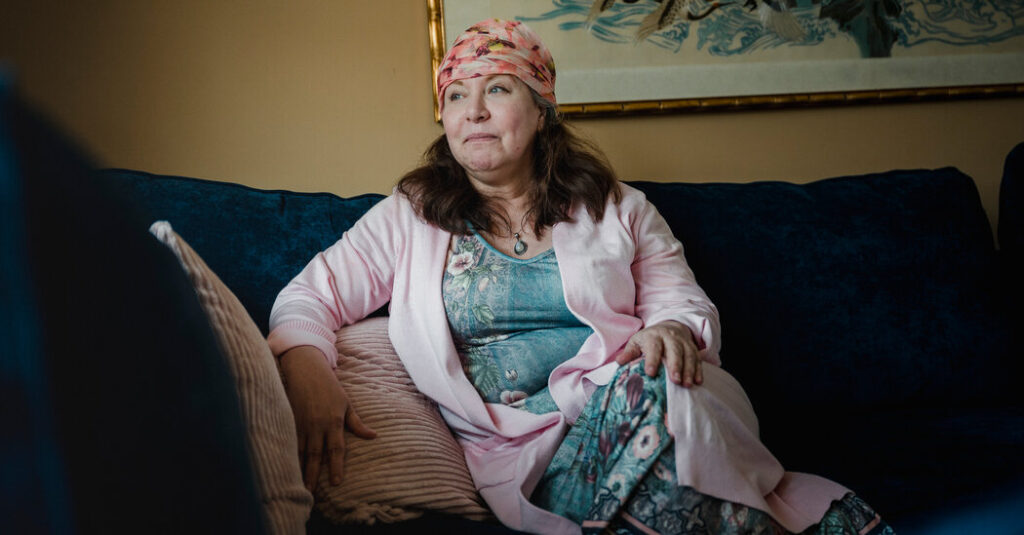
The lawsuit accuses Debra Lynch, a nurse practitioner who operates the telehealth service Her Safe Harbor, based in Delaware, of prescribing and shipping abortion pills to residents of Texas in violation of that state’s abortion ban.
“The day of reckoning for this radical out-of-state abortion drug trafficker is here,” Mr. Paxton said in a statement announcing the lawsuit, which was filed on Tuesday in the state’s district court of Jefferson County. “No one, regardless of where they live, will be freely allowed to aid in the murder of unborn children in Texas.”
Ms. Lynch said in an interview on Wednesday that she would continue to work to supply pills to women who need them. As a result of abortion bans and restrictions, she said, “women are losing their lives and children are winding up orphans and babies are being born with non-life-sustaining medical conditions. As long as that is happening, there’s absolutely nothing or nobody that will deter us from our mission to bring health care to women.”
The lawsuit comes during an intensifying battle among states that has arisen since the U.S. Supreme Court overturned the nationwide right to an abortion in 2022. The clash centers on whether states are required to honor one another’s abortion laws, and legal experts on both sides of the argument expect it to eventually lead to a constitutional showdown that could reach the Supreme Court.
About a third of states currently have near-total bans on abortion. About 20 other states have adopted some type of abortion shield law, intended to protect licensed prescribers who send abortion medication to patients in states with bans. In their strongest form, shield laws preclude officials in their states from cooperating with extradition requests, subpoenas or other legal actions taken by other states against those prescribers.
Last summer, Delaware’s shield law was strengthened to clarify that it “provides protection from civil and criminal actions that arise in another state that are based on the provision of health care services that are legal in Delaware.” Even before that, Ms. Lynch said lawyers advised her that Delaware’s shield law protects her work.
Last year, The New York Times spent a day with Ms. Lynch, listening to phone consultations she conducted with abortion patients (the patients gave permission). The visit provided a rare window on the work of an abortion pill prescriber and the varied, often sensitive circumstances that women seeking abortions may experience.
Mr. Paxton’s lawsuit cites that article, along with one published by a Texas newspaper, The Austin American-Statesman, to claim that Ms. Lynch had been open about sending pills to Texas. The lawsuit also cites the Her Safe Harbor website, which indicates that it offers abortion pills prescribed via telemedicine and will help patients in all 50 states.
In August, Mr. Paxton’s office sent cease-and-desist notices to Ms. Lynch’s service, as well as to other abortion pill providers. The lawsuit said that the attorney general’s office had received no response from the service and that a month later, Ms. Lynch was quoted in Medscape, a medical news publication, saying, “We don’t fear fines or jail time at all.”
In her interview with The Times on Wednesday, Ms. Lynch said that, because of the Delaware shield law’s provisions, her service’s lawyers had not responded to the cease-and-desist notice. In other cases, such as a lawsuit Texas filed against a New York doctor, representatives of the abortion providers have also invoked the shield laws. And in two cases of criminal charges filed in Louisiana — one against the New York doctor and another against a California doctor — governors of those states have refused to extradite the providers.
Ms. Lynch said on Wednesday that Her Safe Harbor, which she operates with several other volunteer licensed prescribers and her husband, Jay Lynch, who formerly worked for Delaware’s health and social services department, continues to ship hundreds of packages a month. She and Mr. Lynch have moved to New York, but continue to operate the service from Delaware, she said.
Pam Belluck is a health and science reporter for The Times, covering a range of subjects, including reproductive health, long Covid, brain science, neurological disorders, mental health and genetics.
The post Texas Sues Delaware Nurse Practitioner for Mailing Abortion Pills to the State appeared first on New York Times.