The Smithsonian’s National Museum of Asian Art is returning to the Indian government three bronzes, museum leaders told The Washington Post, after extensive provenance research indicated that the objects were removed from their original sites illegally.
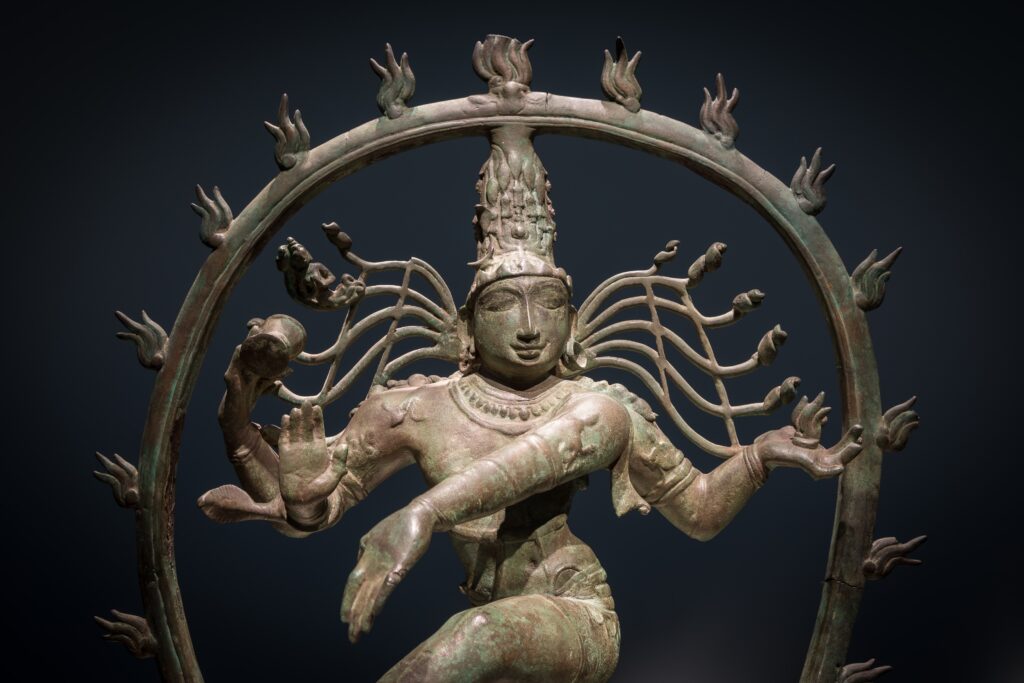
The trove includes the 12th-century “Somaskanda,” which shows Shiva with his wife, the 16th-century “Saint Sundarar With Paravai,” as well as a dancing Shiva known as “Shiva Nataraja,” made around A.D. 990.
Statues in the form of that last sacred image have become notorious targets of looting and theft.
After early 20th-century writing by art historian Ananda Coomaraswamy pitched the figures as emblems of India’s exceptionalism, they exploded in popularity. Souvenirs re-creating the sacred image multiplied at tourist traps and gift shops. Shiva Nataraja statues, meanwhile, disappeared from temples.
“It got really famous from this guy’s article, and then every museum in the West needs to have a Shiva Nataraja,” said Padma Kaimal, a professor of art at Colgate University who has written about the image-type. It was a time when museums asked fewer questions, and the coveted dancing gods were welcomed into their collections.
The Smithsonian’s dancing Shiva will remain on a long-term loan and will be displayed alongside information about its repatriation.
“The return of these sculptures, the result of proactive research, reflects our dedication to ethical museum practice,” museum director Chase F. Robinson said in a statement.
In an interview with The Post, Robinson added that the museum believes strongly that the objects’ full biographies “are really interesting and compelling stories, and we are increasingly integrating them into our galleries and as a feature of our exhibitions.”
The return attests to the sharper attention to objects’ origins across the museum world in recent years, as advocates, historians and museum professionals have called, sometimes in vain, for the repatriation of artifacts such as the Benin bronzes and Elgin Marbles held at prominent museums.
The Asian art museum last year appointed Nancy Karrels as associate director of provenance and object histories, a new role at the institution, and last month, the museum announced the return of its first batch of works under the Smithsonian’s Shared Stewardship and Ethical Returns Policy, which was adopted by the wider institution in 2022. Those three sculptures from Cambodia were found to have been removed from the country in a period of widespread looting during civil conflict before appearing on the U.S. market.
Previously the Smithsonian had a policy of returning items proved to be obtained illegally, but the 2022 policy widened grounds for return. Museums could deaccession and return objects based on ethical considerations alone, as well as collaborate with origin communities for their care.
The repatriation of these bronzes to India — made on legal grounds — is a result of the museum’s systematic review of its South Asian collection.
The museum’s approach demonstrates a newer way of thinking about and presenting objects: That the very thing that may necessitate an object’s return is also part of the story a museum should tell.
“Historically, museums are much better at aestheticizing the object than contextualizing the object,” said Robinson. “Charles Lang Freer was a fantastic collector. He really wasn’t interested in the social context, religious context, ritual context,” he said, adding that “there has been a change of course in museology of the last generation or two. Increasingly one finds exhibitions and galleries devoted to trying to recontextualize.”
Holdings in the Smithsonian’s extensive, nearly 180-year-old collection have long sparked calls for repatriation. In late 2022, the National Museum of African Art returned 29 Benin bronzes to Nigeria.
A 2023 Post investigation found that the institution took decades to take action on human remains, including more than 250 human brains. (At the time, Secretary Lonnie G. Bunch III said the Smithsonian was accelerating its efforts to return remains and called the period of their collection the institution’s “darkest history.”)
The research required for returns can be hefty. The National Museum of Asian Art has a team of four people working on provenance research, larger than other museums of its size, Robinson said. The work underlying the Indian bronze return took years.
“Somaskanda” and “Saint Sundarar With Paravai” were part of the collection Arthur M. Sackler donated to the museum in 1987. The institution received a tip that the pieces appeared in photographs at the Photo Archives of the French Institute of Pondicherry. They sent a curator to visit the archives and found that the statues were documented in temple settings in Tamil Nadu in the 1950s. Such “in situ” photographs form a legal basis in India to establish theft, Robinson said, and “confirm the sculptures’ unauthorized removal from India,” the museum said in an email.
The “Shiva Nataraja” arrived in the museum later, acquired in 2002 through New York’s now-infamous Doris Wiener Gallery. According to the Manhattan district attorney’s office, Wiener was known for taking “shopping trips” through South Asia “to select stolen antiquities that would later be smuggled into New York.” In 2021, her daughter, Nancy, who was a part of the gallery operations, pleaded guilty to trafficking illicitly acquired works and creating false provenance records.
Robinson said museum researchers attempted to trace the origins of the “Shiva Nataraja” bronze that Wiener sold them. They were not able to find a gallery matching the name that her documents provided as the source of the object, nor any street matching the gallery’s purported address. The object, like the others, was also photographed in a temple in Tamil Nadu in the 1950s.
It was not the only stolen Shiva Nataraja that passed through the Wieners’ hands — another was returned from the Asia Society in 2021.
“There’s a huge network of extraction, we could call it, that’s particularly focused on these Shiva Natarajas,” Kaimal, the Colgate professor, said.
The figures are vulnerable to theft not just because of their popularity but because “the temples are out in these tiny villages that can’t afford serious security, and people need to see the images during worship so you don’t want to lock them away,” Kaimal said. At times, copies of the piece have been swapped in during “cleanings,” she said.
The bronze shows Shiva dancing on a demon representing ignorance, encircled by a ring of fire and on a lotus base. It is considered “one of the most important, visually thrilling forms of the Hindu god Shiva,” according to the Asian art museum, and is rich with symbolism in the objects Shiva holds in his hands, the clothes he wears and more.
Recently the image, which Kaimal says Coomaraswamy’s essay argued “shows that India was full of wisdom long before Europe,” has appealed to Hindu nationalist sentiments in India. But it also has wider allure.
“These images continue to be very powerful in the present because they have deep meaning for people who identify with these places, all the Indian expats, but also for many people who admire India,” said Kaimal, calling them “beautiful, important, precious objects.”
Kaimal applauded the Asian art museum’s efforts to return the bronzes. “This is big. This is about acknowledging that the ways in which objects made their ways into museums have not always been legal,” she said. “That’s a huge confession for museums to make.”
The post Smithsonian Asian art museum to return three stolen bronzes to India appeared first on Washington Post.