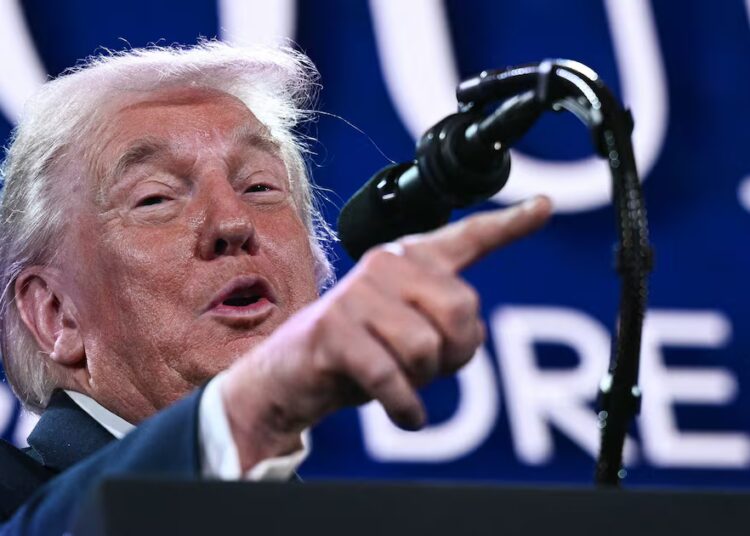
I’m still processing how the world changed last week. President Trump’s wild threats against Greenland — and by extension against America’s NATO allies — crystallized for many leaders what they already believed but perhaps were too scared to say out loud: The rules-based international order is no more.
The man who said it out loud, Prime Minister Mark Carney of Canada, became something of a hero in Davos. Today, I’m writing about what Canada’s efforts to pivot away from an increasingly volatile America can teach other countries.
Canada’s lessons for a new world
We knew world leaders liked Mark Carney’s speech last week at Davos. What we’ve learned in the days since is how much Canadian voters liked it.
Carney articulated in stark terms a question that is top of mind for many: How can countries whose economies and security have depended for decades on the United States cope with an increasingly unreliable and sometimes hostile partner?
“The old order is not coming back,” Carney said. “Nostalgia is not a strategy.”
Instead, countries need to reduce “the leverage that enables coercion” by diversifying their trade partners, reducing their strategic dependencies — and by banding together.
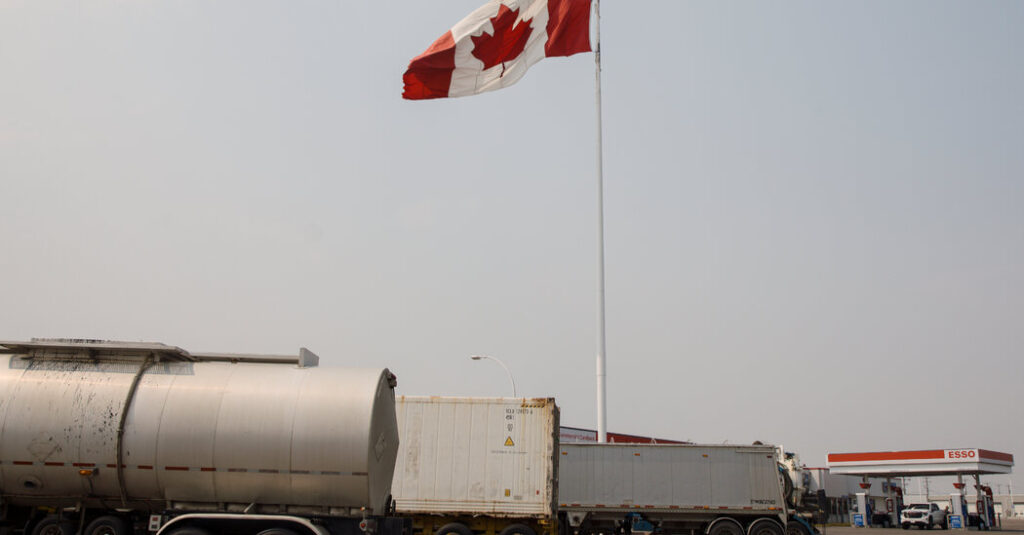
It’s not an approach that promises to be easy. No country is more integrated with the U.S. than Canada. The two countries share a 8,891-kilometer land border, the longest in the world. For two in three Canadian exporters, the U.S. is the sole market. Nearly one in 10 Canadians is employed in industries that depend on American customers.
But it’s also the country most vocally determined to change this. Carney was elected on an anti-Trump wave after the president began pushing to make Canada the 51st state. Just before his speech in Davos, Carney signed a new strategic partnership with China. In the speech, he announced 12 new trade and security deals over the last six months. Canada is in the process of negotiating more free trade pacts in Asia and Latin America.
Polling after his speech found Carney’s approval rating jumped eight points, to 60 percent — an indication that Canadians are firmly behind him.
Canada’s very public pivot away from the U.S. in some ways offers a challenge to other U.S. allies who have found themselves facing uncomfortable post-rupture choices. Because if Canada can pull it off, analysts told me, anyone can.
Overcoming geography
Canada has been hurting since Trump returned to the White House and imposed a 25 percent tariff rate on most goods, raising it to 35 percent last summer. Nearly 70 percent of Canadian exports go south of the border. By comparison, only 5 percent go to China, the country’s second-biggest trading partner.
I spoke to my colleague Matina Stevis-Gridneff, our Canada bureau chief. She told me no one in Canada was under any illusions that the U.S. would cease to be the country’s No. 1 trading partner. “There is no overcoming geography,” Matina said.
Instead, she said, Carney’s idea is to strategically diversify to multiple new partners, in sectors that are important to the economy. Read Matina’s analysis here.
Some diversification has happened already as a result of tariffs, Andrew DiCapua, an economist at the Canadian Chamber of Commerce, told me. Trade with the U.S. was down about 4 percent in the first ten months of 2025, he said, while trade with other markets was up about 13 percent in the same period. For the first time, Canada is exporting natural gas to Asia. And the share of Canadian oil going to countries other than the U.S. has jumped to 10 percent from 2 percent, largely thanks to China, he said.
Canada’s new “strategic partnership” with Beijing is an attempt to diversify further. The decision by China and Canada to reduce tariffs drew attention in part because it broke with a longstanding tradition: Canada following the U.S.’s lead on China.
The actual amount of change involved is modest so far. Carney agreed to reduce tariffs for a small number of Chinese electric vehicles. In exchange, Canada will see lower tariffs on canola seed — a major agricultural industry in Canada, but still just one industry. Even this deal was enough for Trump to threaten more tariffs on Canada..
Carney wants to double trade with non-U.S. markets by the end of the decade, which would cut the share of U.S.-bound exports to perhaps 60 percent.
There are some areas where Canada has real leverage. It has rare-earth minerals that the U.S. covets. Cars produced in Michigan and Ohio rely on Canadian parts. It’s by far the largest foreign supplier of energy to the U.S. These exports are made possible by physical infrastructure — pipelines, grids, power lines — that are hard to replace quickly.
But to focus on the areas where Canada has leverage in bilateral negotiations with the U.S. is in part to miss Carney’s point.
Middle powers of the world unite
One idea at the heart of Carney’s speech was that “middle powers” must learn to band together in response to American volatility.
I spoke to Edward Alden, a senior fellow at the Council on Foreign Relations. The argument Carney was making, Alden said, is that “left alone to deal with a rogue United States, none of us can stand.”
“Canada can’t, Mexico can’t, the Europeans can’t and the Japanese can’t.” Alden continued. “But working together, we can form a stronger united front.”
There was a moment when Trump first announced tariffs around the globe when things might have gone differently, Alden told me. If countries had cooperated to push back, rather than cut their own deals, we might be in a different place today.
It’s partly Canada’s own vulnerability to the whims of an American president that made this speech land so powerfully as a call to action, he said.
Canada will never be able to fully pivot away from the U.S., which is partly what made Carney’s mission at Davos so important. What Carney is trying to do is inspire others to create a world in which, when the U.S. flexes its muscles, other countries have Canada’s back.
MORE TOP NEWS
Trump’s threats to Iran
Trump sharply intensified his threats against Iran yesterday as a U.S. aircraft carrier group took up positions within striking distance. He said that if Iran did not agree to a set of U.S. demands, he could soon mount an attack “with speed and violence.”
In talks with Iran, the U.S. and European countries have put forward three demands: an end to all enrichment of uranium; limits on ballistic missiles; and an end to all support for proxy groups, including Hamas, Hezbollah and the Houthis. Trump notably made no demands regarding Iranian protesters, after previously promising to come to their aid.
A shift in Minneapolis
My colleague Tyler Pager, who covers the White House, describes how the crackdown in Minnesota continues on the ground even as Trump has appeared to soften his tone in response to the outrage over the killing of Alex Pretti. Watch the video.
More news from Minnesota:
-
A man attacked Ilhan Omar, a Democratic member of Congress, at a public event in Minneapolis, spraying her with an unknown substance.
-
Two ICE agents involved in the fatal shooting on Saturday have been placed on leave. Here’s the latest.
-
Ecuador lodged a formal diplomatic protest after an ICE agent tried to enter its Minneapolis consulate without permission.
OTHER NEWS
-
President Vladimir Putin welcomed Syria’s president, Ahmed al-Sharaa, in Moscow even as he continues harboring the deposed Syrian dictator Bashar al-Assad.
-
Silver prices have surged even faster than gold. What’s going on?
-
A drone strike killed five on a train in eastern Ukraine. A survivor described the moment.
-
Scientists moved the Doomsday Clock even closer to the apocalypse, citing alarming developments in politics, technology and climate.
SPORTS
Tennis: On the brink of being eliminated from the Australian Open, Novak Djokovic caught a break.
Olympics: What to know about Russian athletes at the Winter Games.
NUMBER OF THE DAY
28,000,000,000
— That’s how many liters of water Microsoft said it would use to cool its 100 data centers worldwide in 2030, according to an internal projection. The company had promised to cut its water use, but that was before the A.I. boom.
MORNING READ
Kim Keon Hee, South Korea’s former first lady, didn’t stay in the shadows. Her high profile and claims that she was “the man” of her household rattled the patriarchal society. Some critics called her a “sorceress” and accused her of manipulating her husband, former President Yoon Suk Yeol.
A court yesterday found her guilty of corruption charges, making her the first South Korean former first lady to be imprisoned. Read more about Kim.
AROUND THE WORLD
How music is medicine … in Amsterdam
A former opera singer in Amsterdam has started a music program called the Singing Circle for people with cognitive declines. The objective is simple: Just sing and be happy.
One 93-year-old participant said she loved the event’s sense of “gezelligheid,” a Dutch word for coziness and conviviality: “The important thing is that you’re doing it with other people.”
A growing body of scientific literature supports music as a treatment for neurocognitive disorders. Read more about the benefits of music.
RECOMMENDATIONS
Listen: Fall in love with Stephen Sondheim’s music. It’ll only take five minutes.
Read: “Until the Last Gun Is Silent” explores how the Vietnam War consumed a civil rights leader and tore a soldier apart.
Energize: To improve how you eat, look at what you drink.
Move: Stay flexible as you age. Here are some workouts for better mobility.
RECIPE
Dukkah is a popular condiment in Egypt, where it’s made with chickpea flour, sesame seeds and occasionally dill seeds and spices. You can also use the mixture as a coating for fried fish or vegetables.
WHERE IS THIS?
Where is this observatory?
TIME TO PLAY
Here are today’s Spelling Bee, Mini Crossword, Wordle and Sudoku. Try our new game, Crossplay. Find all our games here.
You’re done for today. See you tomorrow! — Katrin
We welcome your feedback. Send us your suggestions at [email protected].
Katrin Bennhold is the host of The World, the flagship global newsletter of The New York Times.
The post Canada’s New Reality appeared first on New York Times.