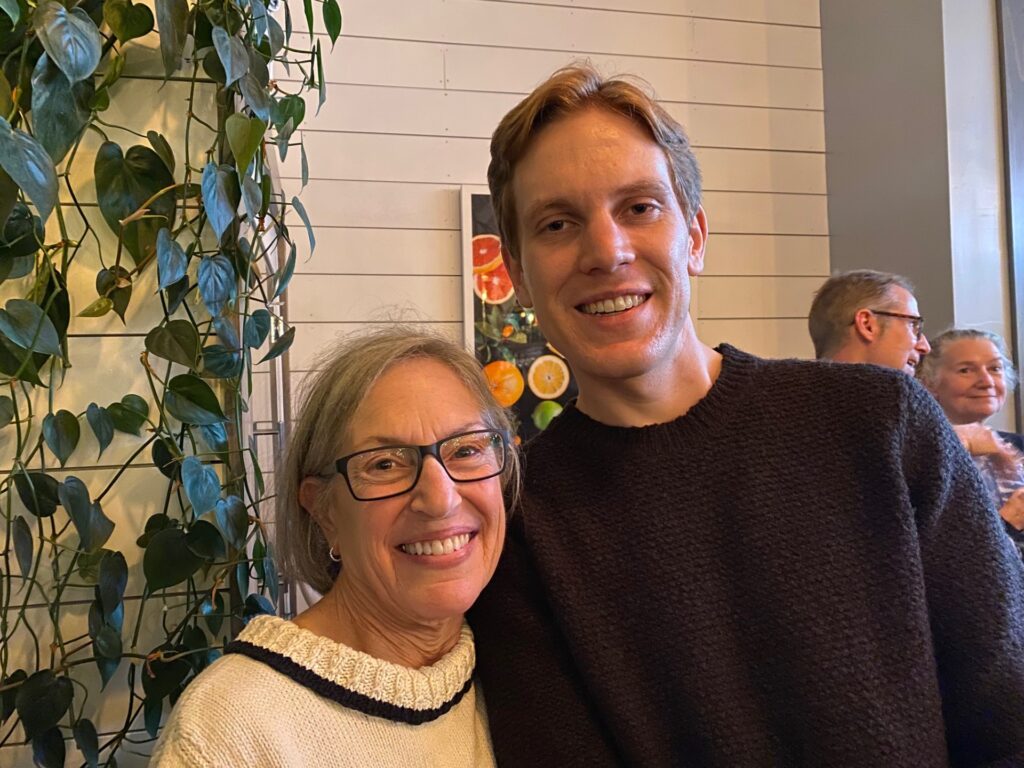
After Stephanie Clemans’s 28-year-old son, William Ostertag, experienced sudden cardiac arrest and collapsed in his D.C. apartment building’s gym, records show it took nearly eight minutes for the city’s 911 call center to dispatch advanced life support units — despite the fact that a staffed fire station was just 250 feet away.
In the 14 months since her son’s death, Clemans has doggedly sought to understand what caused the delay, hoping that hearing an audio recording of the 911 call could shed light on why it took so long for help to get to her son. The city declined, citing a policy of not releasing 911 audio to anyone but the person who made the emergency call.
On Tuesday, she filed a lawsuit against the city in D.C. Superior Court, aiming to force the release of the audio. The suit revives long-standing concerns about transparency at D.C.’s Office of Unified Communications, which manages the 911 call center.
“This information is vital to my understanding of what my beautiful, beloved son experienced when the sudden and unforeseen end to his big, gorgeous life occurred,” she said Tuesday, reading from remarks she prepared for the annual D.C. Council oversight hearing on the 911 agency the next day.
“My nightmare is that my vibrant, very much alive son died and people with power are saying to me that I do not have the right to hear what was happening as he lay on the ground, unable to breathe, as his blood lost oxygen and his brain began to die,” she said. “I disagree with those who would deny me this information.”
Spokespeople for D.C. Mayor Muriel E. Bowser (D) and the city’s 911 agency did not return a request for comment on the lawsuit; the city typically does not comment on pending litigation.
Asked about a separate public records request at Wednesday’s oversight hearing, Office of Unified Communications Director Heather McGaffin said the office does not release 911 calls out of concern for caller privacy and safety.
“We have had many many [Freedom of Information Act] requests for people asking for things and they want to know who called on me, who reported this, and they want to know names, they want to know phone numbers,” she said. “We don’t give that information out because there is an expectation of privacy when you call 911.”
But Clemans and open-government advocates say the city is going too far. They argue that other jurisdictions, including Colorado and Alabama, successfully protect the right to privacy while disclosing information in the public interest — and they say a grieving mother has the right to answers about her son’s death.
“There are other states which have this kind of balancing of public accountability information released but personal, private information from the audio kept secret,” said Fritz Mulhauser, co-chair of the legal committee at the D.C. Open Government Coalition. “D.C. is unusual in trying to keep everything secret.”
In November 2024, Ostertag was working out in his apartment building’s gym in the Columbia Heights neighborhood when he experienced sudden cardiac arrest, his mother and her lawyer say. Witnesses to Ostertag’s collapse asked someone staffing the apartment building’s front desk to call 911. According to a written timeline of the emergency response that Clemans obtained through a public records request, the 911 call-taker initially categorized the emergency as a seizure, which is considered significantly less urgent than cardiac arrest.
At first, an ambulance that lacked the equipment for an advanced medical response was dispatched from Connecticut Avenue NW, according to the lawsuit. It took about 7½ minutes for the call center to upgrade the situation to a cardiac arrest and alert the trained paramedics at the station next to Ostertag’s apartment, Clemans and her attorney said.
Those paramedics arrived within a minute, took over CPR from bystanders, restarted Ostertag’s heart twice and took him to the hospital, the lawsuit said. Medics restored Ostertag’s pulse, but his brain had been deprived of oxygen for too long; he slipped into a coma and died a week and a half later, according to his family.
The lawsuit argues that “all else equal,” the paramedics next door would have gotten to Ostertag within three minutes of the call being placed if they had been dispatched first.
But key questions remain. Though the written timeline offers some information about the emergency response, it is not clear what the call-taker asked and how the caller responded — meaning Clemans and the public still lack key information about why the call-taker may have initially miscategorized the call. To find those answers, Clemans has been seeking the audio of the call — but her public records request was denied.
“For privacy concerns, we can only release audio calls for service to the caller or their legally retained representative. As you did not make this call, it cannot be released to you,” an Office of Unified Communications employee wrote to Clemans in a response reviewed by The Washington Post.
The person who called 911 in this case was a temporary staffer who no longer works at the building, Clemans said. She has been unable to locate them or find out their name, despite seeking help from the building’s management.
“Without the release of the 911 recording, Ms. Clemans has no way of knowing whether the classification of her son’s emergency as a seizure was due to the caller or due to agency error,” the lawsuit says.
In the lawsuit, Clemans contends the agency illegally denied her request for the audio recording; she argues that the agency could have redacted or edited the audio to protect the caller’s privacy. In addition to seeking the audio, Clemans’s lawsuit asks the court to monitor the agency’s compliance with public records laws and asks that she be reimbursed for attorney’s fees.
The call center has faced scrutiny for years, following several high-profile deaths that occurred after 911 delays or mistakes. In 2024, a 5-month-old died during a computer outage caused by a botched software update that scrambled the 911 center — and contributed to an approximately 15-minute delay in providing proper care, The Post reported.
In 2023, 10 dogs died in a flood after a call center employee made an apparent error in conveying the seriousness of the call, delaying the 911 response.
In at least two cases in 2022, children died after apparent 911 errors — including a case where firefighters were sent to the wrong address for an infant in cardiac arrest and another where a call for service for a child in a hot car was canceled. It is not clear whether the delays caused the deaths.
In 2020, a 59-year-old woman died after a heart attack. Her ambulance was dispatched to the wrong quadrant of the city — a mistake that the Office of Unified Communications later publicly apologized for.
In response, the D.C. Council increased some scrutiny of the agency, requiring it to publicly post data on its performance and monitoring recruitment and training efforts at the call center, particularly after staffing shortages in the past several years coincided with 911 wait times that exceeded national standards.
For Clemans, the search for answers is intensely personal.
“It’s a struggle to keep moving forward and be part of the world when your child dies,” she said.
Ostertag lived in D.C. for the final three years of his young life, working in the federal government to administer loans to clean energy and carbon monoxide safety programs. He was passionate about public service; before he moved to D.C., he worked for Teach for America. He was applying to business schools; after his death, his mother said, the family learned that he had been accepted to Columbia University and would have been offered a scholarship. He had a girlfriend whom he intended to marry, Clemans said.
“I do not have an ax to grind with the 911 call center,” Clemans said. “I just want to know — and I have the right to know — what happened to my son as he lay on the floor next to more than one kind stranger, dying.”
The post After son’s death, mother’s quest for D.C. 911 records leads to lawsuit appeared first on Washington Post.