As the television offshoots of movie franchises have proliferated, the possibility of doing something different and better with them — of replacing popcorn treats with more substantial meals — has become an expectation. The praise lavished on shows like “The Penguin,” done as a grim, Batman-less gangster saga for HBO, and the “Star Wars” spinoff “Andor,” done as a somber, largely Force-free political allegory for Disney+, makes it harder to get away with superhero or space opera business as usual.
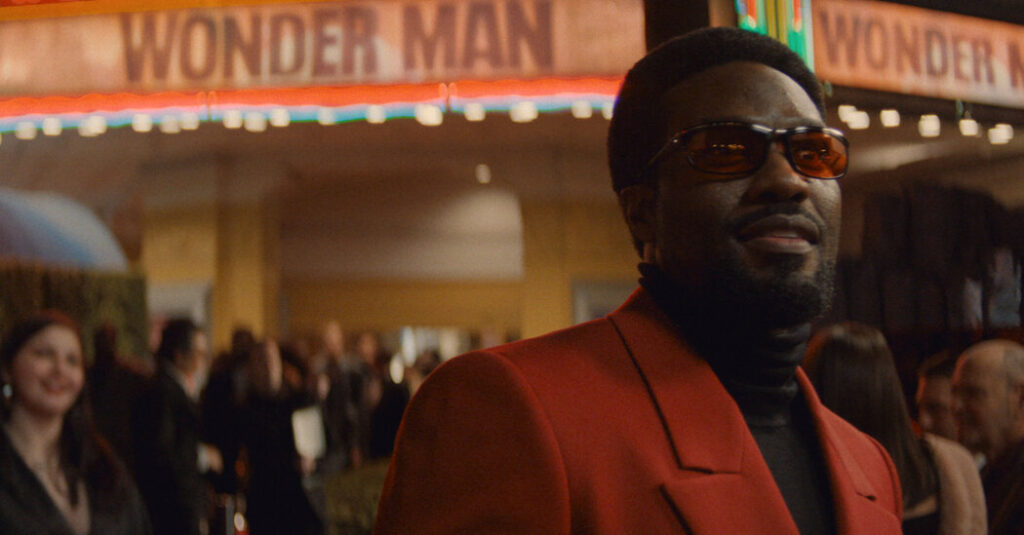
“Wonder Man,” the new Marvel mini-series on Disney+ (all eight episodes premiere on Tuesday), ranges far from the confines of its particular “universe.” Simon Williams, the protagonist played by Yahya Abdul-Mateen II, is a second-tier Avenger in the comic books, an arms manufacturer’s son who gains extreme strength and speed and battles supervillains. In the series, he’s the son of working-class Haitian immigrants and a full-time actor (it’s his day job in the comics) whose devotion to his craft is so complete that he submerges his powers in favor of eagerly preparing for soul-sapping auditions. He, and “Wonder Man,” float free of the Avengers and the whole multiversal superstructure of the Marvel project.
Replacing the comic-book heroics is a playfully bittersweet story about a character as outside the norm as the average superhero. The obsessiveness and earnestness that fuel Simon’s acting make him an outsider, a pest, a poor fit in society, before his powers can even enter the picture. The only Wonder Man in the show, which was created by Destin Daniel Cretton (the director of “Shang-Chi and the Legend of the Ten Rings”) and Andrew Guest (a writer on “Community” and “Brooklyn Nine-Nine”), is a fictional hero Simon worshiped as a child. When Simon auditions for a new Wonder Man movie, the twist is that he would rather play the hero than be the hero.
What sets “Wonder Man” apart, though, is not its depiction of the life of the struggling Los Angeles actor — though that is deft and often funny — or its metafictional conceits. At heart the show is a classic buddy comedy, pairing Simon with a more seasoned but much less fastidious performer: Trevor Slattery, an existing Marvel character who was jailed for making terrorist propaganda videos back in “Iron Man 3″ in 2013.
A ruined bon vivant, now sober, and bush-league Olivier with very mixed motives for befriending Simon, Trevor is played with a marvelous deadpan insouciance by Ben Kingsley. In films, including “Shang-Chi” and the short “All Hail the King,” Kingsley has taken a more broadly comic approach to the character; the tone and texture of the series allow him to do something softer and more emotionally complicated. His puckish Zen calm — a facade that can dissolve into sweaty panic — plays well with the nervous energy, alternately appealing and exasperating, of Abdul-Mateen’s Simon.
But a Marvel series cannot be just a backstage comedy about a Mutt and Jeff pair of actors trading their favorite lines and pushing each other through the bewildering audition process of the Wonder Man movie. So Cretton and Guest have dipped into the Marvel closet, pulling out a sinister agency (which now has an interest in Simon’s hidden powers) and a minor superhero named Doorman (whose back story has been overhauled to provide a reason for Simon’s secrecy). This gives them the framework for the action and suspense that gradually take center stage.
And even as “Wonder Man” pushes against the limitations of the superhero story, it demonstrates the impossibility of entirely escaping its grip. The more realistically human you make your characters and their interactions, the more obtrusive and artificial the mandatory superhero material will seem.
Thus a stand-alone episode explaining the impact of Doorman (Byron Bowers) on Simon’s life is awkward and self-conscious (though Josh Gad has a sprightly cameo, playing himself), and the scenes in which Arian Moayed reprises his “Ms. Marvel” role as a menacing government agent feel as if they’re from a coarser, more ordinary show. Superhero stories demand high stakes; playing against that, in a series whose best moments are quiet and low key, is interesting in theory but herky-jerky in practice.
“Wonder Man” is consistently charming, though, when Abdul-Mateen and Kingsley are together, playing a very odd couple whose friendship is repeatedly put through the wringer in the style of “Midnight Cowboy,” a film they bond over. (Movie obsession is a running theme; Trevor, who we are told starred in “Turtle Diary,” is Kingsley if his career had gone terribly wrong.) Among the Marvel series, it has a distinctive sense of wonder.
Mike Hale is a television critic for The Times. He also writes about online video, film and media.
The post ‘Wonder Man’ Review: A Break From the Multiverse appeared first on New York Times.